13.11.11

Pro Arte (1972)


Listening to Pro Arte discography is frustrating business because guys were clearly excellent musicians but neither music (by it's leader Đorđe Novković) or vocals (by Tom Jones soundalike Vladimir Savčić Čobi) sit well by me - something is just not right,no matter what record sales at the time said. It almost makes me wish to get rid of the composer and singer,but than it wouldn't be the same band I guess. For one thing,vocals are so theatrical and mannered that it makes me cringe. But than,guys in the background play really good - there is some good Hammond organ and guitars that really spark - specially on the uptempo material ("Sa mnom pleše djevojka" that could have easily been something from "Indexi").


What I really wanted was a music without annoying vocalist and possibly without this composer. My wish is almost granted on the last song that turned out to be instrumental ("Stari dvorac/The Old Castle") and voila,the band is brilliant when they finally get a space to show instrumental skills without pressure to record hit singles. I really like that last instrumental number and it clearly shows what they might have been in some other circumstances.

Pro Arte (1970)


Yes,I remember Pro Arte from my childhood - they were hugely successful with some decidedly nonsense,bubble gum hit singles hat brought them record sales but completely ruined any reputation they might have in the musician circles. True,even Beatles recorded "Ob la di,ob la da" and "Yellow Submarine" but Pro Arte really played on that card for all that's worth. That is why I never even thought about listening to them,expecting some annoying catchy jingles that perhaps worked back than but would probably just sound plain silly now.


Than I realized Pro Arte played behind some other musicians of the time and as a backing band they were not so bad,so I decided to give them a chance. Curiosity killed the cat.

Guess what - their first LP album is actually not as horrible as I expected - guys are playing some serious soul-rock quite well,everything sparks and it's not even so far removed from what another pop band from Sarajevo "Indexi" did around the same time.The only thing that really stands out is main vocals by Vladimir Savčić-Čobi who clearly emulated Tom Jones - to hear Tom Jones singing with backing by energetic rock band is a somewhat surreal experience, because the match is strange fitting - while Čobi was by all accounts very sweet and much liked man,I am not completely convinced that this was the right place for him and perhaps he really belonged elsewhere (no wonder band later moved to corny material).


I was so unsure about this album that I had to listen it several times during a week - band is on fire but vocals are so melodramatic and pompous that it spoils the picture. Than I listened other albums and realized this is actually the best one,perhaps at the very beginning they really showed off in the best light until later they turned to pop jingles. The album actually regularly showed on several "best of Ex Yu Rock" lists as a respected historical document from 1970. so I won't be too harsh on them - from what I heard by Pro Arte this is by far their most serious recording.

12.11.11

Ethel Merman biography by Brian Kellow


Immediately after boring Jo Nesbø I needed something that would lift me up from all that norwegian doom & gloom full of unhappy people suffering the summer heat (like Oslo is in the middle of some tropical land) so I grabbed a book about Broadway legend Ethel Merman and it was a joy.


I was just faintly familiar with Merman,knowing that she had some great success in the musical theatre ages ago but didn't know much about her.

Author Brian Kellow did some great research and explained circumstances in which Merman grew up,why she became who she became and how important it is to understand she was product of particular time & place,for example that she continued the line of classic musical theatre performers who burned on the stage but could not cross over to the movies (where big gestures did not work) and the flame of their professional genius burned people close to them in private lives. Kellow is intelligent enough not to shy away from Merman's less desirable character qualities but also tries to explain and portrait her as a human being. It would have been too easy to simply describe Merman as a theatre goddess and leave it at that,but Kellow shows hard-working woman faithful to her inner circle and suspicious towards the rest of the world,full of humor and passion for theatre. Curiously enough,she knew instinctively what works best on the stage but made fatal judgements towards husbands and often with disastrous results. Never a big thinker or too intellectual (Stephen Sondheim describes her working technique as a "talking dog" who simply learned her lines and belted them out) she apparently was a child deep inside and singer Margaret Whiting said "One look at that Christmas Three she kept on the hall table, and I knew exactly who she was". The book inspired me to listen some original cast albums with Merman (she played many important roles in what now are known as Broadway classics) and to check out her turn in "The Muppet Show" where she was elderly but still adorable,she truly was happy as a child surrounded with Muppets.

Jo Nesbø


Norwegian author Jo Nesbø made a big splash now after Stieg Larsson successful "Millenium trilogy" became publishing phenomenon - since Larsson is sadly deceased,attention focused on another writer from the north of Europe and Nesbø is advertised as "new Stieg Larsson". Well,not exactly.


Apparently Nesbø already wrote a whole series of successful crimi novels so this is just one of them,however this was my first introduction to his writing and I must say that I find them incredibly slow and suffered trough the whole book,expecting but not finding any of interesting quirks of Stieg Larsson (who could also be slow at the start but later gets towards completely original and unexpected turns). Honestly I don't get where all the fuss about Jo Nesbø comes from since the story is very usual serial killer plot with police going in circles and main character is alcoholic constantly suffering from hangover - like we never ever before encountered self-destructive policeman who don't know should he quit his job,divorce his wife or simply shut up and die. I persisted to the end,constantly expecting that something interesting will happen but it didn't and guess what,the killer was exactly the one I suspected from the start.

My impression is that publishing world simply needs new Stieg Larsson so now they are building new star but to me this looks exactly like any of the paperback pulp fiction crimi stories sold on the newspapers stand.

The Immortal life of Henrietta Lacks


I prepared the whole extra hand luggage full of books that will travel with me,still could not help checking out local bookshops here in Zagreb and on impulse bought "The Immortal life of Henrietta Lacks" that occupied me for nights in a row. It turned out to be a gripping story about young black woman who died in 1951 but hospital team kept her cells and used them for medical experiments (for some reason these cancerous cells showed as strong and lived forever) - as much as this was important and useful in medical research around the world,the bad part of the story is that her impoverished family was not informed about it and if Henrietta helped millions around the world,her own family did not have enough money for medical insurance.


The story basically goes as two parts simultaneously - the author follows and explains the past, situation of the times and how Henrietta lived and than jumps in the present time where she tries (with great difficulties) to contact Henrietta's descendants who are understandably traumatized,angry and suspicious towards white lady journalist,expecting another fraud. I was constantly upset while reading this book - author very casually mentions ugly circumstances in which blacks lived (Henrietta's mother died during 10th childbirth, her own baby falls on it's head during the birth and get epilepsy and so on) on the other hand there is the whole issue of doctors using patient's cells without anybody being asked or knowing about it,so the story goes far beyond Henrietta Lacks. The end of the book is not exactly happy end - Henrietta's descendants at least accept they will live their lives as before,in poverty but maybe their own children will get something out of it.

And finally identity of the woman who inadvertently helped the whole world is now being widely known.

"Megan is missing" and "Trust"


Because a good friend is horror movie fan,we watched back-to-back two new horror movies.

"Megan is missing" is a chilling,warning story about two teenage girls who fall into hands of internet serial killer. Everything about the movie is very disturbing - director had clear intentions to make it realistic as possible (use of mobile phone camera,computer chat cameras and so on) and actors are believable enough to the point that one can't stop watching it although it's clear that story is not going to be a happy end.Equally disturbing is the fact that these kids would visit teenage parties where in order to be cool everybody gets drunk/druged and clearly it's difficult to actually have control of what children are actually doing when they go out. I will not go into big details here because story is full of surprises,but I have to mention that these two girls are school friends who are daily in touch and together they bond against the world,sharing their laughter,jokes,dreams and talk about boys. Than there is internet as a new social circle full of weirdos and things are often not what they seems.Some of the comments of people who watched this movie were angry and upset,but I believe it is a reaction to the seriousness of the story that resonates with everybody - it's impossible not to get upset with this movie and that was exactly director's intention. A warning.


"Trust" (2010) is equally disturbing but not as brutal visually - here we have comfortable middle class family where father works in advertisement industry (posters of half naked teenagers promoting clothes and basically brainwashing kids to look older and "desirable") and daughter has fixation with her internet friend who eventually shows up to be wolf in lamb's skin. Not as horrible as previous movie,but still upsetting because this time around girl is seduced and it takes her long time to admit to herself that she was a victim - while the whole family falls apart,girl still insist everybody is against "their love" until police search proves that this is a serial rapist who uses the same tricks to get teenage girls all over the country. Very interesting story with believable characters and excellent acting, Clive Owen plays the father who can't understand why exactly this happen to the daughter he adored and always wanted to protect - but as the movie shows,often we cant really protect the children even if we have best of the intentions.


Both movies are not the kind I would usually watch and maybe this is the reason why they stuck with me so long,my friend prefers the second movie because it's more drama,while I was more disturbed with the first one. However,now it's the time to watch something happy for a change and erase this from my head if it's possible.

Rest


All this writing is because I am still recovering from Appendicitis operation and now of course have time & inspiration to take care of this blog.

I don't mind being inactive because there are too many things to enjoy - books,music,movies that keep me occupied.

Soon enough I will have to get back to work again and than it will be 12-hours again each day of the week,so this is a welcome although unexpected prolonged vacation.

11.11.11

Hrvoje Hegedušić "45 Godina" Anthology


Double CD compilation that honors career of croatian chanson singer/composer who quietly but steadily worked for decades somewhere in the background.


As a singer Hrvoje Hegedušić fought with the windmills along his pals Arsen Dedić and Zvonko Špišić in often hopeless war against pop junk - together they helped to put on a map so called "school of Zagreb chanson" where poetic lyrics combined with gentle melodies gave dignity and quality to popular music. Perhaps less distinctive vocally than his brothers in arms, Hegedušić was nevertheless known for careful repertoire where his own music was often matched with excellent selection of best of the poets. This kind of music,because of its message and sophistication usually interested selected (mostly urban) cognoscenti who loved art and poetry,but rarely sold well - though it has to be noted that his ballad "Balada iz predgrađa" (based on poem by legendary croatian poet Dobriša Cesarić) is a real gem and true chanson classic that still plays on the radio - it perfectly describes Hegedušić as artist and at the same time made Cesarić more accessible to mass audience who were not familiar with poetry.


Where as a singer Hrvoje Hegedušić self-consciously sacrificed commercial appeal in order to release only occasionally (handful of solo albums,to my knowledge) and to stay true to his integrity as a urban troubadour, he was hugely successful as a composer of hits for others. He was a true hit-maker who worked with almost everybody who was important and his breezy way with memorable melodies shows that Hegedušić instinctively understood what works in pop market place. In fact, his work as a composer could in itself cover the whole CD box, not to mention other aspects of his behind-the-stage work as organizer of pop festivals and such.


First CD is about Hegedušić as a solo artist and it collects interesting selection of poetry in music,what interests and inspires him. He sings about forgotten everyman who "turns the radio up when crying became too loud" and grey lives in the suburbs, old guys in the bistro, lonely Sundays and people who are lonely in the crowd. The most interesting part of this CD is perhaps his new recording of "Na trgu ispod sata" that he wrote decades ago for Višnja Korbar who performed it on late 1960s Zagreb pop festival - she was great as usual,but to hear composer re-adressing this old beautiful song today is a revelation.


Second CD is titled "Hrvoje for Friends" and offers (understandably) only a small,selected list of his work as a composer. Songs are mostly much more upbeat and radio friendly,though it has to be noted that perhaps too much space is focused on songs recorded by his wife Ksenija Erker (why not CD nr.3 "Ksenija sings Hrvoje"?) instead of showing other names he has worked with. Nothing wrong with Erker of course, but this CD could make stronger point by having different artist per each song since Hegedušić left important mark in many other career's besides of his wife. Let's hope there will be a rich CD box in the future.

Grupa "MI" 16 originala '67-'71


Grupa "MI" ("We") had a brief and important moment in the spotlight at certain point in the late 1960s/early 1970s as a croatian own soul-rock band,with impressive brass section and r&b repertoire. Some compare them with "Blood,sweat and tears", to me they sound a lot like Janis Joplin's backing band "Full tilt boogie" or contemporary "Mladi Levi" from Slovenia.What this means is - music that relied on celebrated international hits of the day (Stevie Winwood, Otis Redding),strong brass section, energetic playing from young punks who refused to play commercial "schlager" game and vocals that were reflecting enthusiasm but honestly were not so exceptional. At the time much was written about singer Neven Mijat, but in reality group was much better as a strong instrumental backing band for other "real" singers than for its own main vocal - excuse me if I am not floored with Mijat's singing but listen how the group sparks with fire playing behind somebody like rock queen Josipa Lisac in her song "Život moj" and you get my point - they were exceptional backing band.


The group had really just a short career (some five years) and not really much of recorded repertoire for "anthology" so music presented here is beefed up with some live recordings, covers and unearthed discoveries from radio archives. It clearly shows that group progressed with time and some of the later recordings really catch the fire lacking from first ones.

Somewhere towards the end they really sound excellent and interplay between guitars and brass section is admirable (again,vocals are weak,unfortunately - but it might have been something that works in live settings,who knows?) and hidden inside all of this is one classic pop single from 1970 ("Bam Bam Ba Ba Lu Bam" backed with "Ljubav ti Više Nije Važna" where both sides were equally strong) leaving listener to wonder what else this group could have accomplish have they continued - they would probably play in rock festivals in Ljubljana or record all-stars albums like Tihomir Pop Asanović.


Its really a memento of "wild youth" for a certain generation who still remembers "Mi" from their college days and surprising glimpse into strong music scene that apparently had counteract to mainstream scene.

Novi Fosili "Hitovi sa singl ploča" (1981)


Cutest compilation of biggest hits up to that point by beloved croatian pop band in its most successful incarnation.


"Novi Fosili" started in the early 1970s but there was nothing earth-shaking with their current line-up until group got Rajko Dujmić and Đurđica Barlović as new members. Young but already experienced Dujmić was capable singer but more important, he was excellent composer who clearly got inspiration of multi-vocal harmonies like "Abba" and his songs changed band's destiny almost overnight, little 4 minutes pop perfections that resonated trough the whole country. Of course it didn't hurt to have wonderful Đurđica Barlović as a main singer since she had instantly recognizable sound, mellow voice that always had melancholic undertone even under seemingly happy melody.


Songs collected here were mostly released as singles and with occasional exception ("Sanjaj me") were not to be found on official studio albums. Most of them were huge hits performed on pop festivals and at the time it looks like every home had at least one of these singles. What specially makes me happy with this forgotten compilation is that it has two early singles ("Čuješ li me, je l' ti drago" and "Pomorska večer") that I got as a birthday present for my 10th birthday, so this was joy of my childhood. Sure,it's easy to dismiss this music as a sunny bubble gum,but just try to make something so likable,memorable and seemingly simple and you will understand that Rajko Dujmić was genius. Later croatian pop groups like "Magazin" tried similar approach but only vulgarized his ideas.


Unfortunately "Novi Fosili" later lost Đurđica Barlović and got new start with new singer (Sanja Doležal) who appealed to younger generation - by than they lost me and music started to sound formulaic. Many listeners of my generation accept only this line-up as golden years of "Novi Fosili", the only one worth remembering and most of us know these sunny little masterpieces by heart. Later compilations somehow got this one pushed aside and focused on bigger hits, after all these were just first steps of the very long and successful career but if you want to hear group in its first wave of inspiration and freshness,this is the place.

Gabi Novak 1962 EP


Gabi Novak started in a pleasant light-jazz fashion (her first album had several interesting croatian covers of Duke Ellington and George Gershwin) but very soon the rules of the business pointed at different directions - not that she ever sold out completely, hers was always distinctive and sophisticated sound but eventually her recordings reflected taste of the time and Novak would look up to twist or "Hello Mary Lou" (for which she interestingly enough, wrote croatian lyrics) as inspiration.


This early EP brings three covers and one original - twist novelty - where talented Nikica Kalogjera provides tasteful orchestra. On two of these songs croatian lyrics are written by Igor Krimov,which of course now we know was pseudonym of very young Arsen Dedić who would very soon become big star himself under the real name. Since young Gabi Novak's voice was very chirpy and different from what we lerned to love much later, the only song that perhaps point at future development is italian ballad "Legata a un granello di sabbia" where her voice sounds like Gabi Novak we know today. Because it's italian cover,croatian lyrics were signed by ubiquitous Mario Kinel who monopolised music business at the time.


Not really essential but interesting as a reflection of the times.

Kemal Monteno "Žene, žene" LP (1975)


Interesting collaboration between legendary nightingale from Sarajevo and celebrated croatian lyrics writer Ivica Krajač.


A little unexpected perhaps because Kemal Monteno was definitely capable of writing both music and lyrics (in fact,I always find him singing best when he does his own music) and although Ivica Krajač was very successful (cult rock album "Dnevnik jedne ljubavi", rock opera "Gubec beg" and basically lyrics for the whole croatian pop scene at the time) I don't hear anything spectacular here - Monteno had a firmly established image of romantic troubadour and Krajač follows this path, tailoring lyrics with heartbreak that Monteno himself could write in his sleep. I mean, did Monteno really needed somebody else to write about "long days", "suffering", "yearning" and so on? That was exactly what he was doing himself for years!


Music wise it's pleasant mid-1970s pop, interesting only because it cleverly moves away from huge orchestrated sound of Monteno's earlier work - no more conductors,strings and old fashioned mammoth big bands that so many singers still copied although it was the previous decade fashion. Monteno was not the only victim of this phenomenon, many singers of his generation had to fight with moth-eaten old-timers who lead huge "big band revue" orchestras and his first LP suffers from this, his beautiful voice often buried somewhere far behind strings and brass section.As a change,here we have very simple arrangements (dated now of course,but remember this is 1975) and focus is on voice that soars to the skies. Monteno himself wrote all the music and it's a guilty pleasure to hear him in the golden years. Several songs have surprisingly upbeat (almost r&b) sound - we are talking about wah wah guitar on Kemal Monteno album - and its almost certainly the most happiest album I heard from him so far. If you were thinking that Monteno was only ballad singer, listen the title song or Shaft-like instrumentation of "Bit ćeš mlada" and you are in for a huge surprise.


Ballads are killer of course. "Pjesma zaljubljenika" have such irresistible singalong refrain that it must be one of the prettiest songs he ever recorded.

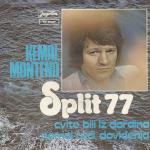
Kemal Monteno Single from Split '77


It's strange to think that because pop festival in Split had such particular image & sound, performers often followed cemented cliché (mediterranean guitars, mandolines, even lyrics had to be about ships,sailing,sea and vine - going so far to adopt local dialect) and very rarely someone would try things little different.


Sarajevo born Kemal Monteno performs summer hit of '77 but although he does things nicely as they were supposed to be done - he could probably sing in Korean pop festival and still sounds recognizable - this time he follows mentioned cliché so close that its literally undistinguishable from any other singer arriving in Split. First, song is not his own but written by old pro Stipica Kalogjera which means music (pretty and mellow as it is) has a certain uniformed Split clothes and honestly absolutely anybody could sing this. Second, the arrangements are tailored to appeal to Split audience so again we are talking about cliché - anonymous studio musicians and cooing backing vocals. Put anybody here and it would still sound the same, so why wasting such a fabulous voice on something so ordinary?


Perhaps this single should be taken only as a experiment in genre. Monteno was already famous not only as a first rate singer but also as a composer and on B side he has his own "Split ballad" that follows everything mentioned to a T. It's another melodic relative of A side with almost identical sound & lyrics, as to show "look,I can do this as well myself". The voice is excellent as usual but material is corny, no matter how you look at it.

Kemal Monteno Single (1974)


Not one, but two pop festival entries (Opatija and Vaš šlager sezone) which points that at this time Monteno was already a big deal because he was invited to perform shoulder to shoulder with his idols. Both songs are typical big orchestrations of the time, sung with his usual mellow croon that I find impossible to resist - although everything here points at early 1970s "schlager" music I could listen Monteno forever.


B side is actually better song but I noticed this already with many singles.

Kemal Monteno Single (1974)


Even so early in his career, Kemal Monteno must have been aware that main hard core of his audience were lovelorn ladies so no wonder he would record a single tailored for them - writing a love ballad with a girl's name sound like sure bet and Monteno would play this trick occasionally. Actually title song is not so special - Monteno sounds like a dream but song is very ordinary and it might as well been called anything, sounds to me like he needed Adrijana simply because of the rhyme. You know, Adrijana na na.


On the other hand, B side brings nice surprise, song "Novembar" that is actually much stronger in both music and lyrics.Its surely upbeat, have some rhythm and melodic hook that flies to the sky. If you ask me, "Novembar" should have been A side - its really a pleasure to hear Monteno in a good upbeat song for a change.