
Showing posts with label Photo. Show all posts
Showing posts with label Photo. Show all posts

28.2.26
15.2.26

31.12.25

5.12.24

10.11.24
The Redgrave Women

Natasha Richardson (left) with her grandmother, Rachel Kempson; niece, Daisy Bevan; mother, Vanessa Redgrave; and sister, Joely Richardson, photographed by Annie Leibovitz at Natasha Richardson and Liam Neeson's home in New York, April 1998 for Vanity Fair.
9.11.24

29.4.24

22.1.24
Photo of the day

Children listening radio programme "Toddlers listen" (1946-1975)
In the broadcast, which lasted 10 minutes, stories were told and songs were sung with children.
Lily Petersen's famous opening line was: "Hello children from all over the country".
17.12.23
Josipa in the Museum
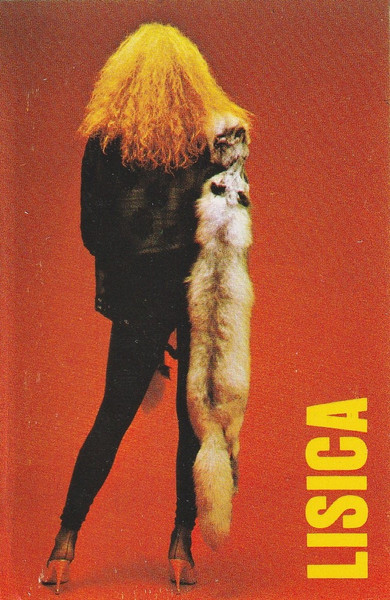
I was familiar with photography by Željko Koprolčec because he was behind some of the most interesting LP covers of pop albums when I was growing up in the 1980s. Namely, he was the photographer who created covers for Aska, Zrinko Tutić, Adi Karaselimović, Dalibor Brun, Novi Fosili, Đurđica Barlović, Ivo Pattiera and Arsen Dedić. Clearly, he was a successful and busy man. But I know him chiefly as a man behind the fabulous cover of 1982 album by my favourite Josipa Lisac - it was designed as an eye-catching, stunning cover and it presented Josipa as a fully fledged rock star. I was impressionable teenager and for me this was the best thing ever. To this day I envy people who got this as a concert poster. They continued collaboration and it seems like it brought up the best in both of them, he was clearly inspired by her confidence and she was in her element.


I have just found several more of this photographs, some of them outtakes from sessions for 1982 album cover, others created later, most of them I have never seen before. There are still more of these pics that I have to discover and it makes me happy to see them, since its all new and fresh to me.


Around 1998 Koprolčec actually presented a photo exhibition in Zagreb's Museum of Arts and Crafts focused exclusively on Lisac - it was not unusual for the pop singers to be subject of a photo exhibitions, but to my knowledge this was the first exhibition focused exclusively on one person and it validated Lisac's position as more than just a pop singer - at this point, she was a cultural icon. If I remember correctly, the exhibition itself was celebrated by two concerts by Lisac - one for the press and one for the audience. I was there and I recall Lisac being backed by late jazz maestro Boško Petrović in Duke Ellington's "Do Nothing Till You Hear From Me". It was a very interesting, unusual musical evening because Lisac selected songs from left and right - not only her pop repertoire but also for example church song "Panis Angelicus" that I particularly remember because it was the first time I ever heard that song and had to look it up afterwards. To this day, I also remember thinking that "Janino ludilo" from "Gubec beg" (a famous mad scene from our first, 1975. rock opera) was perhaps too sombre for a pop concert because it killed the mood instantly. I do remember the exhibition and the concert very well - press reported about some disagreement between the diva and photographer - she gave concerts but declined to be at the opening. I also bought a beautiful photo album that was on sale and lost it immediately, since I started moving between countries and continents soon afterwards. These photographs remind me on that evening.


31.10.23
Real-life characters from the "Killers of the Flower Moon"

29.9.23
God's children: Margaret Ann Neve

This woman is called Margaret Ann Neve at the age of 110 in 1902.
She was born in 1792 and died in 1903, making her the first proven person in recorded history who lived in 3 different centuries
26.9.23

2.5.23
God's children: Lady Day going home after the concert 1957.

The full title of this photograph is "Billie Holiday on Broad Street leaving after a gig at the Sugar Hill club in Newark 1957" and here we have a completely natural, random and candid moment where living legend and internationally celebrated Jazz royalty is caught in a second just as a natural, breathing and probably slightly tired human.
As much as we love to romanticise and admire celebrities (specially dead ones), its easy to forget they were just humans, like any of us - nobody starts with the idea that one day they will be remembered as giants and cornerstones of anything. Most of us are just living day to day and its the people's perception of us what makes all the difference. Billie Holiday herself was long gone and became a myth, our jazz lady of perpetual sorrow - under the layers of beautiful, melancholic music there is a real person buried deep, the old photos showing her fragile beauty, Gardenias and all. Mostly, we see her in the dressing rooms, alone with her dog, on a stage, her life lived between sharp contrasts of expected 1950s comfortable home life and night clubs. Majority of her pictures were posed so this one comes as a refreshing glimpse into a moment, when Lady Day is deep in her thoughts, walking towards the cab, perhaps to her dealer, the stage glamour just a prop, she needs a drink and her feet hurt her. What an excellent photo.
11.3.23
God's children: Muhammad and Samir

Every now and than a photo found online stop me in the tracks. This was one of them. Surely, we can't always take everything we read online for granted and most of the time its not true anyway - what we know for sure is that this photo was taken by Italian photographer Tancrède Dumas who had worked in the Middle East and had his own photo studio in Beirut, ca 1860. While living and working there, he took some very unusual photo portraits of now completely forgotten and lost world - one of them is this heartbreaking and highly memorable photograph of two unfortunate souls who depended on each other for survival. Various web sites have mentioned their names as Muhammad and Samir - the story goes that one was blind Muslim and another paralyzed Christian and they were beggars who lived as one, sharing whatever lodging and meals they could find, until death eventually separated them and the survivor quickly perished from grief as one could not live without the other. While the story itself is certainly moving and inspirational, we don't need to take it as a literary truth - neither their names or history can not be confirmed but what is certain is that these were two beggars dependant on each other and very probably completely alone in the world.
The writer in me wants to know everything - who were their parents? Were they both rejected after birth? How did they found each other? Were they raised on some kind of orphanage and than kicked out as they grew up? How did they scramble for the food, survive harsh conditions of being homeless on the streets of Damascus, where did they found a place to sleep, did they comfort each other and wipe each other's tears? It is only a photo from a long gone world but my heart aches for them. If only I could go back in time, I would do everything to make sure they have roof over their heads and decent food, I find this so heartbreaking. Somebody should write a whole novel about them.
7.2.23
Inspired by an old photo

Lady came from Baltimore,
All she wore was lace.
She didn't know that I was poor,
She never saw my place.
I was there to steal her money,
Take her rings and run.
Then I fell in love with the lady,
Got away with none.
The lady's name was Susan Moore,
Her daddy read the law.
She didn't know that I was poor,
And lived outside the law.
Her daddy said, I was a thief
And didn't marry her for love.
I was Susan's true belief
Married her for love.
I was there to steal her money,
To take her rings and run.
Then I fell in love with the lady
Got away with none.
The house she lived in had a wall
To keep the robbers out.
She'd never stop to think at all
If that's what I'm about.
I was there to steal her money
Take her rings and run.
Then I fell in love with the lady
Got away with none.
(Tim Hardin)
9.1.23

31.10.22
Exhibition: "All those Amsterdam people ... 1935-1975"


I went to see the oldest document that mentions Amsterdam and found something else, no less interesting: City Archives on Vijzelgracht has long been one of my favourite places in town, because they always have excellent exhibitions, interesting subjects and imagine the entrance is actually free (where for other museums you need to pay ticket) - I have my annual museumkaart anyway, but its just great to know I can bring friends here and introduce them to the place. Currently there is exhibition titled "All those Amsterdam people... Photos 1935-1975" that covers citizens of Amsterdam from 1930s to mid1970s and majority of the photos was carefully selected black & white work from artists like Charles Breijer, Piet Goede, Dolf Kruger, Sem Presser and Maria Austria.


I thought it was excellent, specially the post WW2 period with its little caffees and people smoking everywhere, totally different city than today. Sure, the only constant thing is change and its natural that city eventually completely changed its profile - these pictures bring celebration and melancholy at the same time.


29.10.22
Sun smiling

28.9.22
Angus McBean

Yesterday I have mention Welsh photographer Angus McBean whom I just discovered (or so I thought) on the exhibition about love, artists and muses. But when I decided to find out more about him, it turned out I was very familiar with his work - to a certain point almost everybody is - its just that I did not know his name. You see, when I was much younger and lived in London, there used to be a poster outside of The National Portrait Gallery with a extremely attractive photo of Vivien Leigh and I always wanted that poster - that was Angus McBean, who, now I know, was kind of her official photographer trough several decades.


Not only Leigh but he created beautiful studio portraits of the whole post-WW2 British theatre scene and everybody who was anybody in Covent Garden, the Royal Opera House, the Old Vic or Stratford-upon-Avon was subject of his work - this might explain why he was celebrated but not so known internationally as for example Cecil Beaton who worked for Vanity Fair and Vogue - however, his work had always a dose of very careful theatrically and drama, in addition to touches of occasional endearing surrealism that probably seemed weird back than but to me just signifies great sense of humour.


Researching more about his work, I discovered that I am indeed very familiar with his photo portraits - many of them were actually legendary, thought people might not always recognise his name. By far the most famous picture he ever took might be the one gracing the debut album of four musicians from Liverpool - yes, it was McBean who took the cover photo of "Please Please Me" (and later similar, used for compilation "1967-1970"). He has worked extensively for record companies, so I actually own albums by Shirley Bassey and Cliff Richard with his photo covers. I just love his work.


p.s. this is excellent photo portrait of young Quentin Crisp in 1941.

Subscribe to:
Posts (Atom)