1.9.13

Goodbye Bobby Bland


One of my all-time favorite singers had passed away, Bobby Bland was 83 years old.

Bland was singing and recording from 1950s but I had discovered him much later - I don't think we had any of his recordings around when I was growing up - it was after CD format had replaced vinyl and recording companies eventually started to mine their old catalogues for re-issues of legendary stuff from decades ago that I discovered early r&b that had shaped and influenced rock, for example names like B.B.King, Ike Turner, "Chess" recording company, Etta James and Esther Phillips, people who were corner stones of what would became rock much later. These pioneers were idols of young rock aristocracy who re-shaped it in their own way, everybody from The Beatles, The Rolling Stones and Eric Clapton to Van Morrison and Rod Stewart had idolized these musicians but mainstream audience was unfortunately never aware of them. For example, when Janis Joplin covered 1950s blues singer Big Mama Thornton, the Woodstock audience hardly knew the original and Joplin was hailed as "authentic" when in fact she was simply doing her impression of older singer. Bland belongs to that generation of early r&b pioneers who are mostly forgotten today but who were hugely important and influential once.

Almost alone among all the greatest bluesmen, Bobby Bland actually did not play any instrument - most of blues giants were guitarists - his gift was the voice. To be considered giant in a field that already had B.B.King, Howlin' Wolf, Muddy Waters and Ike Turner, you have to really be special and believe me, the voice of Bobby Bland was pure gold. He didn't even had specially good looks but he was considered ladies favorite because of his uncanny singing, to put it simply, he had a haunting, aching sound that came straight from the heart and he was darn soulful long before the term "soul singer" was even invented. Perhaps he was a early link between blues and "soul" - he certainly belonged to that generation of 1950s musicians who managed to continue working into 1960s, 1970s and beyond, often backed with first rate musicians.

My first introduction to Bobby Bland couldn't have been better - in the first rush of my passion for 1950s r&b I discovered "Chess" company and their wonderful list of artists, than stumbled upon Bland's "Two steps from the Blues" 1960 album. Like many of those early LP albums it was probably compilation of his current singles and very strong collection.
He croons the blues with poignant, yearning voice but give him dancing, ass -shaking r&b and he would certainly hold his ground even there, rasping on the exact spot where rasp should be, just a great singer. It seems he was specially effective whenever he had songs written by composer Deadric Malone and this is the name that pops out very often trough Bland's early discography - later in his career, Bland would find a home in "Malaco records" company that faithfully continued to support the veteran singer and constantly release his current works. "Malaco" albums are fine for Bland fans but naturally its his early music that counts the most and where his legend was cemented. I can't find any faults with "Malaco" albums, its simply that they are well-produced, clean-sounding studio releases of much older man (therefore somewhat routinely done) in comparison with freshness and immediacy of fierce 1950s music. Yeah, he had developed a certain mannerisms later in life (kind of snort) which I don't mind, I simply love Bobby Bland.

Just like Esther Phillips was known as "Little Esther", Bobby Bland was often listed as Bobby "Blue" Bland during first two decades. People often like to point that Bland worked as a chauffeur for B.B.King, but this is not a dream rags-to-riches story about overnight discovery, quite contrary Bland had built his reputation very slowly - lacking strong instrument or good looks he had to work in a field where to afro-americans media visibility was limited and his success never was the same like young rock stars who sold albums by millions. During his life, Bobby Bland was much loved by other musicians, singers and "cognoscenti" like Van Morrison and Mick Hucknall (who had recorded the whole tribute album) but never experienced complete crossover success like some other names in business. I have LOTS of his music and he would surely be missed from me.

25.8.13

"The Mill on The Floss" by George Eliot


With everything I read - and maybe because I read so much - I am aware there is so much literature that somehow escaped my attention, for various reasons. For my own pleasure I often go for history, non-fiction and biographies, but there is always a gnawing feeling I should spend more time with classics we all know about but never willingly visit once the obligatory school reading is done. This obligatory school reading its often a mistake because it forces young brains to wrestle with heavy stuff that produces not love & passion for books but in fact ends with completely opposite results, with kids rejecting reading because it wasn't fun or appealing enough. Truth to be told, my excursions into classics are not always fun - "The Phantom of the Opera" was simply old fashioned, moth-eaten story that only bored me and it took some time before I decided to give classics another chance, this time it was definitely worth an effort.

George Eliot is the name I was familiar - but only in theory. If you pressed me about English female writers of classic era, I would name Jane Austen or Brontë sisters but Eliot somehow escaped my attention so far and it was only a chance encounter with her famous "The Mill on the Floss" neatly printed in almost-pocket size edition (ideal for my journeys) that made me pick it up, almost an impulse purchase. Once I decided to check it out, I fell into her world without any problems, in fact I am still reading it and enjoying it very much almost every night after I finish my work. Yes it was originally published in 1860 (more than century and half from now) and writing is occasionally long-winded with description of trees, lakes, rivers and rooftops but Eliot so lovingly paints the picture of rural life with its charming, eccentric characters that I wonder why did I wait all these years to discover her just now - or perhaps it is a perfect timing.

Eliot is not just creating her characters - she is affectionate towards them, explaining their follies, fears and oddities. In her world nobody is black-and-white; everybody has his own reasons why they behave the way they do so in her gentle way, author points how everybody has different perspective - in this she shows amazing compassion for people and naturally has a great gift for story telling. It is not just two main protagonists (brother and sister) but also the whole supporting cast that gets our attention - it would have been easy to simply follow brother and sister, but Eliot is determined to show everybody else and often she shows sparkling sense of humour and how much she loves her characters. Right now I am still not half-way trough the novel but liking it immensely and enjoying every page that I steal from deserved night's sleep. This time, my excursion to classics was a very pleasant surprise.

17.8.13

Sevdah


Talking about "Sevdah" here are two legends of this kind of music. Both singers made their names during 1960s and 1970s so today they are considered hard core traditional national legends and just like in american country music (similarity is not accidental) what was popular once has completely changed in the meantime, I guess today they listen completely different kind of "Folk" in Bosnia.

Since I grew up relatively far from "Sevdah" music and there was clear cultural division between urban and ex-village population in big cities, this was kind of unwritten sign-post about someone's background. Because I was just a child and latter fashion-wise teenager, it took me forever to actually look out into "Sevdah" (and into traditional folk music in general) and to start appreciate its beauty. With maturity came respect and understanding what actually this is. I still cannot claim that I will ever completely 100%  "get Sevdah" like someone who was born in Sarajevo, for example, but I do occasionally enjoy and appreciate what I hear.

Beba Selimović is a well known name in "Sevdah" and probably legend in her own right. However this 2 CD compilation was the first time I listened her music with attention and tried to understand what exactly was that she was doing and why she came to be so successful. At 32 songs it sounds a bit too much of the same to be honest (rhythms are very much plodding and she is backed by accordion almost exclusively) though her voice is very clear and pretty in somber, lady-like way. Selimović projects honesty and purity that obviously appealed to traditional society that appreciated these qualities in a woman. There is absolutely no trace of such thing as sex appeal or wink in her posture, Selimović is all about serious business, class and in her way she is regal. Bosnians adore her so who am I to say, however I prefer voices with more personality, this is somewhat too pretty-pretty for me. It reminds me on laced covers that mothers used to place on top of TV.

Safet Isović is completely different story - I usually prefer women's voices but this time I take Safet Isović any time, he was a genius in this genre. He has passed away long time ago but listening to his music, it is clear that he would never completely go away. (I distinctly remember my parents talking about him with admiration like he is Caruso) So today, in my 40s I am checking out compilation by Safet Isović and yeah, its actually VERY good. This compilation starts with interesting duet between two singers - the very first voice we hear is Zaim Imamović than young and glowing Safet joins in and harmonizes like a dream. All trough the CD his voice is a thing of marvel, this truly was a golden voice capable of belting or crooning gently, not to mention long phrasing and seemingly no breathing at all. The lyrics of these centuries old songs might be occasionally depressing or sad but there is nothing depressing about  Isović's singing - he projects such healthy, robust joy in singing that listeners heart leaps together with him. Specially is great to hear some old material freshly re-mastered after so many decades ("Sjetuje me majka" was ancient 4-song EP recording, for example) and he also sings much older variation on famous song "Kad ja pođoh na Bembašu" with different lyrics. As opposite to Beba Selimović whom I find pretty but one dimensional and unconvincing, Safet Isović is pure joy of singing and music - I know it is not fair to compare two completely different artists (and he could naturally exhibit far more extroverted performance than ladylike Selimović) however I could listen this guy for hours. And at the very end of CD there is a wonderful duet with Nada Mamula that was a huge hit in its day and even I remember that one. Just a wonderful singer and wonderful CD.

Josipa Lisac rarities


While I'm writing about Josipa Lisac, it occurred to me to look back at two of rarities in her back catalogue - she is known as eccentric and eclectic rock singer capable of turning unexpected directions and still sounding recognizable.

In 1975. Josipa Lisac was playing main female role in hugely successful "Gubec beg" rock opera (clearly modeled on "Jesus Christ Superstar" as way to bring rock music on theatre stage) where female folk choir "Ladarice" were invited as special attraction. "Ladarice" had a particular, throaty sound of village girls singing on top of their lungs and they usually sang traditional folk songs, but in "Gubec beg" they were functioning like a greek chorus echoing the story.  Almost like outtake from "Gubec beg" comes song "Dvanaesta je majka Slavonije" written for festival of patriotic songs that year, where famous Rock Lady sings backed by "Ladarice" - it is true rarity, not only because of lyrics (celebrating famous Partizans of Slavonija) but also because music sounds like genuine traditional folk song.

"Dvanaesta je majka Slavonije" starts with Josipa Lisac solo - she uses her voice just like "Ladarice" usually do, full throated, echoing from one village to another, than "Ladarice" join in with their heavenly harmonies. Its such a shock that it takes a moment or two before surprised listener realize this is actually Josipa Lisac who camouflaged her voice to sound like "Ladarice" and is singing hymn to WW2 partizans. The song is hard core traditional folk and beautiful in its own way - even if lyrics sound strange today, its only because we are distanced from WW2 and its following decades, in 1975 it was completely common to sing revolutionary songs and this is what we learned and sang in schools. Songs about war, partizans and Tito. Today its very fashionable to question and criticize it all but not so long ago it was our reality.

"Omer beže" and "Niz polje idu babo sejmeni" was a brave and completely unexpected experiment - our Rock Lady sining "sevdah" (Bosnian variation on Otoman folk music) backed by authentic Bosnian folk musicians. According to interviews, her lover/composer Karlo Metikoš listened when Lisac hummed around the house and convinced her to record a single just for a sake to show that she is capable to expand in different directions. Known as a young and angry rock singer ("screamer") Lisac already had a reputation trough her various festival performances and stunning rock album debut, but nobody knew or expected she was capable of this kind of singing - she completely follows rules how "Sevdah" is supposed to be sung (with long phrasing, feeling and respect) but adds her own twist to it, so its immediately recognizable that is Josipa Lisac who sings this. Songs were ancient stories from centuries-old days so nobody could accuse of of selling out (however, it did sold very well). Highly praised for this experiment (even by true "sevdah" singers like Beba Selimović) Lisac refused to follow obvious commercial success and hardly ever sang this again, it was never compiled on her official compilations and today only music connoisseurs know about this.

"Dnevnik jedne ljubavi" - celebration of 40th birthday, live in Arena


After 45 years of dignified career, my all-time favorite singer got herself a concert in ancient roman amphitheater - performing in Arena cements the legendary status of any artist and this time Josipa Lisac celebrates 40 years of her debut album, rock masterpiece "Dnevnik jedne ljubavi" ("The Diary of One Love")  originally released in 1973. with help of Ex-Yu Rock All-Stars Band. It was composed by late Karlo Metikoš and built as showcase for a young singer who from that moment on was recognized as our first and only female rock singer. Because "Dnevnik" was such a strong album, Lisac enjoyed very long success for decades and the respect for her was such that she was voted female singer of the year even when she was not even living here (from 1977-80 she lived in USA). The album was released in many various formats (I used to own it on vinyl, tape and CD) and has never been out of print ever since its original release.

Listening from today's perspective, "Dnevnik" still sounds shockingly good - enthusiasm of everybody involved (from backing vocals to musicians, composer and lyrics writer) is clearly audible and even though album can firmly be placed in early 1970s, the beauty of the music, its poetry and message are timeless. Than 23 years old Lisac forever distanced herself from easy-listening company of colleagues who performed on MOR festivals and if on her debut album she leaned on certain mannerisms (her recognizable nasal sound) she has built a nice career out of it. Generations of listeners have grown up adoring this album and even though Lisac bravely continued on trough 1980s, 1990s and beyond, with lots of hits along the way, people still demand these old songs, now "Dnevnik" celebrates 40 years and its just right that this occasion should be celebrated in a place so regal as Arena.

When I was a child growing up, I remember being completely besotted with Josipa Lisac who was above competition in any way - she was constant, huge star where others were just passing by.
She was also a cult singer with urban audience who followed and supported her even though she never was a commercial like big sellers - if anything, connection with rock music got her bad reputation expected from rock stars. Strangely enough, as a child I thought I must have been the only one who loved her because all of my friends were into other commercial pop singers, it came as a surprise to find out Lisac is in fact highly respected not only between colleagues but also with music connoisseurs who keep her going with concerts, albums and new projects, when her contemporaries are long retired (just check the list of All-Stars musicians involved in "Dnevnik" - they were all important back than but only Lisac still is today). Trough the decades she kept going on strong, adding new mannerisms to her voice (to me she sounds even better today), experimenting with hair, clothes and image but always being her recognizable self. Even though part of mainstream audience would never completely accept her, Josipa Lisac will forever be remembered as Croatian Rock Queen who cleverly cultivated her repertoire and audience, enjoying the fruits of her work even decades after other artist's music had passed its expiration date. Lisac always stated that she made her choice between "to have and to be" - she is an artist who stands behind her music and it shows - nobody else from her generation still works and is capable of having a concert in Arena. She recorded "Dnevnik" long before male stars Oliver Dragojević and Zdravko Čolić had their debuts and trough the decades had amassed huge reservoir of respect. As for the concert itself, I don't think she sang "Dnevnik" completely - her repertoire is far too rich to focus exclusively on 1973 songs - probably she peppered the concert list with hits from various decades and got her excellent backing musicians to show off in instrumental passages, dressing up old favorites in new clothes. Naturally, because of my work I was not able to enjoy her concert in Arena but I was there between the audience in my thoughts that evening.

The Suspicion of Mr.Whicher by Kate Summerscale


Initially intriguing real-life story about murder in Victorian England, that turned out somehow less interesting that expected - contrary to all the compliments on the book's cover ("gripping", "unputdownable")  I have found this book long-winded, rambling and unnecessarily expanded. The crime story itself is fascinating and it caught the attention of the whole country in 1860 (even Charles Dickens had his opinion of what actually happened) but to be honest, if Kate Summerscale simply stuck to the story, she would have one nice, long newspaper article - in order to actually built book around this, she used pages and pages of backtracking explanations about geography, characters, social classes, education of the time and Victorians in general. Her favorite device is almost predictable sidetracking: if someone enters the train at Paddington train station, there goes a chapter about Paddington train station at that time. There is a ton of not really interesting information unrelated to crime itself (backgrounds of this and that character) that eventually somehow drains the energy and interest from a reader. I almost feared any more information about the weather, buildings, architecture or facts because it over-balanced and over-shadowed story that was gripping and interesting itself.

This is what happened: during a quiet, sleepy night in a locked, secured and respected family house, there was a murder discovered some time in a morning. A little child had disappeared from his bed and after a frantic search found killed and thrown in a "privy" (outhouse toilet). Since all the windows and doors were locked from inside, suspected was absolutely everybody who was inside - including father, his second wife (ex-governess), children, nursemaid, cook, servants, gardener and even outside help (washerwoman, shoemaker, butcher, neighbours). Since local police was unused to crime of this calibre and curiosity of the whole nation turned into maniacal frenzy (it was a favourite table conversation and thousands of people had their own theories about it) a serious and successful detective was sent to investigate the case - Mr.Whicher does his job as detectives should, uncovering every corner of a family house, however he is soon heavily criticised in media about being "ruthless" and not having "respect" for family privacy. It sounds strange today - specially because we are talking about crime investigation here - but at this time in history apparently Victorians were very sensitive about their privacy, intrusion and class distinctions - somehow the focus of the attention moved from a murder and crime itself to Mr.Whicher who (in newspaper's opinion) was low-class, greedy and immoral person because he dared to search and expose blood-stained nightgown (for example) where respected people would not even talk about such private subject.

The crime itself was eventually solved - for all his accomplishments, Mr.Whicher was finished and retired soon. Talented, capable and clear-headed detective had a bad luck to work in time when class distinction was still very important and suspected killers were expected to have been treated with dignity because of their social status. Even though he was proven to have been correct in his suspicion, Whicher was never recognised for this. Summerscale uses her book to explain way too many things at once - crime story, status of early detective policemen, background of all the characters and even chapter or two of what happened afterwards. There is even a tantalising suggestion that murderer is not the one who got locked up. Myself I found a book little bit too meandering but must admit that Summerscale did excellent research of the era and she cleverly connected this real life story with its later literary echoes (Wilkie Collin's "Moonstone" for example). Very interesting story but not exactly "gripping".

10.8.13

"Queen Of The Wits" by Norma Clarke


Neatly connecting with recently read "Not in God's Image" (about treatment of women trough centuries) here is a biography of obscure Irish poetess who intellectually was far above majority but suffered humiliation, poverty and hardship on account of her fate to have been born as woman.

"Queen of the Wits" could as well have been subtitled "At the end of her Wits" - for all her wit, humor and bravado, for all the spark Laetitia Pinklington used to embellish the stories and poetry she wrote, the reality was harsh and often depressing. The little Irish poetess was often hungry, constantly in debt, occasionally imprisoned, thrown out of her lodgings because she had no money to pay the rent, humiliated by landlords and landladies, always on a lookout for the next wealthy benefactor who might provide her with support on account of her poetry. Like a heroine from some 18th century picaresque novel, Pinklington life reflects "wheel of fortune" that has her living relatively protected family life in Dublin one moment, just to have been forcefully divorced, thrown out of the house and left on her own the next - the husband being master of her fate, material possessions and even children. Once she was ostracized and society doors closed in her face, Pinklington moved to London where she lived the "scandalous" life of single woman who was writing poetry, pamphlets and letters on order. It is interesting that because of her social status (single, divorced woman with no money, protection and property) Pinklington often encountered compassion and help in "lower classes" and was rebuffed, abused and mistreated in wealthy palaces.

Pinklington had a wit - there was a literate spark in her that would not stay silent and her talent was recognized early, even in her Dublin days when celebrated Jonathan Swift enjoyed her company. This wit, spark and clever way with words kept the little Irish lady going on even trough the hungriest London days, when she found audience liking her writings - often she would sell her poems to a wealthy patrons who would present them as their own, or write something flattering to aristocrats who would answer with grateful donation. Again and again we encounter lonely, depressed and frustrated Pinklington trying to keep her chin above the water, pleading here, begging there - had she really pursued "whoredom" (as her husband claimed) she would had far easier life and would probably amassed wealth instead living off the crumbs occasional aristocrat gave in charity. Like a real-life "Fanny Hill", Laetita Pinklington became notorious because of her best-selling "Memoirs" (published in three volumes) where she dished out stories about celebrities of her day, simultaneously describing her own life in a clever, self-mocking way that had certain charm and brought her national fame. As her son Jack later found out, she was so unique that she was tolerated - when he tried to write his own "scandalous memoirs" about celebrities of next generation, he was firmly and clearly told not to dare.

It is questionable would Laetitia Pinklington ever wrote anything at all, had the fate kept her safely protected under glass bell of respected society - her husband, after all, was her main competitor and already published some work when she was still drinking tea with Jonathan Swift. Once the fate threw her completely in the air, little Pinklington got back on her feet trough literary work that provided her with rent, food and life necessities - for the 18th century world this was disgraceful, but she managed. At certain point she even had her own printing shop, though these quiet chapters of comfort were often just a prelude to something like arrest, sickness or other calamities. Norma Clarke's biography of this little "Foot-ball of Fortune" is excellent read, though there is a lot of tears mixed with laughter and harsh reality of her survival can be exhausting - just like aristocrats who loved Pinklington's funny writings but would not care for her   serious, suffering letters, some readers might be put off with constant hardship Pinklington had to endure. She might have been "Queen of the Wit" but not of her own choice. As her last poem "Call me not to a world I hate" suggest, Pinklington might had dreams about sheltered existence where she would not depend on charity and fickle aristocrats.

7.8.13

Tina Turner's Wedding Picture


Georgia Holt: Cher's mother singing


The History of popular music is full with forgotten siblings, often no less talented but overshadowed with more prominent cousins. In most of the cases the simple fact is that path has already been blazed by original artists who made their mark and everybody else was just a sound-alike. It is a profession where being good is not good enough - only true originals have staying power, so naturally sound-alike rarely stand a chance. And there is also a matter of sibling rivalry - Aretha Franklin never even gave a chance to her sisters, but "graciously" used them as backing vocals and songwriters. And what about good intentioned family connections that never led anywhere - Frank Sinatra son, Nat King Cole's brother, John Lennon's son, Barbra Streisand's sister  ... all those people sounded too close to their famous relatives to survive more than passing curiosity.

Georgia Holt was apparently wannabe actress whose main claim to fame was giving birth to Cher - she has recorded this country album in 1980. with Elvis Presley's backing musicians (James Burton, Glen Hardin, Larry Muhoberac, Jerry Scheff, Ronnie Tutt) that promptly forgot about it and left the tapes in her garage. It was Cher who pulled the connections to have it re-produced, re-mastered and finally self-released.

The album is actually surprisingly enjoyable in its right - Holt sounds just like her famous daughter (somewhat mellower) and it was a good idea to have album starting with their duet on a song "I'm Just Your Yesterday" - the first voice we hear is familiar sound of Cher, than her mother comes in and the blend of their voices is effective, emotional and touching (almost hard to say who is who). The rest of the album is actually fine  - it is a collection of traditional country ballads and classic covers ("Crying Time", "Love Me Tender", "I Wonder Where You Are Tonight") played well, produced well and sung by the voice we all know, but with a twist - basically it could pass as a Cher's country album. Naturally it is a one-off and curios gimmick but gives Holt long-wished for celebrity and success (it is on US Top Country Charts right now) and not only is a pretty novelty album but nice, loving gesture from her daughter to have it finally released (Cher had also arranged for some highly visible TV duet performances).
In all honesty, she does sound a little too much like Cher and would probably not have a chance as competition in a business that already has one, however as a loving gesture and nice curiosity, it works surprisingly well.
Highlights: "Love Me Tender", "Crying Time".

28.7.13

A Short History Of Nearly Everything by Bill Bryson


My first encounter with Bill Bryson - who sounds like a friendly, chatty neighbor pouring gossipy informations out of his sleeve and chuckling to himself along the way. He is maddeningly short in his little biographical portraits of scientists, researches and people who basically shaped our understanding of science, however along the way it becomes clear that this is a conscious style decision - how to squeeze centuries into a relatively short and easily digestive volume.

Bryson writes about science in a charming way - without ever being patronizing, he laughs, wonders and enjoys the subject - basically he does cover everything, from astrology, planets and asteroids (did you know that asteroids are passing by our planet twice a week?) to a life on earth, from micro- cosmos to a bigger picture. He also have a wonderful sense of humor - our head is nothing but a "big, oily bon-bon" for microbes living in our pillows - which is very welcome when dealing with potentially dry subject. Bryson tries to simplify things but he still got me lost on a several occasions (atoms, molecules and such) however he has to be complimented for making a best seller out of something like this.As he had already noticed himself, scientists often came to great ideas but were not able to communicate them well - we need people like Bryson to clear up the picture, make it more presentable and easier to understand.

Not in God's Image by Julia O'Faolain and Lauro Martines


A collection of essays, documents, letters and first-hand accounts of women's treatment trough history, from antiquity (Greece,Rome,Byzantium) trough Hebrew and Muslim world to European Middle Ages, Renaissance and late 19th century. The editors - Julia O'Faolain and Lauro Martines have succeeded in making a interesting (although naturally somewhat sad, angry and depressing) story with a point - no matter what society, it wasn't until recently that women were finally recognized as right partners to men, trough thousands of years they were treated as feeble minded cattle who depends on husband/father/brother and suffered without any possibility of lifting their voices.

O'Faolain and Martinez have skipped famous women in history because all those warrior queens and aristocrats are not really representatives of society - they are focused on anonymous women who have lived, worked and shared their destiny with others in sisterhood. Again and again we encounter depressing stories about women who brought their wealth to a marriage, just to have it completely taken by "master" (husband) who had all the rights to enjoy it, spend it, beat her and command her, without any possibility that she actually might have right to say something about the matter. It is not said so openly but obviously religion, church and tradition has a lot to do with it - time and time again women were reminded of Eve's sin and countless Biblical characters whenever situation called for it. Even simple thing as education and literacy took forever to actually be recognized as something positive - for centuries women were kept in the dark and assumed they are better off without any education (since they will spend their lives in the kitchen anyway) - with exception of occasional monastery Abbess who could read and write, thousands of women were living incredibly drab, dull lives, constantly in fear of being beaten up, hungry and left starving by husbands who have right over them. (Either father or husband.) Than the witch hunts and such - not very happy story but somewhere along the way renaissance got things little brightened up and by the time of reformation women's voices were finally heard in public. Unfortunately there was still a long way to go - the last few chapters deal with 18th and 19th century where wealthy women enjoyed nice treatments but working women suffered as much as before - if one was born poor and without a influential friends/family, there was a very thin line between legal and illegal options. Interestingly enough, as the collection deals with legal rights of women as well, here is that I read for the first time that women got right to vote (and therefore have been recognized as equal citizens) only in 1944 - imagine that! - what the book somehow side-steps is the big question of mental conditioning that produced generations and generations of women who actually accepted this treatment and expected everybody else to suffer their position in silence. That should be another book. 

21.7.13

The Gospel According To The Son by Norman Mailer


Just finished "The Gospel According To the Son" by Norman Mailer - it fits perfectly with my curiosity about the man behind the myth and I have already stumbled upon several interesting interpretations - however, this is by far the most original point of view, because Mailer actually talks trough Jesus as main protagonist. The writing style is excellent - very, very slim, basic and occasionally close to Haiku poetry. Almost anybody can write long-winded and elaborated, Mailer went to completely different direction and cleaned up his writing style until we are left with only very basic, Bible-like sentences that actually sound rich, true and believable. Well informed about the times of his story, Mailer occasionally drops fascinating info here and there, making the whole novel even more brilliant. It is a short book but very very powerful and the writing style is breath taking. Amazing how true artist can breath life into something so well known as New Testament. (Mailer is also surprisingly respectful towards ancient tradition and does not stray too far from originals, only giving them his own spin and point of view.) It is one of those short books that I enjoyed very slowly.

23.6.13

The Return to the ships


It happened fast and caught me by surprise - basically I got an offer on Thursday to join the ship on Saturday. The carrot that dangled in front of my nose was the possibility to work with a friendly manager and already familiar team/environment. Even the ship is identical to the ones I worked on before. My plans were different - some more vacation, perhaps a trip to London and return to Croatia - but after I had shower & shave & coffee I realised this is indeed a very good offer. To miss this one would mean I might fall into some sadistic hands instead later. And in all honesty, why not taking this offer now, since I already had a nice, long vacation + EU blocks me from re-locating in Amsterdam so return to the ships is inevitable. It casted dark clouds above my whole vacation so let's better face the reality. And I accepted.

It took me only one day to buy suit/ ties/ shirts/ shoes and to pack my luggage for the night train to Copenhagen. Of course I went to my favourite bookshop and bought enough books to keep me busy for a while - I bought books before I got anything else. Since I had to lave so quickly & unexpectedly, I did not had time to actually meet almost half of my friends in Amsterdam. People are very relaxed there and don't understand that I have limited time on dry land - "sure, we'll meet next week" they all said nonchalantly while in the meantime I would already have to go. The presents I collected for them are still unpacked in my suitcase.

I am on a new ship now. Old friends, familiar faces, same rules, working hours, same food, same windowless tiny cabin. Another eternity of drills, standing, packing and unpacking the boxes, inventories, very late nights and early mornings, swollen feet. This is my joyless life now until end of the year.

Amsterdam


I brought the sun with me in Amsterdam and the old city suddenly came to life in all it's glowing glory, with thousands of tourists roaming around and enjoying coffee on sunny terraces . The atmosphere here is so powerful, so special, that Berlin and Budapest seem simply gray in comparison. Music, laughter, crowd, a streetcars rushing by , the little bistro on canal, the quaint dutch architecture - it all makes my heart leaps with joy as I walk trough my favorite corners and soak in the lively charm everywhere around me.

Of course, locals are spoiled and not even aware how lucky they are. They constantly complain about one thing or the other, the tourists, noise, politics, prices, weather and what not - not one of my acquaintances is satisfied and they all tend to moan while I listen in disbelief. I would gladly peel potatoes just to live here, however politics don't allow it so for now I simply have to accept this bitter truth that as Croatian I am kindly welcomed to visit and spend my money here, but absolutely not permitted to live & work in Netherlands. Not even as a garbage collector. The cruelty of being legally branded as outsider from the world I don't belong makes me question the whole point of my Don Quixote fight with the windmills - my friends in Amsterdam live their comfortable lives without ever having to work 16 hours daily, the way I do on cruise ships week after week, months and years away. Perhaps I simply need to close the wrong door and dreams that had me bedazzled too long - if I'm not wanted here, maybe I should look elsewhere.

1.6.13

Impressions of Berlin

I liked Berlin far more than Budapest.

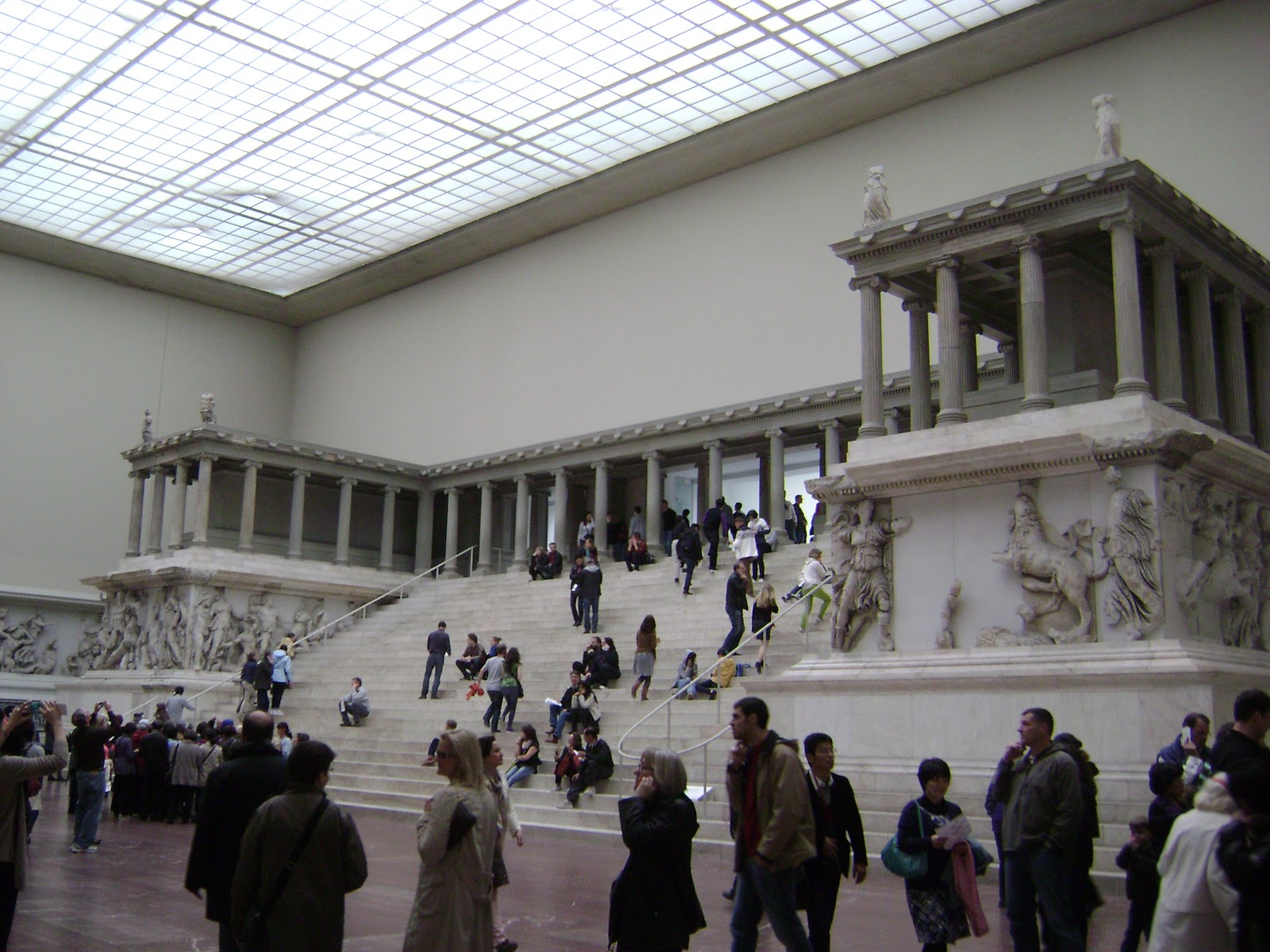
It was rainy when I arrived but I was still excited to be here - somehow even without map I found my way to Museum Island (the main reason why I came) and checked out magnificent Pergamon Museum with re-constructed greek temple, doors of ancient Roman city market and (the best of all) Ishtar Gate of Babylon - that was truly spectacular.


 Since weather was rainy, I made up my mind to visit a museum per day - it worked quite nice, I got myself a 3-days ticket for Museum Island and saw a lot of beautiful art - Nefertiti, ancient Egyptian, Greek and Roman sculptures, lots of beautiful paintings and later I have visited Berlin's Film Museum where they have lovely exhibition about 1920s and 1930s german movies (that I always loved) + Marlene Dietrich collection from her private archives - her costumes, clothes, make up box, letters, telegrams... fascinating. I was very happy to be there.

 Jewish Museum was in my neighborhood so I checked it out yesterday - it was a very strange experience. Besides being very depressing and emotional story (basically there is almost nothing happy or uplifting here, its a long saga of prosecution, humiliation and survival trough centuries) and I cried quite often while walking trough - but I was prepared for this - the surprise was in architectural design of the building's basement, where architects purposely wanted visitors to feel strange, off-balance and displaced - they accomplished this by building walls and floor just a little leaning in wrong direction (in a very clever, discreet way) so as visitors walks in (unprepared) he start to lose the ballance very soon and feels sick, scared and threatened - which is how most of the jews felt. There are also doors leading to "Holocaust tower" and inside are just empty, gloomy walls, the whole space is one huge feeling of fear and death, strange how they managed to do this.


 Berlin is mostly completely rebuilt after WW2 and I actually like it because of that - you still sense this is old town with tradition, history and story behind it, but streets are built nicely, buildings are impressive and even huge amount of tourists can't camouflage the fact that locals are basically nice people. They wait politely on the street lights, greet warmly on the stairs and I have impression they are polite. The weather has been mostly always cloudy and rainy so I didn't look out for night life or anything else besides my cultural interests - I usually walked 7-8 hours daily and was tired in the evenings, when I would simply relax with my music, computer and museum book guides. Can't believe that I travelled trough Budapest and Berlin without actually experiencing night life, but it simply didn't interest me. I am officially getting old.