26.4.19

"Game of Thrones : A Knight of the Seven Kingdoms"


After watching it like a maniac trough the years of swapping the whole seasons with friends and co-workers, sleepless nights where seeing just one episode was impossible, now we arrived to a very last season and are actually forced to watch one by one episode as it originally shows on TV. Initially, the very first episode was frustrating because it felt like nothing is actually happening and I was genuinely criticising the whole show, saying why is there so much talks and nothing when danger is lurking around the corner. However, the second episode was just fantastic - either it was really great or I was simply in the right mood, I found myself rewinding scenes and watching them again and again, enjoying every second. Strange enough, nothing really major happened yet - the big battle is expected soon, so what we got - and very cleverly done - was to see all the important characters finally arriving in the same place (Winterfell) and mingling along each other, fully knowing and understanding this might be their last night alive. But the dialogues and connections between them were just awesome and I loved every second of it.

Because now everybody finally realises that Cersei Lannister lied and had no intentions to send army to help in the North, it comes as a big surprise that her brother Jaime Lannister arrives alone, by himself to join the Northerners. Initially he is doubted, despised and faces potential execution but somehow we understand he is actually not a bad guy - he really changed trough the TV show and we got to really like his character - when Brienne of Tarth stands up in front of everybody and vouches for him (saving his life, basically), saying to Sansa that he swore to her mother that he will protect her, things drastically change for him and furious Daenerys Targaryen has nothing more to say. Daenerys has a really bad time now since here in the North nobody likes her, nobody really listens to her anymore and even Jon Snow is kind of distant now (either busy with upcoming battle or feeling bad about their relationship). Both sisters - Sansa and Arya - have their big moments, but personally I still feel bad for character of dwarf Tyrion Lannister who once used to be the highlight of the show and now is just reduced to occasional quip in the background, he got lost in a shuffle somehow and although its nice that he survived so long amongst all the killings and madness, I expected him to be more prominent and important. Brandon Stark on the other hand, really surprised me because he turned into such a fascinating creature - he is obviously not human anymore and knows all the future and the past, so everybody hushes when he speaks. I just love how all these characters finally got to interact together for the first time and there was a scene where several of them meet for the last drink before the fire - one of the best scenes ever - they just talk and reminisce but what happens was one of the most beautiful and affectionate scenes in the whole history of the show. What it means to Brienne, who truly was always the only good-hearted, sincere person in the show, was just phenomenal and I cried my heart out for the joy of seeing her smile. I have been watching "Game of Thrones" for so long now, that I can't even imagine that the show will eventually end, will probably watch it all over again at some point. 

23.4.19

"The White Crow" by Ralph Fiennes (2018)

Thanks God I have nice friends who appreciate my movie choices, so there was never a doubt about checking this one out - a little escape out of mainstream cash box mega hits and predictable car crashing explosions - we were actually both excited and curious about seeing biopic of Rudolf Nureyev although our ignorance about his life was both touching and plus, as we enjoyed the movie without knowing much about his background. For some reason I just assumed the movie will be in English (because of its director) so it came as shock to find out I had to deal with Russian with Dutch subtitles (after all, we were watching this in Amsterdam) but as usual, it was not a problem for me, I have already watched French, Spanish and even Japanese movies with Dutch subtitles and found out that when I'm really into a movie, language is not a barrier at all.

Ralph Fiennes directed this one and its very clear that someone with artistic sensibility holds the reigns - in my mind he is forever associated with role of SS officer in "Schindler's List" but there is of course much more to him, here he carefully avoids anything bombastic and in fact creates very evocative atmosphere of cold war, where politics control the fate of individuals. He also gives wonderfully restrained performance as ballet master who nurtures young, wild and immensely talented dancer who will eventually became world famous Nureyev. The role of Nureyev is played by charismatic real-life Russian dancer Oleg Ivenko who is actually genuinely magnetic, although physically there is only a slight resemblance between them, but that was not the point - what Ivenko brings to the movie is impression of a untamed, young country bumpkin who has neither patience or social skills to ease his way into higher spheres of heavily organised Soviet system where art is financed and therefore controlled by government.

Even at home amongst his own colleagues, he is outsider who does not search for company and prefers reading books - once he finds himself on European tour, he is thrilled with sense of freedom and all the art he encounters - I was personally very moved with the way he actively searches famous museums and galleries of Paris, to soak in all the beauty he knew only from books, something I often did myself once I found myself around the world. Strange how we crave beauty above all the other things, when my work colleagues would all go to McDonalds, I was the one who went exploring museums and loved every moment of it.


Towards the end of the movie, the big finale eventually arrives - and I must admit that Fiennes does wonderful job of building the climax, where we suddenly realise that government officials won't allow Nureyev to travel further with the rest of Mariinsky Ballet troupe but they are sending him back to Soviet Union with some false explanation. Being who he was, Nureyev won't mildly comply but creates scandal on the Paris airport, where eventually he asked for asylum and escapes the clutches of Soviet officials for good. From now he is not able to travel back home anymore, but the international career is open to him and he will become world famous. I must admit that I enjoyed the movie very much and was actively pouring over Nureyev video clips afterwards, its really a gripping story. Ah yes, Nureyev's homosexuality is treated very matter of factly and it was never the main issue, it was kind of obvious and not a big deal, in fact movie strongly suggest that he was perfectly fine with both genders if occasion came his way. 


19.4.19

"Through The Storm" by Aretha Franklin (1989)


As a young man, fresh from high school, full of youthful confidence (and ignorance) I took my best pal along and bursted in the office of celebrated newspaper offering our services as music critics. They must have been amused with our youth, because they actually gave us assignments: I was to review latest album by Queen of soul, while my friend had to write up about a certain artsy fartsy rock concert where we got drunk at the bar and didn't even realise that the concert actually started (" nah, they are just adjusting instruments"). I don't recall were we actually paid at all but we were thrilled to see our names in national paper and I did my best to sound very mature, article overflowing with complicated words and phrases that might sounds impressive (at the end nobody believed that I wrote it).

While my friend was at loss how to approach artsy fartsy concert by celebrated artists who didn't make any sense to her, my task was no less complicated because I was very much aware that I was just a kid and this is Aretha Franklin and album is very mediocre - so, I wrote my review very respectfully but made a point that we are talking about the artist venerated for her back catalogue and no amount of producers and special guests can hide the fact that this is extremely formulaic, slick product far removed from golden glory of her former years. Some twenty years I am listening "Through The Storm" again and my opinion has not changed - just like back than, the only time when the album gets mildly interesting is gently swinging ballad written by great lady herself ("He's The Boy") where she sits by piano and tones histrionics down - by this point we are so used to Franklin's style that it actually gets more satisfying to hear her singing relaxed instead of trying to smash the ceiling. The rest is unfortunately very bland and indistinguishable. 

4.4.19

"Green Book" by Peter Farrelly (2018)


Since I moved out of the centre, I noticed that my perspective has changed and suddenly I dislike the idea of just popping out somewhere for a drink or a walk, like I used to do when I was in the heart of town and it was the most natural thing to do. Now, when I'm back, I'm really back and  wild horses can't make me go back to town again - which is a pity since I neglected something nice as for example cinema treat. Well, to go back to that frame of mind, I decided to simply stick around after work and make it to the cinema in the evening, even though it was a bit challenge since the Spring in Amsterdam means storms, rain and hail + until evening I was quite tired but it was definitely worth it.


"Green Book" was suggestion from my work colleague, who somehow became my cinema buddy - we really enjoy going to the movies together and discussing everything later. Perhaps I was to excited with "Roma", "The Favourite" and "The Wife" to actually pay attention to other "Oscar" nominations, so I'm glad we checked this one out because it was really entertaining, feel-good movie that played me like a violin. It is a story about New York bouncer accepting a new job, to drive classical music pianist trough the tour of American deep South - the catch is, this is still segregated US and his new employee is a black. Very sophisticated, cultivated person but it don't mean a thing to audiences in Alabama and such places - they will applaud the entertainment and will probably be amused with the spectacle of black classical pianist, but he still can't eat in the same restaurant, use WC in their homes or sleep in decent lodgings (hence "Green book" with list of motels available to blacks in the south). The dynamics between the driver and his employer is the heart of the movie, as they come from completely different backgrounds - Vallelonga is uneducated, simple Italian who survived trough life on the strength of his knuckles, while Don Shirley tries to keep his dignity trough the incredibly rough times and insist on good manners. It's a white man's world in which driver manages to bulldoze his way somehow, but black classical pianist might be too much of an refined oddity - later in the movie we get to understand that Don Shirley also feels outsider in both white and black worlds. There is a very poignant scene when the car stops in the middle of some fields deep down south and black farm workers all stop their work and stare at the spectacle of white man driving a car for a black person. Of course, bigoted policemen just wait for such people on the road to lock them up for no reason but being out in the night (the first time I ever heard about "Sundown towns" where it was actually against the law for blacks to be out after sundown).


Some nitpickers complained that movie is too simplistic but I disagree - its a very sensitive subject and language of the cinema have to somehow point at the atmosphere of the times, the world that today most of us find completely alien. At the beginning of the movie Vallelonga (who at that point still has no contact with blacks, since they are not customers in New York nightclubs) actually throws glass cups in the garbage after he saw his wife ordering refreshment to some black construction workers - this is how most of white people lived. Trough the journeys with his black passenger, he slowly changes his mind, comes to admire his virtuosity and becomes fiercely protective of him - at the end they share the same lodgings and Vallelonga genuinely invites him on a family Christmas dinner. The story is based on actual real people who really lived and became lifelong friends and movie suddenly (and very belatedly) put a spotlight on music by Don Shirley who was all but forgotten and ignored by now - to me he sounds like some distant predecessor of Nina Simone who was also classically trained pianist and often mixed genres (in her playing one can clearly hear classical influences). Reality was that black person simply had to entertain - there was no place for black people in classical music - so even on his tours, Shirley was playing lightly swinging variations on classical music combined with popular pieces. However, I need to research his music now because the movie became huge sensation and it brought him back to the spotlight. The soundtrack itself became one of the most popular in history of "Milan Records".

25.3.19

"I Am a Photograph" by Amanda Lear (1977)


Where intriguing, nightclub hopping, jet set personality finally steps into music as solo artist and plays with smoke and mirrors to titillate continental audience hungry for another Dietrich-like entertainer. Of course its all a brainchild of German producer Anthony Monn who masterminded the introduction of his latest discovery and it must be said he did a good job of packaging and selling his product - all of his albums for her are great, guilty fun without pretensions and not for a moment listener would confuse this with US disco - this is decidedly European affair with tons of schmaltz and kitch but great in itself. 


Can't say why, but this reminds me very much of early Donna Summer (also brainchild of European producer Giorgio Moroder) though of course Summer was great singer while Amanda Lear couldn't really sing to save her life, although critics who gleefully pointed at this obviously missed the point - with Lear it was all about wink and nudge, suggested naughtiness and oversized camp personality. The whole hoopla about singer's real identity is actually pretty obvious, since Lear wrote majority of lyrics herself, to me this all sounds like any Asian Tony Manero imagining himself as femme fatale  - the harder Lear tries to convince us she is genuinely seductive, the less believable she is but my guess is that just like with Mae West back in the 1930s, it worked for some. The whole album is great fun, like first four Lear LPs and once she severed ties with Monn, the magic was abruptly gone. Guilty pleasure. 

23.3.19

"Ten Cents A Dance" by Ruth Etting


If you are familiar with Hollywood 1950s classics, chances are you know the biopic "Love Me or Leave Me"  that one and only time had Doris Day playing cold and manipulative role of a calculated nightclub dancer who uses the influence of gangster boyfriend to break into show business, just to drop him once the fame and fortune happens. James Cagney was heartbreaking as besotted gangster pulling all the connections so his girlfriend can get on Broadway, though watching Day in an her dazzling glory its a bit unclear why she needed any push at all, since she had charm, looks and talent galore - it was heavily fictionalised and kind of "Fatal attraction" of its day but the story is timeless and deserves new version that could look closely on dynamics between the two main characters.

This "ASV" compilation (on unfortunately obsolete British label) is the real thing: here you can hear genuine article and what Ruth Etting actually sounded like. In music literature she is mainly unfairly compared to contemporary Annette Hanshaw who seems to be kind of artist critics prefer - while Etting was a big star, Hanshaw is known only to cognoscenti therefore by some strange logic she is celebrated as better of two, though there is absolutely nothing wrong with Etting herself. Both possessed thin, slightly squeaky and girlish voices popular back in 1920s but where Hanshaw had annoying trademark to end her recordings with a phrase "that's all!" (it gets predictable and tiresome after a while), Etting milked pathos of her sentimental ballads for all its worth. In addition to sensational looks (she was in Ziegfeld Follies), she also had tons of really good songs of which some later became American Songbook standards - "Love Me Or Leave Me", "You're The Cream In My Coffee", "Body And Soul" and "Mean To Me"  were later re-visited to death by any Jazz singer from later generations, while "Ten Cents A Dance" was Etting's own "Private dancer". Its a surprisingly strong jukebox of 1920s and early 1930s hits and of genuine interest to any listener curious about that era. 


20.3.19

"Aretha" by Aretha Franklin (1961)


Known variously as "Aretha", "Aretha Franklin With The Ray Bryant Combo" or "The First 12 Sides" this delightful debut album finds nineteen year old gospel singer following the direction of her good friend and idol Sam Cooke who had earlier stepped out of the successful but limited market of religious music and exchanged it for greener pastures of pop hits. It all came with the approval and the blessing of her preacher father so its interesting to note where young Franklin initially saw herself - as a jazzy, nightclub singer performing standards that she soaked in trough recordings of other artists, like "Over The Rainbow" and Broadway show tunes. Much was made about "Columbia Records" alleged inability to understand young artist's potential and while its true it didn't pay off in commercial terms, personally I believe its not so much about recording company as about the timing - Sam Cooke and Marvin Gaye were also recording albums with jazz standards at the time and ladies like Nancy Wilson were indeed successful doing exactly same kind of material. Like so many artists with church background, Franklin simply had to discover her place in popular music and for a while she tried really hard to be all grown-up, serious and sassy mama like Dinah Washington.

Nothing wrong with the album itself - it actually might be one of my favourites from all her "Columbia" period. If you don't know anything about her and hear this for the first time, the impression is about very young, talented and confident singer with a enormous potential and very likable, confident swagger. "You came on like a big deal and all that you could beg me, listen mister Big Wheel all you do is drag me" warns this bold young woman, in hindsight creating path for future "Respect". The small combo behind her really cooks and singer herself shows endearing versatility, her strong, passionate voice easily switching between tenderness and roar - perhaps nightclub jazz repertoire was not really her place but she was sensational nevertheless and its unfair to compare her to Holidays and Fitzgeralds from previous generations, since she came up from completely different world. This was the time when Afro-Americans strived to break into places like Las Vegas and Copacabana nightclub, so jazz standards were things to do. Maybe it didn't create any hit singles and left no impact sales-wise but people had heard and listened - across the ocean, Dusty Springfield was impressed enough to cover "Won't Be Long" on her own "Ev'rything's Coming Up Dusty" album and this was all before Franklin actually became big as soul singer. 

18.3.19

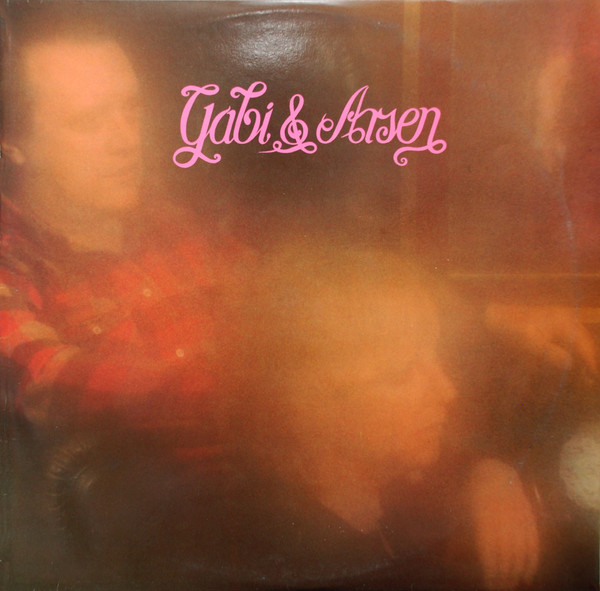
"Gabi & Arsen" by Gabi Novak & Arsen Dedić (1980)


The first couple of Croatian pop have recorded occasionally trough 1960s and 1970s but this is their first (and only) genuinely duet album, which is strange because they were often perceived as a package deal, ArsenandGabi. Musical influence was mutual - if in the voice of his wife Arsen Dedić found perfect sound for his elegant chansons, Gabi Novak herself metamorphosed into sophisticated artist trough husband's top shelf repertoire. However, it must be noted that they both welcomed and encouraged collaborations with other artists, this album being a perfect example of that.

"Gabi & Arsen" is a very classy affair, perhaps a statement about themselves as artists - as they successfully weathered two decades in business, couple found themselves in a comfortable position where competition was not necessary anymore and they were established enough to enjoy view from the top. Recorded in Ljubljana with Slovenian producer Dečo Žgur at the helm, this album is sort of their Slovenian excursion - Mojmir Sepe, Jure Robežnik and Jože Privšek pops up as composers, while Dušan Velkaverh and Andrej Šifrer join as lyricists (along with songs by Kemal Monteno, Marina Tucaković, Željko Sabol, Rajko Dujmić and even poet Dobriša Cesarić). It is very endearing collection of warm, soft pop that explores dynamics between two musicians - as expected Novak pulls most of the vocal duties, while husband gently murmurs in the background, their chemistry and affection clearly audible. If there is one small complain - and this is purely my personal impression that takes nothing away from musical pleasure - is that couple occasionally sounds very middle aged and settled into "everything is behind us already" mode, when in fact they were in their early forties and have been married only a decade. However, the beauty they create together is undisputed and the poetic way they praise each other wrinkles is truly memorable. Perhaps it didn't bring any hits but this little gem is a thrill for the fans of both artists. 

16.3.19

"True Love" by Alex Harvey (1973)


This album by Tennessee country-rock songwriter has quietly stolen my heart and without noticing, I kept returning to it time and time again. Internet search proved to be bit confusing because there is another musician with exactly the same name but eventually I found out the identity of my guy and it dawned on me why I liked him so much in the first place - this particular Alex Harvey belongs to the same generation of artists like Kris Kristofferson, Dan Penn and Spooner Oldham therefore its soulful country with just a enough of gospel touch in the background to make you stop and pay attention. Plus, as a songwriter he is excellent (his credits include "Reuben James" and "Delta Dawn") while there is something really endearing about listening composer's own voice, in this case whiskey-soaked, world-weary and slightly husky sound that combined with a cover photo really makes me feel like I know this guy.

"Makin' Music For Money" is opener and it probably first caught my attention - it is a statement in itself, of artist on crossroads, divided between the call of Mammon and urge to create music for the love of it. The rest is very much same high standard of songwriting with excellent lyrics and very enjoyable 1970s easy-flowing vibe that stands somewhere between country and rock - to hear Harvey singing his own material brings me the same pleasure as hearing Penn and Oldham performing their songs themselves (on excellent "Moments From This Theatre" album) and while my music taste usually goes in completely odd and unpredictable directions, I find myself returning to this album again and again. And singing on top of my voice. 

"Eight Show Tunes From Scores by George Gershwin" by Lee Wiley (1939)


Shadowy figure in the history of Jazz, Lee Wiley was one of those rarefied artists known mainly to cult followers but the more one discovers about her, the more interesting her small discography looks. She also sounds uncannily as some predecessor of later Peggy Lee who used same smouldering, whispery style but with far greater commercial success. Its a very seductive, intimate voice that sounds like a warm cloak wrapped around the listener and perhaps harks back to great, neglected Mildred Bailey (another artist worth researching) so there is a definite link between generations here.

So far everything I heard from Wiley was top shelf and this early recording is no exception. She slowly burns trough eight Gershwin songs that are considered standards now but were fairly new back than - famously, Wiley was probably amongst the first recording the whole collection of music by certain composer - the backing is very elegant and unobtrusive, while Wiley croons like a siren and pulls you into some twilight zone that still sounds incredibly haunting decades after it was originally recorded. Musicians do get occasional instrumental "hot" moment but mostly its all about the voice and the lyrics performed with great sincerity and attention. The overall impression is of the late hours music in some elegant nightclub, all you need is a drink and a waiter re-filling your glass, while pretty lady on the stage does her magic. Timeless. 

15.3.19

"Zagrebačka škola šansone" (1976)


The first part of mid-1970s compilation that celebrates famous so-called "Zagreb school of chanson"  this wonderful album focuses on artists who promoted chanson as an art form locally - the phenomenon started in early 1960s as reaction to ubiquitous festivals of pop music and initially it included actors as well as singers, apparently it was genuinely hotbed of creativity outside of mainstream. Because it never gained commercial appeal, it was mainly followed in the urban areas but every now and than someone sneaked into big stages of popular festivals so our homemade chansons were fairly well known - Chansonfest still goes on and local festival in Krapina is basically chanson performed in particular dialect. 

The names represented here comes as no surprise - they are all without exception big, legendary names in Croatian popular music and the level of sophistication, poetry and inspiration is staggering. It must be noted that each single of them seriously followed certain standards that consciously rejected banality associated with pop jingles, so although it sounds like fight with windmills, for a while they thrived on music as the art form instead as entertainment. The whole group included here worked and existed shoulder to shoulder with smörgåsbord of various other entertainers on TV (in my childhood that would include folk singers, rockers and basically variety shows) but they were accepted as artists - perhaps not the most uplifting, more of melancholic sort, definitely highly respected and kind of music played late in the night on the radio. I hear it now again, many years now after I had LP initially and its even better than I remember back than - from the lyrics and arrangements to performances themselves, it shows high level of very endearing artistic consciousness that excludes commercial appeal for decidedly reflective direction, kind of music one listens when alone. Highly recommended, though language barrier might be a problem for listeners who won't get the beauty of lyrics. 

12.3.19

"Leaving Neverland" by Dan Reed (2019)


This is highly controversial new documentary that apparently raises huge discussions around the world and leads to arguments between the fans and non-converted - at the end it all boils down to the fact which group you belong. It is also much, much more than story about particular case but in my opinion its about how the perception of someone widely known might change with time and are we actually able to accept the truth, no matter how unpleasant it might be.

I saw the two-part documentary recently and it made my blood boil. Honestly, I don't know what do I find more upsetting: the horror of obvious crime case, the fact that this all happened again and again in front of the whole world, the parent's obvious complicity and refusal to accept something is strange and unusual in letting their little boys sharing bed with a grown up man (on tours, while parents were tucked away elsewhere in hotels), visible distress of the victims who to this day are confused between their love and loyalty to man who abused them or - perhaps worse of all - reaction of the fans around the world calling for boycott of this documentary without actually seeing it and claiming its simply not possible, that it can't be because "he won so many awards".

For the start, let's go back in time a little bit and look closely at Michael Jackson - hugely successful pop singer who literary grew up under the TV cameras from adorable little black boy into weird and creepy looking eccentric, transformed into unrecognisable, effeminate creature who walks under the umbrella and hides his face under the mask. That, for the start should already be alarming but strangely enough, it seems the world accepted him as a harmless eccentric who simply loves to have children around because his is just a child himself. Hm. Than this person builds a entertainment park on his property where starstruck kids come to him. And parents of these kids are so impressed with his wealth, lifestyle and everything he can provide that they go with it, completely blinded with his fame and smiling happily as their little boys sleep in Jackson's bed. Than we have TV footage's from Jackson's tours where he always walks around with little boys (never girls) and still no one finds it unusual or alarming. And no one questions it, no one finds it unusual why would grown up man surround himself with boys instead of having adult partner around. After a particularly nasty court case and accusations, Lisa Presley enters the picture as obvious cover-up wife and leaves five minutes later. Wife nr. 2 provides children (?) and leaves with truckloads of money as well. Still, the public thrives on Jackson's fame and refuses to believe that someone so hugely popular could possibly harm children.

Documentary is not about Jackson but about his victims - Wade Robson and James Safechuck were both separately abused by their idol for years and years, protected him on a court and lied to themselves and to their parents. The obvious question is: why did they change their mind now, so many years after the fact and when Jackson is no more around to react and protect himself. As expected, many people believe it's all about the money and financial gain - this kind of perception just shows how these people see life around them, as constantly materialistic world where things are sold and bought. I have seen documentary, seen the trembling hands and felt the deeply stressful and traumatic state of both (now grown up) men and I absolutely believe they are telling the truth. Psychologists who specialised in child abuse claim its actually very typical that victims of such crimes take a lifetime of accepting what happened to them and most of the time, memories are covered under layers of self-defence. To this day you can tell that both Robson and Safechuck idolise the man who destroyed their childhood but at the same time they are horrified with all of it. 


One of the interesting things that I immediately thought of, is how much Jackson always cultivated the image of harmless, child-like Peter Pan: from experience I know that when people so strongly build a certain public persona, reality is probably completely different. It's an act. Look closely at his whispery, giggly talk and facial expressions, everything points how artificial and unreal this is - when he was finally arrested, his mug shot shows someone clearly deranged and self-delusional. He got away with court case by paying everybody off, but the dark clouds of shame and scandal never got away completely and now the truth finally came out. I have no doubt what these men are saying is truth and to everybody who has actually seen documentary its very clear and obvious these people were victims. And the parents - this is so infuriating - these people are so delusional that I wanted to jump into TV screen and beat them up. Absolutely infuriating. Strangest of all is the reactions of fans around the world who refuse to believe it, because Jackson's music was part of their lives for such a long time, they simply can't accept this. Personally, I have always felt Jackson was a creep so this don't really come as big surprise, its just upsetting that the world refused to believe what was very clear and obvious. 

6.3.19

"Let Me Off Uptown" by Cheryl Bentyne (2005)


For all her importance and influence, Anita O'Day seems to be rarely mentioned nowadays - while the holy trinity of Billie-Ella-Sarah is accepted without doubt, this strong-willed, scat virtuoso with a particular, sly sound is more of musician's musician, known and loved by cognoscenti but seldom heard or played anywhere. A 2007. documentary "Anita O'Day: The Life of a Jazz Singer" tried valiantly to put things in perspective and introduce than still-living artist to new generations, but it came too late - O'Day passed away before the movie premiered and I still remember the impression of a frail, old lady being hurt after all these years with stigma "The Jezebel of Jazz"  that made her even more unrepentant - since she was publicly tarred and feathered, O'Day decided to continue with smoking and snorting everything that came her way - damage was done anyway and this is all what people wanted to know. Her 1981 memoir "High Times, Hard Times" was heavily edited and tailored almost exclusively on seedy parts of travelling musician's life, pampering to sensationalistic audience but hardly a word mentioned about music. Which is strange because music is the real legacy this wonderful artist left behind.

To my knowledge, Cheryl Bentyne (one of The Manhattan Transfer singers) is the first singer recording full-blown O'Day tribute album - I've heard literary hundreds of albums where singers bow to Billie, occasional respectful nod to Ella or Vaughan, but hardly ever anybody re-visited O'Day who in her time was serious hit-maker and recorded dozen of masterpiece albums for "Verve". So perhaps the main difficulty was selection of material, since O'Day has quite impressive body of work, starting from series of delicious 1940s singles to neck-breaking scat recordings later - Bentyne and her team did their homework seriously and hand-picked little bit of everything, representing the width and depth of O'Day repertoire from various stages. There is a hip swing of 1940s title song, followed by selection of famous ballads and peppered with scat numbers for which O'Day was so celebrated.


Cheryl Bentyne is of course, her own woman and she don't even try to imitate O'Day - her voice is much lighter and gentler than O'Day husky, sly purr - what she does very effectively is to channel the spirit of her strong-willed predecessor and lovingly re-visit all these standards that no one else dares to look at. "Waiter, Make Mine Blues", "Man With A Horn" and of course fast-paced "Tea For Two" (O'Day's trademark) are all here, along with faithful renditions of "Skylark", "Pick Yourself Up" and the most of the music associated with O'Day - its a very enjoyable listening and it will probably turn you on to original recordings.