16.7.18

"River Deep - Mountain High" by Ike & Tina Turner (1966)

Where all-powerful and notoriously megalomaniac producer spots someone outside of his considerable collection of talents and sends a chauffeured limo for only half of husband and wife duo - these are still 1960s and girl singers do as told, which is something Ike Turner drilled in his wife who outwardly appears as powerful tigress but sings about submission and pain. No matter how big they might have been, all these ladies from Darlene Love, Aretha Franklin, Diana Ross or Dionne Warwick are still pawns in hands of husbands, managers and producers, following orders and singing same line hundreds of times until boss says its good enough. For once, the possibility of breaking into pop market silents Turner who readily agrees to send his wife alone and whatever resentment he might have felt was suppressed with hefty check and ambition. While this chance was simply too good to miss, it sowed the seeds of subsequent paranoia in Turner who will be convinced that others want to steal his main property from him.


To his credit, Phil Spector outdid himself in grandeur and builds sonic cathedrals around collection of pulsating pop jewels, some already well known by that time ("Save The Last Dance For Me", "Every Day I Have To Cry"), others written specifically for project, however he must be praised for artistic vision that bravely places in the spotlight none of his coiffured and manicured girl groups that had bigger commercial appeal but such unrepentantly raw and authentic soul shouter as Tina Turner who is female equivalent of James Brown and Wilson Pickett. Occasionally cushioning her roar with seductive strings and massive choirs ("A Love Like Yours") he gives Hollywood star treatment to bedazzled singer accustomed to different approach and lets her thunder above massive, symphonic orchestration that sounds like majestic avalanche. Since Spector never completely finished the whole album, the rest is filled with material produced by Ike himself - rough, frenzied and sweaty, these songs (mostly remakes of previous singles) initially appear far removed from Wall of Sound but now in hindsight, its actually perfect combination because it gives variety to what might have been Spector overkill. Some of them ("Such A Fool For You") in their way even match producer's vision, since they are genuine soul and uncluttered by Wagnerian ambitions. It sank in US but deservedly won audiences in Europe and the title song is considered pop classic now, preceding singer's ultimate glory as a solo act later, when her powerful voice will again be surrounded by unexpected production but than, in 1980s it will be synthesisers and drum machines instead of cinematic orchestration. 


13.7.18

"Live! The Ike & Tina Turner Show Vol.1 & 2" by Ike & Tina Turner (1965)


Fascinating peak inside of hot & sweaty club where Turners whipped audiences in frenzy during their early 1960s days before they crossed over to rock market. Later released under countless different incarnations and covers, it might be little confusing for record collectors accustomed to their "Proud Mary" period but its important to understand this is journey in a time machine, into what was than known as "chitlin circuit" with predominantly Afro-American public and repertoire adjusted to them - lacking their own hits, Turners enthusiastically covered songs by Sam Cooke, Ray Charles and Etta James amongst others, with audience responding wildly to eruption on the stage.


Always cunning and competitive opportunist, Ike Turner probably noticed huge success of similar live album by James Brown ("James Brown Live At The Apollo") so this two-volume release was no brainer - all you need is a recording equipment, good audience and you let the girls do the business. As expected, there are some cameos by members of the revue, so velvet voiced Jimmy Thomas and Ikettes girls Vanetta Fields and Jessie Smith get their own solo spots, but they are naturally eclipsed by overpowering presence of Tina Turner who is loudest, sassiest and by far the most charismatic of everybody around. Encouraged to scream, shout and sermonise, she is perhaps not a subtlest of singers at this point and her voice is best described as battle cry of amazon warrior queen, but she is darn effective and every inch female counterpart of James Brown. This is what Phil Spector probably heard before he decided that Tina is what he needed for his next, monolithic project, however it was to be worlds away from this music and it would took Turners further into another direction. As historical document, its a extremely interesting testament of music of a bygone era, raw and passionate r&b that is spiritually much closer to Stax than slick Motown, therefore probably more of interest for soul purists. 


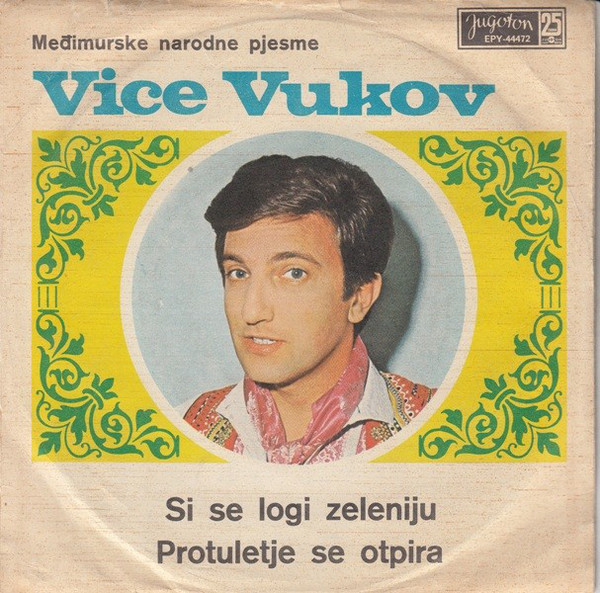
"Međimurske Narodne Pjesme" by Vice Vukov (1972)


During 1960s Vice Vukov was perhaps the most magnificent of all the voices in Croatia - his naturally powerful, almost operatic instrument was joy to hear and than popular festivals all kept the doors open for his appearances. Born in Šibenik and soaked in Italian bel canto music, Vukov was extremely versatile singer who preferred sonorous ballads that best displayed his dazzling command of technique and it can be easily said that back than there was nobody around even close to such virtuosity. While his singing talent was never in doubt, factors outside of music eventually got him blacklisted and by early 1970s his music career was basically over - this is why its interesting that his last studio recording in this period is collection of hardcore Croatian traditional folk music, seemingly innocent enough but obviously a strong message from unrepentant artist.

Despite of all political turmoil (the story behind it demands more space and is not really relevant to music itself) the material collected here on Vukov's farewell EP is hauntingly beautiful and my favourite of all his recordings. Since he was extremely eclectic artist and capable of singing absolutely everything, he approaches traditional folk music from Međimurje (Northern area, known for its melancholic melodies) with utmost grace and sensitivity, making them sound better than ever before. While his professional activity was decidedly pop music, even classically trained artists admired such sophistication and bearing - here he sings four traditional folk songs backed by Tamburaški Zbor RTV Zagreb and combination of tamburitza with such regal voice is truly intoxicating, I played this recording to death and always find it magnificent. If you transport me back to early 1970s when his records were forbidden, I would probably blast this from my windows and got arrested immediately, such was a frenzied witch-hunt atmosphere at the time. 

(P.S. Vukov was in his fifties when he returned to the music scene of newly independent Croatia and his voice was spectacular as ever.)

"Nada" by Gabi Novak (1985)


"Nada" or Gabi-in-synthesiser-land finds this dignified pop veteran trying to find her place in the 1980s music and despite good intentions, there is certain lack of direction, like singer's heart is not completely in project. Just few years ago, Gabi Novak successfully entered new decade with album full of hits ("Gabi Novak" from 1982. with "Pamtim Samo Sretne Dane", "Što Je Ljubav", "Plava Ruža Zaborava" and "On Me Voli Na Svoj Način" amongst others) so it appeared that lady still stands strong where majority of her contemporaries are slowly losing the battle with time - it helped that her particular brand of gentle crooning, famously described as "electronic whisper" was quintessential easy-listening, adjustable for any radio playlist and women always responded to these classy feminine musings graced with poetic lyrics. However, as 1980s progressed, with young, angry and colourful acts demanding spotlight, it seems that Novak slowly lost the motivation to continue the race and in fact, after lacklustre reaction to this collection it will take another seventeen years before she will return to recording studio.

Significant is the fact that "Nada" was not released by giant "Jugoton" (her hometown label) but "PGP RTB" which in itself means that insiders failed to hear its commercial potential - while beautiful title song was deservedly huge radio hit, the rest is surprisingly undercooked, like these are demo tracks in search of big producer who would beef up things a bit. Husband Arsen Dedić as producer keeps everything very simple, but excessive dependence on synthesisers sound like shoestring budget and despite involvement of several first-rate collaborators (Đorđe Novković, Kemal Monteno, Rajko Dujmić and even Oliver Mandić) the final results find fifty year old singer placed in a icy-cold place, never before she sounded so distant and uninvolved. Between two bookends (title song and closing piano ballad "Oženjeni muškarci") music is only mildly interesting and perfunctory lyrics are too often downbeat, which perhaps explains why album placed Novak in the background, while louder and hungrier acts pushed their way to the front. Luckily, she will eventually find acceptance again in 2002. and as I can personally attest from her recent 2018. concert performance, she is still very much beloved and admired at the grand age of eighty two. 

12.7.18

"Godine Nisu Važne - 50 Pjesama" by Nikica Kalogjera


In his time, Croatian composer Nikica Kalogjera was one of the most successful people in business - pop festivals catapulted his hits, he was behind best selling records, biggest artists clamoured for his attention, it could easily be said that he defined our pop music trough 1960s and 1970s. Still, as rock music replaced ubiquitous schlager, new generations - conditioned to reject everything previously done - neglected not just Kalogjera but the whole mainstream crowd associated with Sunday TV shows, so when this compilation was originally released in 2002. the greenhorn music critic assigned the job to review this project bemoaned the task, apparently bellow standards of someone who deals with more important, preferably foreign, music.

As expected, in a long run Kalogjera's commercial success backfired - kids have no idea that it took years of apprenticeship on the 1950s radio before he was even allowed to participate on festivals, where his versatility as composer and arranger made him distinguished presence. If initially he joyously roamed trough various genres, at the end of 1960s he struck gold with irresistible pop ditties that sold in truckloads but pointed at the road of no return: no matter how much hit singles he served on international markets, Kalogjera's biggest fault (in the eyes of recently born music critics) is that he ignored rock and decidedly followed schlager route, so beloved trough continental Europe. No wonder he found warm welcome in Germany, where this kind of music is traditionally accepted and cultivated. 

Out of two CDs planned as retrospective of Mr.Kalogjera's songbook, the first one is by far more interesting, perhaps because it follows his earliest work with variety of experiments in all sorts of genres, from children's songs to quasi-Mexican, folk and even girl group sound, guy was ever eclectic and I only wish there was space for his work in chanson since he was right there when poets and people in theatre collaborated in early 1960s. From 1970 and "Čibu Čiba" the material dangerously veers towards lightweight, decision that was obviously carefully planned and it paid off but in hindsight CD two didn't age very well and what were his golden commercial years sounds thin now. For lots of middle-aged listeners this is, however, the soundtrack of another era and as such it reflects socio-economic atmosphere where radio hits were supposed to be simple, uplifting and sunny. 

The Lion Queen


Just when it looks that Mrs.Bach settled quietly in her place of choice, far away from limelight and ready to enjoy her deserved retirement, unexpected tragedy struck from another side of the ocean. I mean, really, how much more tribulations can life throw at this woman? When back in 1986. her autobiography "I, Tina" shocked the world and finally revealed the truth behind carefully choreographed stage act, it presented the portrait of bruised survivor but even though it was a best-seller, it wasn't until 1993. movie adaptation "What's Love Got to Do with It"  that her life story became universally known (apparently its easier to watch movies than to spend time reading) - some of my acquaintances even expressed doubt that facts are so brutal and ugly, but what do they know, opinionated in their cinema chairs and far removed from the struggle of black woman in man's world. In hindsight, it wasn't just about Ike Turner but about the way industry treated women, sexism, misogyny and ageism that kept this lady out in the cold until she eventually clawed her way back to the top. 

Like the rest of the world, I celebrated her overnight success and was thrilled with the whole unprecedented spectacle of 1960s veteran experiencing complete rejuvenation and renaissance, not as some nostalgic act from another era but relevant and powerful hit maker in her own right. While there is some truth in often pointed statements that her old music might have been more exciting than later chart busters, Turner never compromised her artistic integrity and gave her 100% even if material wasn't always as exciting as her live performances. To this day I still enjoy watching her concert video clips and the way she whips audiences into frenzy, which is something she mastered decades ago - its just that back in the day her audiences were confined to small r&b clubs and it took lifetime to get out of there. Apparently there is some part of Afro-American audience that resents her international success and claim she left her roots behind, which sound like pure nitpicking to me - after all, Turner worked hard to get the recognition and once she established herself not as a black artist but as artist period the whole world was hers - moving to Europe where she was beloved, accepted and respected was simply natural step.

As it happened, her old family was left behind. Four sons with ex-husband are all grown up men now, financially cared for by hard working mother although none of them apparently made anything for themselves - the fact that press now easily ignores, pointing that she left them behind. Even worse, she was at fashion show when the news about eldest son' s suicide came. Obviously she wouldn't be there had she only had inkling what is going to happen - they had loving relationship and the guy was even there in Switzerland on her wedding, proudly displaying pictures on his Facebook profile. I can't possibly imagine what is going on in the mind of someone who is so depressed to even contemplate such action, but the guy always seemed as perfectly nice person, in fact much nicer than the rest of the bunch resentful of Turner's new life. This casts dark cloud over recent media excitement about new stage musical about her life (something she wasn't thrilled about but agreed upon as a convenient way to satisfy public clamouring for her live appearances, without actually going trough it herself) and news about upcoming book and documentary. It seems everybody is entitled on their opinions and comments in the media are mostly gleeful, but so far the lady keeps out of the spotlight and deals with grief in private as its natural - personally I think its utterly tragic anytime when parent has to bury the child - but my guess is that media won't stop hunting her because people are by nature curious and want to know about everybody's personal business. I was deeply saddened with this news and just hope that she will find peace of mind and strength in such circumstances. 

11.7.18

"Gee Whiz: The Best of Carla Thomas" by Carla Thomas (1994)


This generous compilation that covers years between 1960 and 1968 is the most celebrated chapter in the career of singer associated with legendary "Stax Records"  label that served some of the best and most authentic soul records in the decade bursting with magnificent music. It also shows how the music changed with time, from innocent doo wop romantic ballads ("Gee Whiz (Look at His Eyes)") to pulsating, screaming shouts of later duets with no less than Otis Redding.

Carla Thomas might have been called Queen of Memphis Soul but she comes across as sweet-voiced young thing more predisposed to sing romantic ballads - her first smash single "Gee Whiz (Look at His Eyes)" still sounds genuine, while later recordings might have been more producer's ideas of what label wanted released. This is not to say that mature Thomas was unconvincing singer but there was something real in those earliest, innocent ballads, while in later years she might have acted the part expected from her - Isaac Hayes is behind most of them and my impression is that Thomas (like most of female singers of the time) had to do as told. "B-A-B-Y" is still wonderful classic and it wraps the singer in recognisable Stax sound (horns and all) so perhaps this is a perfect starting point for further exploring music of this lady who might not have been the grittiest or loudest, but she deserves re-evaluation since she was right in the middle of creative whirlwind at the time when Memphis brimmed with exciting music. 

"Feud" TV Series


Binge-watching TV series is a thing today and I am not immune to this phenomenon, although nothing since glorious "Game of Thrones" really interested me enough to invest my time to follow episode after episode - out of curiosity I decided to check something fairly recent, since the subject appealed to me + combination of talents involved seems intriguing. Before you know it, I gulped three episodes, although the programme has only eight so this is not going to be punishing task.


Many years ago, I had read delicious "The Divine Feud" where Shaun Considine in detail discussed lifelong competition between two Hollywood biggest screen goddesses Bette Davis and Joan Crawford. As much as I can remember after all these years, it was very entertaining and engaging read, although between the lines one gets impression that two of them were curiously not so much different - both survivors in the fickle business, they were eventually reduced to play together in a horror B movie that most of the people remember them nowadays, still fantastic and chilling "What Ever Happened to Baby Jane?". Its perhaps unfair that most of the audiences know associate them with this particular movie, because both ladies cemented their legends decades before this and their 1930s and 1940s work is in fact, the reason why are they celebrated. Behind the scenes, apparently, they were fiercely competitive, although I still have doubts about the truth of it, because it might have been part of Hollywood public machinery in order to whip audiences in frenzy.


"Feud" could have been a disaster and caricature, luckily it works surprisingly fine because instead of non-stop bitching, script focuses on the position of actresses in Hollywood and how the industry treated them once they came to certain age. Both no longer young, Davis and Crawford had to work hard just to get another chance to get back on the screen and even though initially they are perfectly fine with each other, publicists, media and almost everybody around only wanted them to fight - manipulated and encouraged, divas clash on the set (which drives director Alfred Molina almost to heart attack) but the script suggest that they were both aware of what was going on. To my knowledge, Davis enjoyed this adulation and continued trashing her co-star forever since, while Crawford kept her thoughts private, but she did pull out of the sequel. Oranges and apples, two ladies were clearly opposite side of the spectrum, since Davis was magnetic actress, while Crawford was glamour star - who knows how their chemistry might have worked if they collaborated back in the 1940s when they were at the top of the game, at this point in 1962. they were forced to claw on each other. Script cleverly suggest that behind the scenes they were both hard-working single mothers struggling to stay afloat and they might have even admired each other. 


So far I have only seen three episodes, but must comment on sensational acting: Jessica Lange might have unpromising screen start in 1976. "King Kong"  but ever since her unforgettable turn in 1982. "Frances" (where she played Hollywood star Frances Farmer who was a victim of industry) I was aware of her magnificent talent and here as Crawford she burns the screen, portraying glamour diva as deeply troubled woman who hides scars of abuse behind obsessive behaviour and constant demand for glamour that kept her all those years. Davis, on the other hand, was never a glamour girl and she was aware of it - Susan Sarandon had difficult task to bring this legend to life and depict her as a human being, with all her strength and vulnerability - she actually does great job and shows Davis as she actually might have been outside of spotlights. My guess is that both these wonderful actresses accepted this task not so much for Crawford/Davis feud as much for chance to point at the position of women in the movies than and now. Even though now we have women directors and whatnot, on deeper level actresses are still perceived as disposable girlfriends/wives/grandmothers and with occasional exception, they still head for twilight where they languish overshadowed by new, fresh faces. If they were alive today, Crawford would probably be a victim of plastic surgery (because her life was based on looks) while Davis would relish roles of mass murderers, since she was always willing to explore dark sides of human soul. 

10.7.18

"Oh No Not My Baby: The Best of Maxine Brown" by Maxine Brown


Just like Baby Washington and the rest of early 1960s songbirds, this silky-voiced siren worked all over the music map with frustrating lack of hit singles, although she almost made it with "All in My Mind" that gave her ticket for prestigious New York-based label "Scepter Records" that promoted artists like Dionne Warwick, The Isley Brothers and Tammi Terrell among others. What came out of this collaboration was only one sizable success but the one she will be forever associated with - irresistible slice of early 1960s pop by redoubtable Carole King/Gerry Goffin team called "Oh No Not My Baby" that singer had to rescue from previously unsuccessful attempt by much bigger hit-makers The Shirelles - I always wondered how this song ever came her way, since Brown would not have access to such material in the first place and it seems fairly possible that someone at "Scepter Records" felt that the song had potential.


Maxine Brown herself clearly had gospel background - she might have recorded music very much in the vein of young Dionne Warwick but you can clearly hear gospel in her passion and exuberance. When initially I got this compilation, I was a little confused with such versatility, because it comes almost as a curse - its clear the vocals are excellent and more than capable but on the other hand, she comes as tamer predecessor to subsequent soul divas who would really get thing going later in the decade. Now its perhaps time for some re-evaluation, because in hindsight, even without big hits this music has its magic - singer is always spot on, while its hard to find fault with numbers by Ashford & Simpson. Unfortunately, nothing matches the sheer beauty of classic "Oh No Not My Baby" but what slipped between the cracks is still worth checking out. Perfect example of gifted vocalist who had all that matters - talent, looks, attitude - but is known only to devoted fans. It actually sounds better than I remember first time around. Personally I don't find her any less interesting than Warwick who simply had better luck with songwriting team. 

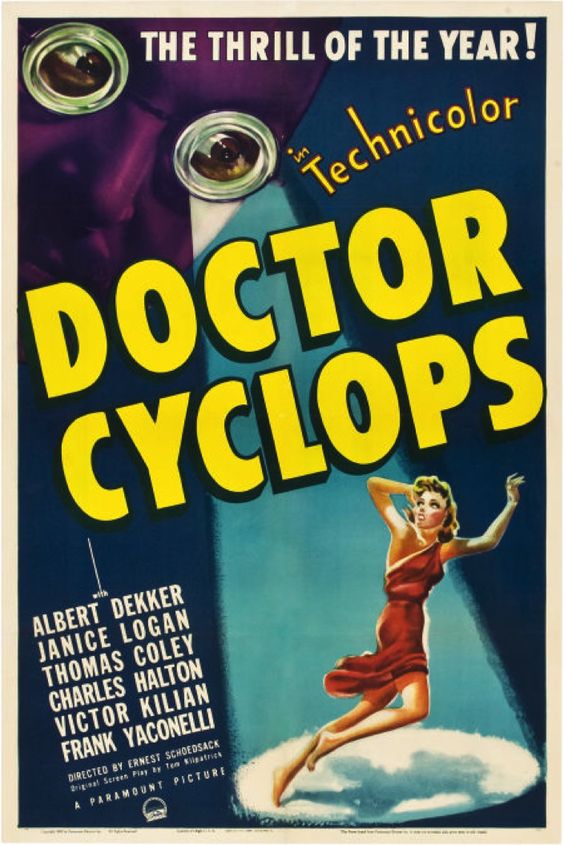
"Dr. Cyclops" by Ernest B. Schoedsack (1940)


Curiously undercooked, this old science fiction movie is one of those unfortunate attempts to follow the impossibly towering previous success - director Ernest B. Schoedsack is the one who will be forever associated with his 1933. masterpiece "King Kong" and seems it was impossible act to follow. This time he had glorious  technicolor at his disposal that is the first thing that strikes the viewer, making you wonder how would 1933. classic turn out if things were different. 


Not every old movie is campy and silly - the best example in this genre would surely be awesome 1927. "Metropolis" - but "Dr. Cyclops" unfortunately feels like children's movie from our perspective, with cartoonish characters and script that defies serious analysis. Bunch of scientists wonder in the Peruvian jungle to help mysterious Dr. Thorkel in his research - before they can even dust their boots, he quickly dismisses them and unceremoniously sends them back to where they came from, which makes them very curious so they decide to stick around and find what secrets he hides. All sorts of mayhem and adventures that follow present our heroes as brave survivalists while Thorkel is obviously an evil ogre, but personally I couldn't help but feeling some compassion for visually impaired loner who lives and works alone outside of any human society - as usual, I am always for unfortunate monster misunderstood by people, be it Frankenstein, King Kong or like here, Dr. Thorkel. Obviously, this is not the way Schoedsack planned, because movie depicts him as evil but I was rooting for him, instead of these annoying visitors. 

Visual effects, so naive to us today, were spectacular for the time and even nominated for Academy Award back in the day. More importantly, writer Richard Matheson paid close attention to this movie because we find clear echoes of "Dr. Cyclops" in Matheson's 1956. novel "The Incredible Shrinking Man" later adapted for the big screen with some identical scenes, so perhaps I shouldn't be too harsh on its predecessor. I guess this is a cult classic now and there must be some movie cognoscenti who cherish its quaint charm. Of all the people in the movie, I can only praise Albert Dekker in his title role as mad scientist - scientists here are curiously perceived as loonies and bug catchers while real people supposedly have other occupations. Not only that Dr. Thorkel works something secretly in his laboratories but he also have books - sure sign of his strangeness and potential dangerousness - today they would make him listen classical music as well, since this is also something every monster does. No wonder I was rooting for Dr. Thorkel instead of those meddling creatures. 

9.7.18

Dreamhouse


Around the Castle


Although I was perfectly happy living quietly in countryside, the world came to me. 
For the first time, my vacation coincided with International short film festival organised in the gloriously restored medieval castle that towers above all of us here on the top of the hill - Veliki Tabor is one of the most beautiful landmarks in this heavenly region, but as a historical monument it usually just stands there pretty and stately, well this time its purpose was to bring people together and it seems this is turning into a beautiful tradition. This film festival attracts young crowd that camps around the castle and spends several days in sort of Utopian commune, with camp fires, music and art, really beautiful sight to see. I was very impressed with the crowd - mostly idealistic, young, urban people stretching on their mats, playing Frisbee, meditating and soaking in the spectacular view, engaging in conversations with filmmakers, enjoying the programme and naturally there were lots of music acts to spice up the evenings long in the night. For the first time I thought that this place actually have a purpose, since everybody had such wonderful time, it wasn't just some boring old event but true get together in the best sense. Of course, castle's original owners would probably turn in their aristocratic graves if they could witness roaring crowd partying in the early hours here.


First thing first - we are in the middle of world football match and Croatia is doing extremely good. For such a small country we have surprisingly strong results and this is also a tradition - at least for few weeks, the whole nation gets so swept away in excitement that people forget to complain about politics, bad economy and negativity so ubiquitous everywhere. Under normal circumstances I would not even switch on TV, but this time I also got carried away with excitement - followed the match between David (Croatia) and Goliath (Russia) on some terrace with friends here in the neighbourhood and it was a blast, we all thought we would get heart attack from sheer nerve racking game which ultimately resulted with Croatia winning over their hosts, the victory celebrated with explosions and detonations all over this usually quiet countryside. 


The football game lasted forever so I already gave up on planned Jazz concert which really interested me - however, my friends insisted that concert will probably be postponed until end of such important sport event so we later ended up in this beautiful spot, restaurant terrace overlooking the hills and valleys, with castle in the background. The performers invited this year were wonderful Croatian music legend Gabi Novak and her pianist son Matija Dedić - I know their music very well and have been listening the whole gifted family for many years (even trough my journeys around the world) so this was pure pleasure and welcome relaxation after the unbearable stress of the football. At midnight the whole crowd sang "Happy Birthday" to this sweet lady who now turned eighty two (!) and she was touched - it was truly memorable evening.


However, evening was still going strong - later we strolled to a castle where enthusiastic crowd danced to pop and rock performers, even I wiggled my booty inspired by my friends who clearly had a blast, the audiences were very happy and the music resonated trough the sleepy hills long into the morning hours.
Next day we all gathered around family barbecue which is obligatory summer tradition - with so many spritzers I could hardly keep my eyes open until the evening when we went again on the same little terrace to listen Slovenian artist Zoran Predin and his charming brand of acoustic ballads, the guy is sixty now but still absolutely magical and as I had seat right next to stage, I had admired what he was doing - with only a guitar and voice, he spread stardust all over hypnotised audience, we were all spellbound. As much as I enjoy music and constantly playing something or other at home, nothing can ever match true live performance where artist is engaged with the public and mutual love flows between them. 

"That's How Heartaches Are Made" by Baby Washington (1963)


This glorious album came from the early days of R&B when American black artists had limited audience at home but were worshipped in Europe, particularly UK where singles by New York's "Sue Records" had cult status. Music acts like Inez and Charlie Foxx, Ike and Tina Turner, Barbara Lynn and Righteous Brothers were all at some point recording for them and they (along with singers like Maxine Brown) paved the way for soul explosion in the late 1960s. It was Dusty Springfield who championed this particular lady as her all-time favourite singer and out of curiosity I checked album that trough the years became one of my favourites as well.

Its very interesting that whispery and willowy Springfield was enamoured of sound so drastically removed from hers - just as in another era small-voiced Billie Holiday admired majestic "Queen of the Blues" Bessie Smith, at first listener is struck with huge difference between two completely opposite kinds of instrument. Frankly, I would assume that Springfield owes much more to young Dionne Warwick who at the same time dazzled with the strings of delicate hits but it seems that privately British diva was enchanted with massive voice of this young lady whose sweet face belied impossibly mature, dark voice. Baby Washington might have looked like a doll but hers was the powerful roadhouse voice not unlike that of Darlene Love - instantly recognisable and exceptionally heavy, it was dark, chocolate sound that completely sweeps the unsuspected listener in warm cloak. Although I have collected her other work (even with girl group The Hearts) this particular album seems to represent her moment of glory, with classic early 1960s hit "That's How Heartaches Are Made" being perhaps the most famous of all. Another personal favourite is haunting "You And The Night And The Music" that Washington completely re-imagines from its past and creates something uniquely hers (another curiosity, also stolen from jazz repertoire is "Doodlin" previously recorded by everybody from Ray Charles to fantastic Lambert, Hendricks & Ross). As opposite to many other early R&B albums of the time, this one sounds excellent even today and I have been listening Washington for many years since - seems she still have cult following, despite being largely neglected by recording industry. UK's "Ace Records" released the whole album on a CD titled "The Sue Singles" (along with other tracks recorded at the same time) in 1996. and its my highest recommendation.

6.7.18

"A Woman Like Me" by Bettye LaVette and David Ritz


David Ritz is American writer specialised in biographies of soul royalty - I have read his biography of Etta James with the greatest interest and he also wrote about Jerry Wexler, Marvin Gaye, B.B. King, Ray Charles and Aretha Franklin amongst others. I also know his name from countless liner notes in CDs by many of my favourite music artists, so it seems the man is great authority on music - when opportunity came to collaborate with Bettye LaVette it must have been a dream job for him because here was this unsung heroine of soul who languished neglected in the background, just to get wide international recognition much later in life.

Initially I was just mildly curious - after all, LaVette hardly left any trace in business, where her contemporaries conquered the world - but before you know it the book was so engrossing that it was impossible to put it down and I read the whole darn thing in two days. What distinguishes this autobiography from countless other similar books is the gleeful frankness LaVette unrepentantly displays all the way through - warts and all, she is here to tell her story and if you don't like it, tough luck. Tough luck is mostly what this woman had trough life full of disappointments and false starts, broken promises, penniless years, music projects shelved and discarded, singing radio jingles and performing in small local bars forgotten by the world. Along the way she did had her share of fun as she cheerfully admits herself - her romps and escapades are gossipy heart of the book, although one suspect pent-up frustration behind all these admissions - having independent spirit and sense of humour is all fine, but to actually name the people who snorted and blowed with her back in the day feels like a swipe at those who made it (the list is long and mighty entertaining). Decade after decade, LaVette barely survives, until reader really wants her to finally get a break - curiously, most of unhappiness and frustration was self-inflicted as singer rejected opportunities for anonymous family life (daughter and the husband are unceremoniously dumped aside) in order to persevere in her pursuit of fame. As much as industry didn't treat her kindly, LaVette herself lacked the skills to deal with important people and book is full of Muthafuckas who deceived her. Its good to see her finally successful, though it feels a bit too late. 

"Unforgettable: A Tribute to Dinah Washington" by Aretha Franklin (1964)


Early 1960s were times when some of the biggest stars of the previous decade suddenly left the race - Nat King Cole, Sam Cooke and Dinah Washington subsequently all got their tribute albums as recording companies followed obituaries with almost morbid obsession. Just as Washington herself recorded tribute album to her famous predecessor Bessie Smith, now another queen celebrated her songbook. It was probably masterminded by singer's ambitious husband/manager Ted White who saw her as natural successor to queen of the jukebox and wanted his young wife to follow similar crossover path.


To understand why this album didn't exactly work as planned, you should check original Washington - controversial, salty and ballsy mama, she was also mercurial artist who sassed her way trough early R&B market with hits like "Evil Gal Blues" before achieving lifelong ambition to break into pop arena with soft ballads with "What A Diff'rence A Day Made" that confused music critics ever since. Was she blues singer? Or 1950s crooner purring gently trough love ballads? Hard to categorise, Washington had many talents and was equally at home in many genres so tribute to her should cover many faces of this magnificent woman. No doubt that young Aretha Franklin genuinely liked her predecessor but at that time (aged twenty two) she was still conditioned with her strict upbringing and reluctant to explore bolder aspects of earthy singer's music - what appealed to her were Washington's later ballads so unfortunately "Unforgettable: A Tribute to Dinah Washington" ended being mostly unexciting renditions of torch songs sung approached with affection but ultimately curiously bland. Where Franklin caught the fire were Washington's uptempo numbers, but there are only two of them - smothered in strings, young singer valiantly emotes and it all sounds the same. Variety is the biggest issue here, since album would benefit from inclusion of Washington's pre-pop repertoire like "Baby Get Lost", "Fat Daddy" or "Salty Papa Blues" (nobody expected preacher's daughter to cover "Long John Blues"). That Franklin was serious, shows fifty years later when she lovingly covered "Teach Me Tonight" on her 2014. album - seems she genuinely loved Washington and never forgot her idol.