29.1.16

"An Apple a Day" by Joe Schwarcz


As a welcome change of pace and subjects, my current reading is something completely different from Fantasy, angels and demons - a collection of essays about the powers of food, what exactly we are putting in our mouth, misconceptions about "healthy food" and a lots of interesting little facts mostly unknown to wide audiences brainwashed by media & advertisements. Deep inside we think we probably know that there is nothing better than fresh products directly from a countryside but really, knowledge is most of the time only a matter of perception - this is why people like Joe Schwarcz come so handy because he knows what he is talking about and is entertaining without sounding too preachy or serious (in fact, guy is extremely funny and not complicated at all). 

So far I have learned that;
Apple actually has natural nail polish remover (acetone) and a embalming fluid (formaldehyde) in it, but in such small quantities that it shouldn't alarm anyone. Poison after all, is a matter of dose. Aspirin was taken as a prevention for heart-attack but it also caused a lot of death in children whose parents took this advice too seriously. Apparently an ordinary Apple has around 300 chemicals inside which scientists claim actually prevent tumors. 

Tomatoes are extremely good for you but not fresh - contrary to my own logic where everything is the best when raw and unspoiled by cooking, Tomatoes are beneficial when cooked because heat releases nutrients that in turn might control cancer cells. Lack of Tomatoes in your diet will reflect in reddening of the skin. And it may be especially helpful on long-distance flights, where a potentially life-threatening condition called deep-vein thrombosis can occur. Sitting in one position, such as in an airline seat, without moving for extended periods increases the chance of blood clots forming in the legs. These clots can travel to the heart or lungs and cause a catastrophe. So when on a long flights, go for Tomato juice!

Cranberries for some reason work extremely well against Bacteria that usually get stuck in humans urinary tract - it simply doesn't allow Bacteria to stay there and it gets washed away with ordinary Cranberries juice. It seems it has similar affect on stomach therefore working effectively as anti-ulcer treatment, protect teeth from Bacteria that cling to them when we eat Sugar and in general works miracles on human bodies. Of course commercial juices are full of Sugar so if you really want to experience health Nirvana, you should stay away from Sugary Cranberries juices and get yourself a real (sour) deal. 

Grapefruit has a bad reputation because it cancels effects of medicine taken (imagine that!) and this is why it has ben taken off daily menus in many hospitals. At the same time it levels Cholesterol, reduces the risk of heart disease and generally speaking has a good effects on humans - however, it does not when taken with medicine so it Grapefruit growers are in a bad position because they still have to convince the world that this particular fruit is actually good for you.

Blueberries rank at the top of health charts because of their color - something in that color actually works very well for us, improving our night vision, preventing blood-clots and slowing aging in our brain cells. It might have some effect on aging process in general but so far all the experiments were done on rats and my guess is that small doses of Blueberries eaten in cakes & pancakes & sweets won't actually work as a magic, you need to eat much, much more (on daily basis) to actually get some positive effect.

Citrus fruits might have excellent effect on cancer prevention, however, its all based on lab rats again and even though it works miracles on them, you would need to drink twenty glasses of orange juice per day to get same dose that rats get in one shot (no wonder they suddenly run on their windmills) so until someone finds out how to actually make this work and what doses should be given to people without getting their eyes yellow from vitamin C, it is still just a theory.

Fish - pregnant women who consumed about 300 grams of fish or seafood a week gave birth to children with higher tested IQ scores.
It is still unknown why exactly is it so but it has good effect on our brains, though it has also being noted that certain fish has way too much mercury so its really up to you. It definitely has some effect on depression (countries with high fish intake have low rates of depression and countries with low intakes exhibit high rates), dyslexia, attention deficit disorder, hyperactivity and Alzheimer’s.

"Good Omens" by Terry Pratchett & Neil Gaiman


The End of the World is coming and two immortals (angel Aziraphale and demon Crowley, both on opposite sides) who for thousands of years knew each other as enemies-who-became-friends decide that it would really be a pity to destroy the world where they already feel so comfortable. So they both work on educational influence on a little boy who is supposed to grow into Antichrist - however, there was some comic baby switch in a hospital so the boy everybody predicted to be Antichrist is actually a perfectly ordinary boy and real Antichrist is someone else completely...

This is a collaboration between two writers - Terry Pratchett & Neil Gaiman - although I can clearly feel much more of Pratchett in here. Gaiman obviously enjoyed this and both probably giggled and laughed a lot as they described all those zany characters. The novel actually sparks with a certain kooky humour which is very typical for Pratchett. For some reason I had never truly warmed up to him and after I did some serious soul searching why is it so (after all, he is a successful writer and had created the whole Pratchett universe of novels & characters) my conclusion is that it feels simply too silly for me - it is very funny at the times and yes, I found myself occasionally chuckling but perhaps I prefer my novels to have a little bit of darkness in them. Not that I believe that every book has to be life-affirming, thunder-and-lighting, carved-in-stone truth about life, sometimes its just fine to enjoy lighthearted literature for the sheer sake of escapism but in my opinion is that Pratchett takes this lightheartedness to extreme and it makes me feel like I'm reading children's books. To be honest, so far I read only two pieces by him and they didn't won me over or convince me that I should read some more, like for example I had with Gaiman. Now I had read three Gaiman novels one after the other so I think this was enough for time being - this collaboration cooled me off - it is time to switch the gears and read something completely different, either non fiction, history or Science Fiction. "Good Omens" was very fluffy and lighthearted so now I need something more substantial.

"American Gods" by Neil Gaiman


Imagine that every traveller, sailor, adventurer, emigrant and a slave who ever came to America brought their own religion with them. Each of these spirits, demons, Gods and deities thrived as long as people worshipped them and remembered them in their prayers or sacrifices but once these people died out, disappeared or simply forgot their ancient religions, old Gods came to be abandoned and now are surviving only disguised as ordinary mortals, living ordinary lives and visible to handful who don't even remember their proper names. New times has brought new Gods - Gods of TV (media), credit cards, Gods of technology and the inevitable war between them is coming, the big storm is brewing.

Ex-prisoner on his way home finds himself entangled in war between old and new Gods. He becomes employed by mysterious figure who appears as cheerful con man but he actually might be Odin himself, travelling across the country to convince old Gods to take one last stand and fight against new Gods. There is a whole bunch of ancient Gods joining them in disguise of ordinary humans - from Thoth and Anubis, Kali and Queen of Sheba to Slavic Gods Czernobog and Bielebog, three The Zorya Sisters and even African God Anansi. In the middle of it all is a mysterious little town that prospers while all the nearby towns die out and its citizens unaware that someone sacrifices all the children who went missing trough the years for the sake of town's peaceful existence. 

Neil Gaiman is my new discovery - after I read and than immediately re-read his book "The Ocean at the End of the Lane" with the biggest pleasure, I was assured that here is someone with a definitive genius and interesting voice, in fact for the first time in my life I said to myself "I wish I could write like this". As usual I do it all backwards, discovering this brilliant writer from his recent work and now going back to his earlier novels - "American Gods" was published all the way back in 2001 and got showered with all sorts of literary awards, it is truly a masterpiece of Fantasy, no wonder even mighty Stephen King praises him and yes, I do find Gaiman occasionally sounding like King's younger brother. Where King is dark and creepy, Gaiman can be light-hearted and perhaps more compassionate to his characters, though both writers are not afraid to look in some very dark corners of human psyche and both love to roam in a certain twilight zone between life and death. In fact, the whole question of life and death is a grey zone for Gaiman who toys with it and reader can never be sure is character's death truly ever final, as his Gods/demons/ghosts/humans swiftly travel between these places. I seriously expected that 2016 will be my year of Science Fiction but so far my literary choices got really sidetracked big time and nothing really went as planned - which in itself is beauty of discoveries - naturally I am immediately right at the start of my next book by Neil Gaiman so Science Fiction will have to wait some more. 

18.1.16

"The Ocean at the End of the Lane" by Neil Gaiman


Encouraged by my last read - something current and contemporary as opposite to my usual unearthing of classics - I decided to check out the book that was constantly floating somewhere around me, in fact I start suspecting that the Universe nudges me towards this book because I was finding it again and again everywhere I looked. Not that I knew a thing about Neil Gaiman, honestly his is the name I was not familiar with. It all changed drastically now, because dear reader, for the first time in my life I finished the book and than re-read it again from beginning to the end.

Apparently it was meant to be a short story and it starts shaky - there are heaps of praises (so called "blurbs") on the book cover, but they all somehow pointed me in a completely wrong direction, promising some dark disturbing thriller and "long forgotten secrets from childhood". Honestly, either I watched too many crime TV serials or this advertisements got me confused, either way it was absolutely not what I expected. There is a relatively slow initial chapter dealing with somebody thinking about past but the real start of the book is on the page 9 as the new chapter starts and the main protagonist recalls ... "Nobody came to my seventh birthday party." From here onwards, we follow this little, lonely unnamed boy who loves nothing better than his world of books and sees the big world differently than grown ups and this is part of magic in Gaiman's writing: he somehow recalls that children have their own way of seeing things, something we tend to forget as we grow up. Whatever happens later (and a lot happens in this magnificent and short book) little boy explains it in his head the way only children would do. When he meets a 11 year old girl from a neighbourhood farm and she is clever way above her age, he asks he how long was she eleven. This was (for example) just one of hundreds of little touches trough this magic book and truly it is a wonder, what a discovery, it turned out to be one of those brilliant small masterpieces that in my heart leave far more excitement than anything super-hyped and massive. At certain point the book becomes absolutely gripping fantasy with supernatural beings all over the place (including the neighbours!) but in the centre is still a little boy and his understanding of the life around him. What a beauty, what a thrill, what a discovery.

"Unbroken" by Laura Hillenbrand


Another Christmas present - now, under normal circumstances I would probably not really go for WW2 literature because I have quite a strong dislike for anything to do with weapons, war and such. This phobia goes so far that I won't even watch war movies - its not only that I have experienced war first-hand but since I can remember, I was fed with stories about WW2 and Holocaust so at certain point this simply became a subject I wouldn't touch with a pole. My own experience of the war and the whole explosion of colours it brings out of usually ordinary civilians (fear, sadism, selfishness, heroism, compassion, xenophobia, cruelty ... list is never ending) makes the whole subject quite traumatic and it is not something I approach lightly as a entertainment. 

However, I was aware that this book was on top of New York Times Bestseller list for quite some time. 
But with so many other things to read about, I would probably not really go for something about WW2 - until the book was given to me for Christmas and since there is nothing like holding a real, physical book in hands I decided to leave my virtual library for a while and give this a chance. I was actually almost sure I won't like it, that the subject is not for me and it will probably bore me with some technical details about planes machinery - to my biggest surprise I dived in it instantly and read first three chapters at once, marvelling at Hillenbrand's exciting and matter-of-fact style that bridges the most riveting journalism with passion of a true historian. 

This is non-fiction (generally my most beloved genre) biography of a Louis Zamperini, the son of impoverished Italian emigrants who somehow focused his wild youthful energy into sport and instead a under aged delinquent he promised to be, became celebrated runner who actually represented his country on Olympic Games in Berlin 1936. Just as he was planning to continue his training and compete again in 1940. the WW2 started and Zamperini found himself in Army Air Forces in Pacific that was completely swarmed with Japanese and sharks. At this point of the story Zamperini and his young fellow soldiers (basically all kids in early twenties) started to experience some seriously dangerous situations and book is so addictive and thrilling that I consciously steal time off from my sleep just to continue another chapter. I am honestly surprised how exciting and compulsively readable this book is because I expected that this is not a subject for me - than again, it connects biography and history so perhaps it appeals to me from that angle. Honestly, the only other WW2 book that I ever remember reading (besides obligatory school literature which bored me to tears) was "Tales of South Pacific" by James A. Michener and unforgettable as it was, this is actually much, much better. I am seriously addicted to this one and enjoying it each night when my work finally finishes after midnight. 

------------------------------------------------

Wow, this was truly a unputdownable book - it is 7 a.m. and I had just finished it.
Not just skipping fast, but reading it thoroughly, with greatest interest and fascination. The parts in Japanese concentration camp - harrowing and never ending as they were, I squirmed nervously as I read them. I chewed my peanuts and almonds frantically as I read about prisoners starving. Everything is this book affected me so much that it followed me in my dreams. Than I would wake up and read some more. I perfectly understand that survived prisoners of war had a serious problems with adjusting to later civilian lives - it is a strange feeling to walk in the sunny streets, surrounded with regular civilian people who have no clue about what you've gone trough. So I do sympathise with all of them - my own experiences, thought not exactly in same circumstances but traumatic nevertheless - are similar. It was excellent, highly dramatic book and though story itself was not a pleasant one, it was impossible to put it down. Just realised it took me actually just a few days to read it - and this is with my work schedule, where I can only read after midnight. 

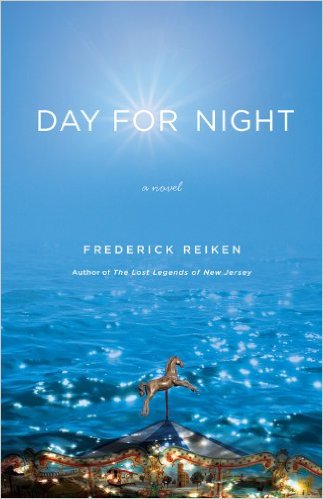
"Day for Night" by Frederick Reiken


This was a Christmas present.
There is nothing more welcome as a gift to me than a book (or a music, movie) BUT what to give to a 100% bookworm who reads an collects his whole life? When it comes to my current choices, I usually roam where inspiration leads me and follow towards whatever suggestion, idea or a recommendation might point. Sometimes the best intended gifts might simply not be the right choice for me, as proven a few years ago when I was given than brand new trilogy "Fifty Shades of Grey" (which my roommate had bought as Christmas present completely innocently because it was very popular and the lady in the shop suggested as a best seller) than still stands unopened somewhere in the corner because I simply didn't have a heart to throw it away. This Christmas my current work colleague faced a small choice in a Aruba's bookshop and bravely decided to go for something written recently and to trust all those glitzy awards and usual advertising tricks on the cover. I was thrilled, to be honest, because I love books + never heard of this one. 

It turned out very interesting, though I was very suspicious initially because I didn't like the voice of the character at the start - it sounded just as annoying and superficial as majority of the people I meet trough my work (me, me, me and some more me) until I realised (around chapter three) that this was actually a very clever trick: every chapter is told from a point of view of a different person, so each of them have completely different way of expressions and thinking. A spotty teenager, neurosurgeon, retired widower, FBI agent, pop singer, it unfolds Rashomon-like into a story that eventually connects different destinies, lives past and present, even far away places. I guess the main idea would be how our lives are all connected one way or the other. Kind of how your life story could be told from different perspectives if various people talk about it. Which brings me to my favourite question - what is truth and are we a person we think we are, a person we strive & imagine ourselves to be or a person others see in our place? Well, I enjoyed the novel up to the point but not really because of the story as much for the idea of each chapter having a completely different, fresh voice. This was done with excellent style and grace, I must admit the author showed even brilliance by using so many completely opposite ways of thinking and different perspectives. As for the story itself, I felt it a bit meandering and unfocused because it started in one place and it went to several others until it closed at something completely left-turn - it all had some sort of conclusion, I guess, but again it was the writing style and not the story itself that thrilled me. 

26.12.15

"The Country of the Blind and Other Stories" by Herbert George Wells


After I have finished with Anne Rice (whom I remember being much better than what actually is) I took a break from reading - which in my case means simply one day without book, just to clear up my head - I took a look upon my virtual library and decided to look up to something different, let's say to a genre that I don't usually visit. Not long ago I have read "Legends: Short Novels by the Masters of Modern Fantasy" which was a lovely collection of short stories written in Fantasy genre. It also inspired me to check out some more Fantasy writers, so I ended up over-dosing on George R. R. Martin and for no matter how exciting it was, for now I am just fine with swords and magicians. This collection also reminded me that I don't usually go for Science Fiction, perhaps because all that talk about Aliens, space ships and technological details puts me off - with notable exception of Frank Herbert's "Dune" I have not been specially interested in this genre. But I did my very serious research and found out several pretty famous titles so now I have another pile to check out and decided (in the spur of the moment) that now I'm going to read some serious Science Fiction. Maybe not too serious and too technical, because (just to play it safe) I started with father of Science Fiction, famous English writer Herbert George Wells who belongs to mostly 19th century so (I hoped) he wasn't too technical. 

Of course, I know H.G.Wells from before - in fact, one of the very first movies I saw in the cinema as a kid was darkly disturbing 1970s version of "The Island of Dr Moreau" which actually is horror story of the first order for any adult reader, not to mention a small child who was left traumatised for life. But since H.G.Wells is so well-known and legendary writer, he fell into group of those people I somehow got impression I was very familiar with where in fact I knew movie versions of his novels - I do have both "The Island of Dr Moreau" and "The Time Machine" (which I always loved) and this happened to be the whole extent of my knowledge. Just like with Jules Verne (another famous writer and visionary) Wells is someone I thought I know well, where in fact I can only name famous titles. So right now I decided to start my Science Fiction with him, as he basically started the genre. 

Science Fiction my foot - quickly I realised this is collection of short stories that have absolutely nothing to do with Science fiction, Wells simply compiled his earlier works published in various magazines and it is delightful in its own way but no Science Fiction. In his introduction, Wells explains that at certain point magazines seriously pursued and even encouraged the genre of short stories, which readers at the time loved and some famous writers in fact got their start this way - the whole tradition of short stories somehow declined and eventually almost disappeared with time, nowadays magazines mostly focus on short articles, photos of celebrities and colourful adverts but there was a time, long time ago when people actually read articles. I clearly remember the contest in my local paper, long time ago, where one of the stories haunted me long afterwards and in fact I recall its title to this day - it was "Školjka" (The Shell) but unfortunately I don't recall the author, it was about young village girl, innocent in her youth and as she finds a pretty, shiny thing on the floor, she assumes it is a shell so she proudly pins it on her - it turns out it was not a shell but a pin from a uniform of German soldier killed by her relatives and as Germans search the village for the killer, she was noticed on the window with her "shell" and quickly executed with the rest of her family. So this is what I always think about short stories - Wells basically agrees with me - they are little masterpieces meant to enjoy in a short span of time (waiting rooms, trains and such) where the story if its really inspired and imaginative stays with us much longer than we expected. It takes a special skill to create such little miniatures and I am right now deep in fantastic world of H.G.Wells though so far there is nothing remotely scientific about them, in what I have read so far he is firmly standing in the present time and describing everyday people around him, but he is truly good. It is also a welcome change of pace for me after reading all these history books and Anne Rice.
Another writer who became world famous for his short stories was Guy de Maupassant whom I definitely need to check out.

---------------------

Dear reader, once I wrapped my head around the fact that this, after all, perhaps won't be Science Fiction collection in a sense of space ships and aliens, it turned out to be very enjoyable read - some of his stories are truly magnificent and unforgettable in a sense that border on fantastic, they only seemingly happen to be in present time but is characters always live trough some unexpected, weird adventures. I thought he might have been influenced by H. P. Lovecraft but than I realised Lovecraft came after him (and was much darker). One of the stories I just read was titled "AEPYORNIS ISLAND" and it was truly excellent, about a man who found him stranded on a deserted island with a egg fossil from some ancient bird - egg somehow actually hatches and the man has to live with little bird that belongs to long disappeared species of animal that lived in completely different era. Two of them live alone of this island in harmony as long as the bird is small but as it grows and becomes dangerous, where eventually two of them compete for power - ancient bird is bigger and stronger, human much smaller and more dangerous for he is cunning and clever. Eventually there is inevitable end which I won't explain here, its truly excellent. So it IS very interesting and I actually can't wait to continue reading this - maybe it wasn't exactly what I expected but its thrilling read.

"The Witching Hour" by Anne Rice


"There is a house ... in New Orleans..."
It is an ancient mansion, completely covered by overgrown trees and garden that now hide what used to be a brilliant palace full of spark, elegance and style. Everything is in ruins, neglected, dark and foreboding, people passing by can only glimpse figure of old woman sitting in front porch, wearing enormous Emerald necklace. The whole town knows Mayfair family, their generations of strong-willed women and only one in each generation inherits this necklace, only one being the chosen one. There is a secret society of psychics, called Talamasca and their members have for centuries quietly and silently, from a careful distance following Mayfair women, from medieval times when they used to get burned as witches, to a present century when they amassed huge wealth and influence. Servants and informers talk about ghost in the house, a ghost that constantly follows, protects and assist Mayfair women trough the centuries. The youngest Mayfair was given to adoption on the day she was born - decision was made that the child must somehow get away from this house and family - but now young doctor Rowan Mayfair finds out that her biological mother has died and since her adoptive parents also passed away, there is nobody to stop her from going back to New Orleans for the funeral and to face the family she never knew, the huge house she inherited. Aware of her own special powers, Rowan knows nothing about the family - its up to the man she had saved from drowning (Michael Curry) to get in touch with Talamasca and finds out who Mayfairs actually are and what dangers might wait for Rowan once she arrives back to the place she was sent away from as a baby.

Along with Stephen King, Anne Rice is the only author that I had ever encountered who have a skill and power to keep me glued to the book from the very first page. With everybody else, I have to work my way trough to get in the mood but these two have special talent to grab my attention immediately. While King constantly keeps me on the edge with his horror and general creepiness, Rice is seductive enchantress weaving her web of atmospheric, gothic web and honestly I almost forgot how good she was. Years ago I remember loving her vampire novels but after a while she got caught up in similar style & stories, at least that was my impression - it happens to many successful authors (including Dan Brown) that both audience and publishers expect them to continue in a particular style and inevitably they start to repeat themselves. That is why you can clearly feel the excitement and freshness Anne Rice had when she changed the gears and left vampires behind to start something at least slightly different - its like she took a breath of fresh air and discovered the beauty of writing again.

I had actually read "The Witching hour" long time ago and promptly forgot the details - like with so many other books, I remember only the impression (which was very good and exciting) and that it has two sequels, but somehow I never got around to finish the trilogy so now, after reading three non-fiction history books in a row, I decided it is time for a break and let's enjoy some good fiction. It didn't bother me that I actually read this before - it felt like a completely new book anyway and I was thrilled with it so much for the sheer pleasure of changing the subjects. As much as I loved my history books, now it was time to look the other way and Rice occupied me so much that I found myself reading it long into the night and than again first thing in the morning, even before the work. One thing that I noticed now - the story is exciting and powerful as long as we are in present time, following Rowan, Michael and Talamasca but at certain point Rice makes a mistake: she slips back to the very first Mayfair/Talamasca connection which was centuries ago and somehow gets caught up in description of every and single generation up to now. Perhaps it wasn't her intention but the story suffers because we loose excitement and concentration for the main characters, as she goes on and on about various Mayfair women and at certain point you actually start to fidget and wonder will we ever go back to the main story or is this it, the saga about Mayfar family trough detailed description of each generation? It reminds me on those old relatives who would strangle you with stories about long gone family members and you just feel exhausted afterwards. So right now I am on the second part of the book but I quietly lost the initial enthusiasm because story went completely off the track and in fact I am still in 1920s (long way to go to the present times), probably this is why I never continued with sequels because I was afraid it would be more of the same. Pity, because it starts wonderfully and it might be one of my favourite Anne Rice novels if not for this strange change of focus. I really wish that at certain point the story returns to main characters again because so far I am deep into testimonies from servants, spies, nurses and nuns trough each century and it gets a bit tedious. 

---------------------------------

The story finally reaches present time around the page 600.
It considerably slows down, testing reader's patience - at this point, after you have read chapter after chapter about every single generation of Mayfair women, now we are treated with extremely detailed (and quite unnecessary) description of every step Rowan and her lover made once they returned to New Orleans. Rowan and Michael eating. Rowan and Michael re-decorating the old house. Rowan and Michael driving the car. Rowan and Michael opening the window.Rowan and Michael preparing the wedding. And though its nice to see these two so much in love and enjoying each other's company, it does make you question whatever happened to this book? It started exciting, it started dark and dangerous and threatening and full of dark corners, where now we are reading about quite mundane, ordinary daily routine of two people who talk to each other chapter in and chapter out. "Don't worry, everything is going to be OK" "Oh but I feel something bad is going to happen" - this is my description of several chapters full of dialogues exactly like that. At the end, when the novel finishes as it does somewhere in limbo, I was honestly relieved and now I know exactly why I didn't bother with sequels. I really have to be in the mood to continue with other two books.

"1177 B.C. The Year Civilization Collapsed" by Eric H.Cline


"The economy of the Greece is in shambles. Internal rebellions have engulfed Libya, Syria and Egypt, with outsiders and foreign warriors fanning the flames. Turkey fears it will became involved, as does Israel. Jordan is crowded with refugees. Iran is bellicose and threatening, while Iraq is in turmoil."

Sounds familiar? Just as I expected and always used to say, there is nothing new under the sun, everything always happens in circles and what you just read is not a description of current political situation but rather a description of something that already happened long time ago, in fact around 1177 B.C. in the area we call Mediterranean - it was the end of Bronze Age and kingdoms were back than known under different names but they were in the very same spots we know today. Author Eric H. Cline explains in very interesting way all the known details and archeological discoveries about that times and how it came that all those kingdoms (that depended upon a certain natural resources from Middle East - it was Copper back than) eventually all fell down like pieces of Domino one after the other. It was catastrophe of huge proportions and the end of civilization back than, but new empires and new civilizations came after them.

One difficult thing for all the historians and archeologists researching this period is that countries and kingdoms were known under different names back than so with few exceptions (Egypt for example) most of these old names mean nothing to us today - the Hittites, the Mycenaeans, the Canaanites, the Cypriots - are known only from ancient documents and letters, others we can only guess. What they all have in common is certain diplomatic language (kings all wrote to each other as "dear brother" expecting support in wars, gifts, trophies and ships full of slaves), market connections where they all imported and exported products (vines, perfumes, swords, clothes, etc) and they all fell one after another when certain enemy fell on them - we know this enemy only by descriptions as "sea people" who burned, pillaged and destroyed city after city. Even mighty Egypt who fought back and pushed them back, never completely recovered from their attacks. What I found fascinating is how these ancient kingdoms behaved in exactly the same way our governments and politicians behave today - they used polite diplomacy first, then brutal force when necessary, even used embargo on certain kingdoms or islands who stepped out of line. Most of things in this book happened in twelve century B.C. and archeologists found the story in excavations of cities long burned and destroyed - we can only tell these places were completely erased and it was not earthquake but enemy who killed citizens and burned the palaces, but who did it, nobody can tell exactly. One after the other, kingdoms of Bronze age fell apart and it was the end of the world as Mediterraneans knew back than. We think the world is connected today but than again, so it was in twelve century B.C. with Middle East being the main resource of Copper and Tin  necessary for making Bronze weapons. It makes you wonder how much history repeats itself, our own times simply reflecting something that had happened already.

"Ripper Street: Season One"


Another recommendation and lo & behold, from the very first minute I not only loved this one but suddenly realized what was so wrong with the previous TV series: this is British TV show. Which means that "The Killing" had this particular cookie cutter, mass-produced feel to it - we have seen shows like this time and time again, another crime, another detective search but this one is European production so it has completely distinguishing quality.

First of all, it is a period piece set in Victorian London - precisely in poorest slums of East London bursting with immigrants, criminals, beggars, prostitutes and what was basically a twilight society. Everybody wears historical costumes, which gives a show a decisive, unreal feeling so even though we are dealing with crime & murders, we are in the world of Charles Dickens and not CSI forensics. Police detectives wear old-fashioned, bushy moustaches and sideburns, ladies are buried under the layers of Victorian clothes (hats, petticoats, gloves), children run around with bare feet. Yes, it is crime story - hence the title, hinting at the most famous murderer of the day, Jack the Ripper - but most of the time Jack the Ripper is just mentioned as a threat and not really part of the story. Each episode had different story and what connects them are three main characters (police detectives) and their wives/girlfriends that we see each time. It is almost unspoken but the main character here is East London itself, from the very beginning one of the very poorest areas of town, place of nasty smelling and low paid jobs, poverty, orphans, place where locals often took justice in their own hands, the part of town where aristocrats and high society (like Oscar Wilde) went only for fun & adventure (just like in 1920s wealthy New Yorkers visited nightclubs in Harlem for kick of forbidden fruit). This time I am not disturbed by neither crime or violence because it is not realistic and everything is set in particular historical period, perfectly re-created and fascinating to watch. Of course it makes you wonder what kind of live you would live in society like these - classes were so sharply divided that majority of people worshipped every penny and would (and were) commit any crime for it. The sheer abundance of everything we have today - food, clothing, comforts of all sorts - were beyond the reach of people back than, who struggled to survive in overcrowded town. Fascinating.

"The Killing: Season One"


This is something recommended by my colleagues and boy, did I had hard time with this TV serial.
I found it so dark, gloomy, unpleasant and altogether heavy that it became a chore rather than a pleasure - after all, we watch TV serials not for the sake of sadomasochism but because we are interested - well in this case I really did NOT enjoy it at all and each time had to force myself to watch another episode, at the end I just wanted to get over with it and be done.

Considering the honest excitement of my young work colleagues who were following it night after night, I actually asked myself what's wrong with me - apparently they loved it - and to be absolutely honest to myself, it might be that at my age I had already seen too many TV serials with similar themes: female detective, forensics digging under the fingernails of the victim (young girl, of course), thousands of suspects where each and one of them is hiding some secret, soap bubbles growing on and on and on. This is American version of celebrated Danish original but I can only focus on what I got here - American version - and not that actors or even scripts are bad, on contrary, acting was very strong (specially grieving parents, family and school friends of a victim) however at this point it seems I am a bit over the whole idea of crime-as-entertainment , I simply dislike watching another TV show where people cry, suffer, kill each other and detectives dig under someone's fingernails, I have seen too many of those and had enough of them. There is a point where I just don't find it neither entertaining nor amusing and don't want this to be my choice of how to spend evening - friends tease me that I had mellowed with age beyond recognition and it might be so, I rather think it has to do with conscious decision not to accept whatever just because it has been served in media. There is so much violence and brutality everywhere, served as entertainment that I need to keep it away from me - honestly I don't think its even healthy to watch too many of shows like these - besides, we have already seen story like this covered many years ago in "Twin Peaks" where everything was focused on murder of a young girl. So my conclusion is, this can only be exciting to my much younger colleagues who don't know better. I managed to go trough the first season - very reluctantly - forcing myself each time to go and watch another episode where someone cries and rain constantly pours, not a trace of sunny skies in this series. As I finished the last episode, I sighed in relief and won't even think about continuing with second season.

4.12.15

"Sulla Tua Bocca Lo Dirò" by Mina (2009)


Spiritual twin to earlier "Dalla Terra" album by Mina, where great Italian singer recorded music with religious material from centuries ago, this one focuses on classical composers and opera repertoire. In fact, Giacomo Puccini is represented with five songs so it was almost "Mina canta Puccini" and it makes one wonder why she didn't simply focus on what is obviously her favorite classical composer. 

The cellophane is excellent - orchestration, arrangements and backing musicians are very tastefully done, everything lead by maestro Gianni Ferrio who approaches this music with sensitivity and respect, without ever sliding into easy-listening. And the idea is not half bad, if you take it as concept that arias from opera could also be sung as a melancholic ballads instead of full blown showpieces they were originally written as. Black-and-white video clips from 1960s are testimony that way back, several decades ago, Mina used to sing Puccini this way as a part of her now-classic TV shows, she would sing aria of Mimi from "La bohème" not as operatic coloratura but as a slowed-down sentimental ballad and it worked, since she was young singer in a full control of strong voice. 

Unfortunately this album came a little too late. At this point Mina was 69 and even if the spirit is here, the voice is not anymore. I understand the age eventually ravages every instrument but her voice is now a shadow of its previous glory and its impossible to listen this (frankly, very brave and ambitious) recording without noticing that sheer will, charisma and focus can not hide the fact it all sounds seriously lifeless. She still holds impossibly long notes in "Mi parlavi adagio" (famous as instrumental piece by Albinoni) and even somehow manages "Nessun dorma" but the effect is depressing since behind all this pretty music and angelic orchestration, it is the sad, shaky voice that once used to be glorious. As always, she choses some English language bits (always the oddest, most eccentric and unsuccessful parts of her discography) and her take on Gershwin brothers is well, one of my least favorites ever. This is a rare example of the whole album where the cover picture and backing musicians/arrangements are actually best part of the package, lady herself was obviously brave enough to attempt this but she should understand that it actually doesn't sound good anymore. Album like this should have been recorded several decades ago, not as a sad farewell. The cover suggest ever-young diva but it all suggest Norma Desmond to me. 

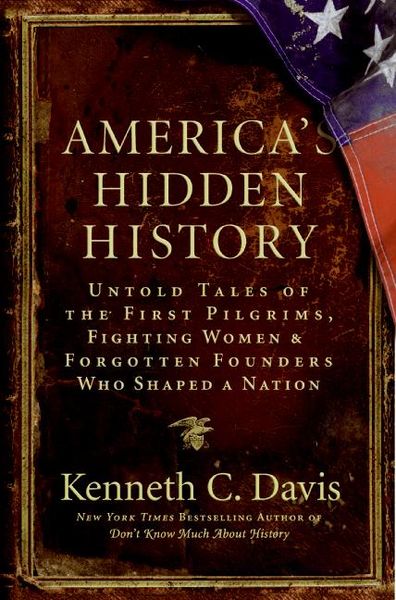
"America's Hidden History" by Kenneth C.Davis


As you can see, I enjoyed previous book so much that I decided to continue with Kenneth C.Davis some more. 


This particular book covers the period of some three hundred years, from the arrival of Christopher Columbus to start of American Revolution - what author does here, since he has more space to focus on particular time, he unearths several lesser-known stories and creates chapters out of them.

It starts with arrival of Columbus who brought pigs with him (a gift from Spanish queen Isabela) to feed his sailors, well the very same pigs brought germs and microbes with them that eventually spread all over the new world and created greatest, unintended epidemics that killed millions of Native Americans who had no immunity to these diseases. (I couldn't help but remembering that in a Muslim religion, these animals were always considered "dirty" and "forbidden" ). From there, author follows the interesting and mostly forgotten characters from American history and gives them proper spotlight and understanding about the atmosphere, the times and politics of the times. I knew about Anne Hatchinson but was not familiar with stories about Hannah Dustin and Mary Rowlandson, both early heroines of their times. There is a whole chapter about young inexperienced country bumpkin who grew up to be George Washington (and circumstances that formed his character and personality), the story about famous Boston's "Tea party", its aftermath and consequences (once the city port was isolated and blocked by royal degree from king George III, other American colonies started to ship food and supplies to Bostonians in a rare show of solidarity which resulted in a feeling of unity amongst colonies against rule from England) and right now I am at the chapter about Benedict Arnold. 

What is really interesting here, besides obvious curiosity about people and stories mostly long forgotten is the explanation how it came to be that American colonists, who were perhaps just few generations divided from old world and who still had family connections to the other side of Atlantic, started to feel resentment about distant government, harsh taxes and overall abuse from aristocratic circles back home  who in most of the cases have done nothing to actually create this new world. Two opposite fractions - loyalists and patriots - were created and the atmosphere was ripe for some drastic change, at the point where revolution and eventually independence became the only logical conclusion. Author explains all of this in a very interesting way so what could have been a dry history lesson again becomes exciting read - Kenneth C.Davis truly loves history and it shows in his passion, excitement and style. I could read his books forever. 

24.11.15

"Don't know much about history" by Kenneth C.Davis


It took me a long time to understand and accept that people from different background/various countries have their own particular educational system which is naturally focused on local perspective. There is no such thing as common knowledge, what I had learnt in my own school has just a passing resemblance to what my friends from other countries had learnt - one of the surprises I faced during my life in foreign countries was the fact that suddenly I found out that (for example) my friends had no clue about geography, foreign languages, history, cinema, music or anything that was outside their language area - where I knew a little bit about everything and could name at least capitols of European countries, my friends did not even know where these places are. Even now I meet passengers on my ships who have only vague idea where Croatia is. On the other hand, my own knowledge is probably very spotty if you ask me about something they were taught in schools.

When it comes to history, this is subject that had long fascinated me - the curiosity was always there, though it never showed in my school grades because what our high school history teacher wanted more than anything was the dates. That plump, sweet lady was obsessed with the dates and it was all she talked about, which naturally made extremely boring history classes, where everybody basically just switched out and either gazed trough the window or meditated until end of the class. It is really pity because teacher can truly light the flame of lifelong passion for any subject if he/she only show excitement instead going trough tedious routine as this lady did - she probably counted the minutes herself, however we always dreaded her classes because she would just rattle important dates and expect us to remember them. One particular day, almost towards the end of my high school I realised that my history grades were always lousy and decided to correct it, not that it would change anything in my life but I wanted to prove it to myself that I can do it - specially because I always loved history anyway. So I got prepared, memorised whatever the subject was and when the next time when this lady asked my comatose class is there anybody who volunteers for exam, dear reader, I stood up, floored everybody (including history teacher) and was the star of the day. It didn't help with final grades but it showed that I could have done much better if only I woke up earlier.

"Don't know much about history" are of course lyrics of wonderful old song by my beloved Sam Cooke and historian Kenneth C.Davis used it wittily for title of this book, focused on American history. His goal was to present history not as a boring, dry subject but as a exciting story that has all ingredients of great drama - sorrows, danger, happiness, heroes, traitors, winners, losers, lesser known facts and descriptions of long-gone scandals or different perspective people had back than. Because my own education was focused on my geographical area, I could talk about WW2 if you wake me up in the middle of the night but honestly I am not so familiar with other worlds. This is where Kenneth C. Davis comes handy because he wrote book that is that rare kind, educative and entertaining at the same time. He starts with discovery of America, Jamestown, Pocahontas and Pilgrims and from here off he goes to American Revolution, Tea Party and many other fascinating stories from American history that most of the people know just vaguely from the movies. Not only foreigners but even Americans themselves need to be reminded, according to author who had a personal mission to create something interesting out of potentially dry subject. It sold in millions, created a publishing sensation and in fact, started the whole "Don't Know Much About... " series, which I intend to check later. What I loved the most about this book was the sheer passion and excitement of author who wrote it as the best thriller, so I actually couldn't put it down and read it with greatest pleasure. The ancient history was fascinating but what interested me the most was XX century where I only realised how ignorant actually I was until now. Davis is also surprisingly clear-eyed and objective historian (if there is such a thing) which is very important because the past eventually gets re-told from different perspectives and official story could be different from what we remember, in this case author is informative but consciously detached and not hiding from dark corners in American history - every chapter comes with the list of useful literature so this is something I truly loved. 

23.11.15

"Horses and High Heels" by Marianne Faithfull


Who could predict, back in 1960s that of all people it would be Marianne Faithfull, that pretty, angelic face with trembling voice and alluring innocence (soon to be crucified in media for her "dangerous acquaintances" with bad boys) who would mature into respected mature artist with charisma and longevity? Of course she metamorphosed into completely different person and shed the old skin to emerge like a decadent aristocrat now, smoky and ravaged voice in place of her innocent younger self - although media never completely let go and has focused on her alleged notoriety ever since, Faithfull herself occasionally playfully going along with it, part of her appeal for me is that I imagine that somewhere deep inside under all that cellophane she is still actually same person like before, just better at hiding it. I know it because from my own (now middle-aged) perspective I understand that we never change completely - under the layers of years and experience we are quintessentially always the same person we always were, the same old heart still beating, dreaming and hoping although we learned how to appear self-assured. 

Listen "Horses and High Heels" and marvel at vulnerability, sensitivity and yes, even sophistication that 65 year old Faithfull brings to this music. Like everything else she had done, each of her albums have a different approach and reason - where earlier she either collaborated with famous songwriters, producers or even focused on Bertold Brecht cabaret music, here she visits New Orleans (yes, there is a song by Allen Toussaint) and does her usual eclectic and eccentric choice of covers but this time she actually rocks like never before and for the first time I started to think, God, Marianne now actually rocks almost like Mick Jagger ("No Reason" by Jackie Lomax). It is truly fascinating listening experience not only because this is 65 years old grandmother rocking and smoking and caressing her whiskey, but because between the lines and under the surface she is honest to herself and not afraid to address serious questions - songs like "Goin' back" or "Past Present Future" might be just 1960s covers for some, but there is no doubt that Faithfull approaches them with intelligence of seasoned actress who rejoices in opportunity to act these songs like brilliant roles. And yes, she is so convincing in them that you might start to believe she sings about herself. These two songs, coming right next to each other are such killers that you can just bow down in awe for the sheer emotional impact they produce. I had loved and followed Faithfull practically my whole adult life so it is with great affection that I listen this album and realise I still love her as much as before, if not even more.