17.11.14

"Milva canta per voi" (1962) by Milva


This is quite spectacular collection of music that was popular in Italy during early 1960s.
While Adriano Celentano and Mina went the other direction and ushered echoes of twist and rock on Italian scene (which immediately turned out to be hit with young audience, while elderly critics nicknamed them "screamers") Milva fiercely protected older, bel canto tradition which means she stood for dramatic ballads and full-blast lung power. But where 1950s singers sound pretty and sedate simultaneously (no doubt this was sign of the times and probably requested) than 23 years old singer went further and displayed such theatrical, passionate flair that in her hands everything turned into hair-rising operatic explosion. No wonder she quickly went on to be signed by "Cetra records" that also had bel canto veteran Claudio Villa amongst their stars - they took serious pride in young protege and supported her on all those fantastic San Remo festivals where she was constantly one of its biggest stars.

I was startled to count how many singles young Milva released up to this point - 60 in total - and this was just her second LP album, the first one being 1961 "14 successi di Milva" which judging by its title was compilation just like this one. All of her biggest hits of the time are here, including "Tango Italiano", "Il Primo Mattino Del Mondo" and Italian cover of "Et Maintenant" ("What not my love") and this gives you an idea about material - bombastic, quasi-operatic and good, old-fashioned Italian drama. Perhaps young singer was influenced by Edith Piaf but I hear Shirley Bassey here, in any case it was a glorious, heroic voice and it influenced a lot of singers in neighbourhood countries who tried to emulate her. Of course she went on to a never ending career later but this first chapter still sounds excellent today.


16.11.14

Old photos of Zagreb


Some more photos of old Zagreb that I actually really like - I always loved old photos, old movies and even old houses (I used to live in one of them) for some reason I always felt a special thrill upon seeing some ancient, leaning and obviously neglected house.

The very first picture here today is Zagreb's famous Ilica street that today looks more or less exactly the same, except that this was taken some 80 years ago so clothes, shops and advertisements are completely different. Buildings are still here but we have lost the street lamps in the meantime. You can walk this particular part of the street and recognise almost everything from this picture.

This is Vlaška street that used to be called "Under the wall" if I am correct. The wall being around our cathedral, which is on the hill at the right. Again, the street looks more or less exactly the same except different shops, advertisements and clothes. What is specially interesting here is the fact that people wore completely different clothes, depending on their social status - citizens wore city clothes, while peasants who obviously came for the market wore their traditional village clothes. There is a woman right in the middle of the road and she looks like a creature from another planet now, nowadays this kind of extremely ornamental scarves and dress can be seen only occasionally on TV but nobody would even think of wearing it in real life.

This is one of the oldest streets in town, right between two hills and once-competitive Gradec and Kaptol, Tkalčićeva street, where I grew up. Long ago, there used to be a little stream right in the middle of this street, later it was centre of "disreputable women" shall we say and never particularly glamorous spot. My earliest memories were about the house little bit further, opposite of park where I used to play, however later we moved in the building with a prominent roof here on the left - this picture was obviously taken decades ago, but this is actually the way I remember it from my childhood when it was pedestrian and completely empty of traffic and bars. Sometime in 1980s it became hot spot for bars and night life and nowadays is kind of curiosity for locals and tourists, though my memories about hungry years spent here are so strong that I always make a point of never visiting this place again. I understand it might look very charming and picturesque to people who come to enjoy their endless cappuccinos from their comfortable homes, but to actually live in this shaky, old houses was not romantic at all.

For the end, the picture that I found in the Internet - this is not Zagreb but some old house somewhere in the world (Belgium? Germany? Netherland?) and I just love this picture. I find it very pretty, beautiful and poetic. I was probably a starving poet who lived in the attic once here. Just a beautiful photo.

Reading again...


This year I was really on a roll with reading - for a while.
Specially on my last ship, I really almost re-discovered pleasure and joy of reading, that is how much I loved my new discoveries. I had almost ignored movies and music, but returned to my first love, books, with greatest passion, probably because e-books were so available and I found the whole concept suddenly so exciting. Than at certain point I found myself really stuck with something I didn't care for anymore, monumental horror/fantasy novel by Stephen King ("The Stand") that was just going on forever and ever, literary bothering me with huge volume and I eventually capitulated, left the darn colossus aside and was afraid to even look at anything else. Sure, I did indulge in book shopping but trough almost whole of my vacation didn't want to actually read because I didn't want to have any feeling of pressure or obligations. Now on this Interliber book fair I finally bought several thin volumes as presents and because they intrigued me decided to give it a go. I read this slim volume last night in one sitting.

"Proklete Hrvatice" is God-awful, bombastic title that should have actually be "Tragic Croatian Ladies" instead of this horrible name that translates as "Damned Croatian Ladies".
It is a very interesting biography of ten Croatian heroines from the past, well researched and there is even some connection between them as some of them lived at the same time and walked the same streets simultaneously, though have they ever meet remains a speculation. It is a very good idea, since majority of these ladies are today known only as names from schoolbooks and we have streets & squares, sculptures and art, but know surprisingly little about them. The book starts with celebrated 17. century poetess from Dubrovnik Cvijeta Zuzorić, who is remembered as being a beauty and gifted poet but nothing from her writings have ever survived centuries (?) - today all we know about her is her name and this is where book tries to clear the facts up. Further chapters are all given to specific women and their contribution to our history & culture. Most of the time I found the stories very interesting and was occasionally embarrassed with my own ignorance as I previously used to mix some of them up (apparently Jelena and Katarina Zrinski were two completely different persons). Naturally, two of the biggest and most familiar stories are about two ladies who lived at same time but probably never met, as they moved in different social circles: Ivana Brlić Mažuranić was gentle, refined and sophisticated aristocrat who wrote children stories as hobby (permitted for someone of her status) but harsh reality, financial troubles and family drained her so much that she ended her life with suicide. On the other hand, first Croatian female journalist and writer of mega-popular "pulp fiction" historical novels Marija Jurić Zagorka lived completely off her own writings and fought windmills trough all her life, suffering humiliations on every corner that someone of privileged class would simply not have to endure. Zagorka happened to be a commoner writing for little, common people and she was darn successful at it, though academic circles always despised her. What this book also mention is her fierce nationalism and troubles that she would often out herself willingly into parading on the streets and being extremely politically active which surprised me a little bit, I mean here we have a little dowdy lady without any husband or support showing strength as a lioness with absolutely no fear or thought for her material background. There is also a very inspired chapter about deaf & mute painter Slava Raškaj that inspired me to look out for her work and gentle finale about late actress Ena Begović who was one of our great beauties.

Milana Vuković Runjić writes very well and I was impressed. However I am also aware that this is a very serious, almost academic book that somehow got published under false pretense of being light, non-fiction entertainment (paperback as part of daily newspaper) and its perhaps too good for intended audience that might find all these informations and analyses too complicated. I almost wish this to be re-printed in different edition and given serious treatment it deserves.

"Proklete Hrvatice Vol.2" is actually even more interesting because it focuses on less famous ladies from the past - we all know about Brlić Mažuranić and Zagorka but hardly anyone has ever heard of Josipa Vancaš who had her own literary salon and was known for nurturing talents of almost anybody who mattered in 19th century Zagreb. Or Mila Gojsalić who somehow went into a legend trough folk poem, but who she actually was? Again, Vuković Runjić does excellent job and I would say that this time she was even more inspired, very interesting read.

Another book that I bought on Interliber book fair (again as a present for a friend who lives in another country) was this slim biography of Josip Broz Tito published under the title "Veseli Diktator" ("The Merry Dictator") by Slovenian author Žarko Petan. I gulped it all in one sitting last night, as I usually do with this kind of slim volumes but it left a bitter taste in my mouth and now I wish that I didn't bother.

You see, all this kind of post-mortem biographies published after Tito's death in 1980 deal almost exclusively with lurid, scandalous and gossipy subjects that nobody dared to mention while he ruled the country for 45 years. To me this looks very much like angry, immature adolescents rebelling against big father's authority and trying to throw mud at someone who demanded respect while he was alive. Author keeps lifelong grudge against the late president, because he was jailed once for daring to ridicule his pompous uniforms and comparing him to some operetta character (his father died while he was in prison). While it is startling to realize that people used to end up in court for talking such things in private conversations and there were enough of slimy characters willing to immediately tell this to police officials, it also explains author's point of view colored with bitterness. Which personally I find very unusual because I am not capable to simmer such thoughts about anybody - most of the time I simply let it go and people who cross me are usually forgotten after a while. But Petan still thinks about it half a century after his imprisonment and won't let it go, now when Tito is long gone and buried he is here to tell his opinion about the man he saw only once in a passing train.

Author is well-known in his native Slovenia as director of TV and theatre, therefore his book might be interesting to people who know him from media. Personally I find all this a bit tasteless, remembering how much Tito was beloved by everybody while he was still alive - I was just a child back than but I was there and saw it with my own eyes, there were whole generations who saw him as a father figure, so even if this was all fake, false and artificial as author claims, this means we were all brainwashed into believing it. I still recall the genuine sorrow of the whole nation right after Tito's death and feel a bit disgusted with this apparent general amnesia where people today gleefully ridicule someone who was big authority once.

15.11.14

"It's The Girls" (2014) by Bette Midler


If initially this sounds like "Hairspray" musical, this is not a coincidence because it has same producers/musical directors.

Bette Midler was singing girl-group covers even way back on her very first LP debut in 1972 so this is not so unexpected after all - she has always been expressing delight in group harmonies and was known for singing them all by herself, often turning originals inside out.

I never considered Midler specially interesting singer, but either she developed with time or I got used to her voice, so this is fine if slightly predictable collection. After all, seems her discography is for some time now focused mostly on covers, so I am not 100% sure where does this lead. Even if her new recordings won't make anybody forget all about originals, its fun and she obviously enjoys doing this kind of material. 1960s bubbly girl group chestnuts are covered almost note by note and they are spunky and campy fun, with Darlene Love making a joyous cameo on one of her classic hits. More interesting are girl-group hits slowed down into meaningful ballads that bring the beauty of lyrics - however, even this has been done before as Roberta Flack would tell you (she recorded "Will You Still Love Me Tomorrow" as piano ballad decades ago and it was very effective). The best is saved for the last - where previously Midler covered The Andrews Sisters, this time she turns to even older musical idols - since The Boswell Sisters were Andrew's girls main influence, we are talking about girl-group royalty from 1930s and grandmothers of all girl-groups that came later, this is done in a wonderfully crazy, snappy 1930s swing style and its highlight of the collection.

Interliber 2014


For one day only I decided to leave my countryside exile and travel to town, in order to visit this year's annual book fair Interliber.
Its always organised at this time of the year and last time I also happened to be in Croatia & it was very enjoyable experience. So off I went, sleeping in a bus and later walking trough the streets of Zagreb to kill the time until evening meeting with friends - who all work and have only just a tiny bit of free time for such frivolities, but we all loved it and shared the thrill of browsing countless book stalls.

Impressions;
It wasn't all new - I saw a lot of same titles that I have already saw last year, which is probably inevitable because its all about publishers.
Since people are constantly brainwashed into fear of poverty and economical crisis, it seems that this year they were more looking and less buying although prices were mostly more than acceptable.Hardback editions naturally cost more, if you wait just a little bit, same titles will turn up in paperback - as everywhere in the world.
Tons of colourful "girl's novels" meant for female audience curious about lives of royalty, tragic queens and what not - I noted slight overkill of Philippa Gregory-kind of novels which seems a bit tired to me. Another market were cookbooks, astrology and self-help, all of them far too numerous for me to actually pay attention, instead of making it exclusive such abundance actually kills my interest immediately. One thing that annoyed me - but I understand this was all about promotion about publishers - is the fact that if suddenly you remember a certain title, there is no way you can find it because a) who knows is it translated into Croatian, b) you must know the publisher otherwise its really like searching for a needle in a haystack. I wanted to give my friend a book by Bill Bryson (anything by him!) but couldn't find it since I don't know the publisher. OK forget about Bill Bryson. I also noted a lots of novels - my friends here are mostly reading novels - and it didn't really attract me because in the meantime I kind of moved away from fiction towards either non-fiction or biographies, most of the books that really left strong impression on me recently were either history or some witty non-fiction book with lots of funny informations.

As always, by far the most enjoyable stalls were not new titles but second-hand bookshops offering their worn-out covers, those were really my favourites. Here I found the titles that I used to read decades ago when I was growing up and these are certified gold, truly well-read and proved classics I knew. Withe the biggest pleasure I bought wonderful collection of interviews called "Interview With History" by Italian journalist Oriana Fallaci, this is something I wanted to re-read for a long time and it costed almost nothing, being old book from 1970s. (I would paid three times more). It has her interviews with people like Henry Kissinger, Golda Meir, Indira Ghandi, Willy Brandt and Sirimavo Bandaranaike - all of them famous and great politicians in their time.

Another second-hand purchase was something that I still remember from decades ago, "The Flounder" by Günter Grass - a novel!_- but if I remember correctly a excellent one, about never-ending push and pull between men and women, with a fish in the between as a symbol of reason (kind of variation of fisherman and his wife story). Again, it cost me nothing. I surprised myself with purchase of book of poetry from 1885 by Croatian poet Silvije Strahimir Kranjčević ("Bugarkinje") who is kind of name from schoolbooks but never read for pleasure, read about him the day earlier and found it strange coincidence that his book was looking at me so took it as a sign. There were also few trivial-but-fun titles that I bought as a presents for my undemanding friends and those I will probably read first myself. The whole evening was very pleasant, with focus more on socialising than book browsing, which was fine by me but I only wish I had more time to explore non-fiction sections. On the other hand, what's the point of piling unread books around me.

"Give My Love To London" (2014) by Marianne Faithfull


By now you either got used to Faithfull's croak or you didn't. I still find it absolutely fascinating that this woman, who used to be just a footnote in "Rolling Stones" history turned out to be far more interesting artist than famous rock group whose albums have became routine job a long ago. Everything from her music, movies, books and interviews speaks about really interesting person who has something to say and is aware about her "scandalous" pubic persona but accepts it and sometimes even plays with it.Though I love her 1960s work, everything that came afterwards is far more rewarding and closer to the bone.

This, her latest album already has great reviews - to me it doesn't sound any better or worse from what she was doing already for some time, offering strong songs written by excellent songwriters, meaningful lyrics and that voice that sounds like it comes from a utterly broken heart. What Faithfull does - and she is very good at it - she constantly presents herself as artist with integrity, completely avoid anything banal or commercial in order to sell more records. That is why her albums don't really catch on first listening but work much better with time, as they sound timeless. I have noted even previously that she sounds so good on Leonard Cohen songs that sometimes I wish she should just record the whole Cohen-songbook because it would be excellent, she really has affinity for this type of material.

More Wes Anderson


"Rushmore" (1998) 
Talking about nasty, sulky teenagers, here is a movie about one of them. As I was so delighted with "Grand Budapest Hotel" by Wes Anderson, I decided to check more of him and went back to his filmography - debut "Rocket Bottle" was sweetly kooky shoe-string budgeted little masterpiece and "Rushmore" apparently was Anderson's first big hit. Done with real money, loved by critics and it even has one really big Hollywood name in it.

It all depends how much patience you have for adolescents with maniacal energy and their unbearable ways. Sure, we were all there and its best left forgotten, I for one feel sorry for my parents and what they had to endure. Wes Anderson and Owen Wilson show their usual combination of gentleness, kindness and humour towards characters in their story but no matter how much they tried, they didn't make Max Fischer any more likable or lovable in my eyes - the kid was little Hitler whom I found indescribably repulsive to watch and in real life I would even avoid him completely like a plague or beat him up. What was god were all the other characters about him, like his little gang of friends and all the grown-ups including wonderful Bill Murray who truly does wonders with his simple acting style - by not overacting, he lights up the screen every time he comes around. Unfortunately the movie is not about him but about this obnoxious teenager (I guess Jason Schwartzman did a good job) so I didn't really enjoy this as much as I expected. I even left my opinion to simmer for a few days, but it didn't change - even when the kid finally shuts up, that doesn't mean he becomes more compassionate, he simply sulks and plots further nastiness towards the grown up world. Dangerous kid.

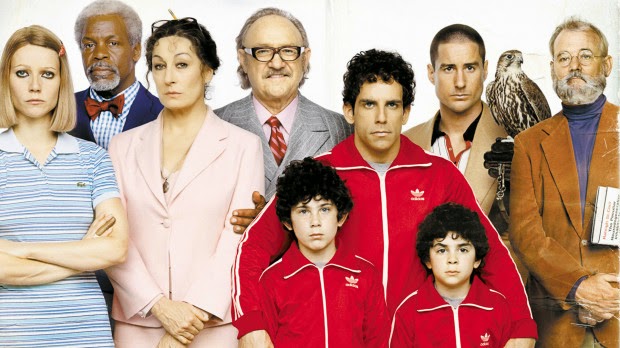
"The Royal Tenenbaums" (2001) 
I don't really get why such excitement about this movie, because for me this is just another re-telling of any of Woody Allen 1980s movies ("Hannah and her sisters"comes first to my mind) about privileged dysfunctional family full of eccentrics. But where Allen had serious understanding for characters and their motives, here it all seems somehow artificial and slight. These are not real characters but more like cartoon descriptions of ideas, tons of famous actors used to walk and talk trough completely unrealistic scenes and I just couldn't sit still trough these dialogues without squirming in my chair. Anjelica Houston and Bill Murray kind of gave it some gravity but they are really just a decoration here. And occasional sentimental parts (grandfather teaching his grandsons to relax and enjoy life) seemed so contrived that it just rubbed me all wrong. There are some instances where artificial movies work just fine because I understand director's vision but this one didn't do it for me.
Strangely enough, his next movie was even more artificial but I loved it because it wasn't silly sentimental but really focused more on oddity of lovable characters.

"The Life Aquatic with Steve Zissou" must have been first Wes Anderson movie that I have ever seen (it was on TV and I remember watching it with one eye, than ending up glued to the screen), now after second viewing I love it as much as the first time, if not even more. It might have been commercial disappointment but to me this is first-class Wes Anderson and everything that was before was just a prelude to this particular moment when things felt in the place. Visually, technically, music, acting, script, I just love love love this movie. It is kind of "Moby Dick" story with wonderful, washed up Bill Murray surrounded with all sort of sweetly weird characters and I must point at Owen Wilson who was really great here not to mention Cate Blanchett who simply not capable of doing anything less than brilliant. At the end I wept completely and utterly lost in the movie.


"The Squid and the Whale" (2005)
This is a very serious drama that I had approached with completely false perception that it would be another quirky Wes Anderson movie. Wrong. He produced it but it was directed by Noah Baumbach. I realised something is very different right from the start, since movie did not even look visually like a typical Anderson creation (the guy has a very distinguished visual style, which I happen to like very much). However, it turned out to be so interesting and compulsively watchable that I couldn't take my eyes of the screen, even though it wasn't pleasant at all.

"The Squid and the Whale" is about a breakdown of a family home - in the very first scene we get a hint that things are not really working out between the parents and we also have two boys who are absolutely adorable in their innocence and confused loyalty to their mother and father. As marriage falls apart, both sides are trying to pick up the pieces of their lives and go trough extremely difficult and painful times which are even worsened with having to share obligation for kids who are constantly switched between homes. Usually I am not 100% convinced with movies that use serious subjects as "entertainment" but this was different, it was a honest, almost cruelly clear look at what happens to people when they reach mid-life crisis (in every sense) and although it was definitely not a happy or jolly experience, as a drama it was quite unforgettable.

Acting is superb - parents are Jeff Daniels and Laura Linney, who are both sensitive and foolish simultaneously, almost like not realising what this all means to kids. Boys are at the heart of the movie and its hugely effective and dramatic performance by both Jesse Eisenberg and Owen Kline, who both desperately look up to their parents for directions and comfort. What I particularly liked is how director handled potentially melodramatic subject with delicacy and never made a step into mushy direction, where others would probably milk sentimentality for all its worth.


"The Darjeeling Limited" (2007)
I am listening to the soundtrack as I am writing this. Wonderfully zany soundtrack and it has unexpected Debussy, so what is there not to like.
To me, Wes Anderson is like a cool, sensitive and arty son of Woddy Allen: in his work I can find all the qualities that I once loved in Allen's movies but this guy has his own original and particular charm. At this point I think that I would recognize his style even if I am not informed who is director. This time around, the story is not so engaging as much rich with thousands of wonderful little details that create a palette of unforgettable moments. Owen Wilson almost goes back his "Dignan" role from 1996. here, same impulse to always make decisions for others, though later in the movie we get idea where they came from. Both Adrien Brody and Jason Schwartzman have their moments and it surprised me how often I laughed, first just a little bit than roaring out loud. The colors and locations are spectacular, though I must say they never take over the movie which is simply beautiful to watch. I just love Wes Anderson.


Happy music - Neil Sedaka's Greatest Hits


OK this is my instantly-feel-good-singing-around-the-kitchen-music.

It occurred to me this morning that although this kind of sound was actually slightly before my time, it left mark ever since - I could hear "Brill building" even in "Grease" which was soundtrack of my childhood. Of course I knew Sedaka for a long time as pre-Beatles hit maker but I kind of forgot about him until recently heard some of this hits on youtube and was surprised how much it affected my mood - these songs were so happy, bouncy and catchy that I got swept away with sudden rush of optimism and I made note that this is something to listen in future, when I need something to cheer me up.

Apparently there is interesting story behind "Oh,Carol" where Sedaka seriously studied what is successful and used all the tricks to make sure this would work. It did and it opened the doors for him in a big way. Almost every single song here is classic, with tons of extremely memorable refrains, clean old-fashioned fun and joy of music that works in therapeutic way. Looking from a today's perspective I am aware that almost everybody can pour his frustrations, anger and gloom at the world but it takes a real craft to come up with something so delightfully infectious and uplifting like "Little Devil" or "Happy Birthday Sweet Sixteen". Sure, its sugary and the sound of white America of the time, but I take it for what it is and how it affects me even today, decades after its release - I can easily imagine driving a car full of small kids behind me and we all sing along as we smile. Before they all turn into sulky teenagers.

12.11.14

Elisabeth Schwarzkopf (1915-2006) CD Box


I swear this was released days after Elisabeth Schwarzkopf's death and I still remember my surprise when I saw it in a window of Amsterdam's CD shop, thinking " wow, that was fast!" - obviously the music industry was well prepared for the fact that elderly lady was 90 and won't live much longer, therefore compilations were planned well in advance.

Schwazkopf was a legend of post WW2 era and one of the classiest ladies around, true noble beauty with magnificent silvery voice. There was also a strong, almost steel-like backbone to her, as many of her colleagues and pupils would admit. Which I perfectly understand, since the older I get myself, less patience I have with people who do things half-assedly. There are tons of recordings where she was either part of opera ensemble or recorded solo, so this 5 CD Box cleverly tries to divide them in various aspects of her art:

CD 1 is about composer Hugo Wolf - recorded with Gerald Moore and Geoffrey Parsons - its completely eccentric art music that she loved and championed trough her career. It sounded very strange to me at first but I grew to like it with time and I probably couldn't get better introduction to this composer.

CD 2 is again piano-and-voice collection, same pianists. But this one is about works of Franz Schubert, Robert Schumann,  and Richard Strauss so this is completely different era and Schwarzkopf is matchless as actress here, specially in "Erikonig" and wonderful "Die Forelle". Listen for yourself and marvel what can be achieved with only piano and voice. On the other hand, "Weigenlied" is pure dream. It really does make a difference when German-speaking artist sings this material.

CD 3 collects various opera arias recorded in places like Vienna, Salzburg and La Scala with list of conductors that sounds unbelievably now - Herbert von Karajan, Wilhelm Furtwängler, Otto Ackermann, Victor de Sabata and Tullio Serafin. I mean, listen and bow. No, not like this, lower!

CD 4 is titled "Encores and Folk Songs" - again its a piano-and-voice collection (with one exception, crowd pleaser "Frühlingsstimmen-Waltz" with Wiener Philharmoniker orcestra, that her teacher Maria Ivogün sang and recorded back in 1924). It is very pretty but it also shows how approach towards some of these composers have changed with time. Another  Ivogün connections are two simple Swiss Folk Songs included here.I was always terrified of Wagner but just now I realized that Schwarzkopf does one of his Wesendonck Lieder songs here and I liked it.

CD 5 is by far the most interesting for everybody who loved Schwazkopf because it compiles previously unreleased recordings that she found less satisfying: since lady was famously picky and critical towards herself, this means these are still far above most of other artists recordings. Here you will find all sorts of goodies ("Four Last Songs" live with Karajan) and most fascinating of all, rehearsals for "Mass in B Minor" where she sings together with Kathleen Ferrier. I mean, these recordings of "Christe Eleison", "Laudamus Te" and "Et In Umum Dominum" are reason enough to purchase the whole box set. Just wonderful.

However, this is still relatively limited overview of great lady's discography because I have some other complete LP albums that were not even mentioned here (operetta, christmas music and such) so I guess its quite impossible to squeeze her whole life and career in a small box. The good thing is that this gives you the idea what Schwarzkopf was about and why was she so loved.

"Bottle Rocket" (1996) by Wes Anderson


Because I enjoyed "The Grand Budapest Hotel" so much, I decided to go back to Wes Anderson and check him out some more. So I went all the way back to his first directorial debut (not counting something short done before) and was pleasantly surprised. Just as I expected, back than at the age of 26 he didn't have all the financial background he can command today and yes, it does look like it was done on a shoe-string budget but at the same time it bursts with youthful energy, enthusiasm and absolutely endearing earnestness.

Basically ignored by industry back than, "Bottle Rocket" was made by bunch of friends and it is about bunch of friends, sweet gentle losers who decide to turn to life of crime and adventure (they have plan for the next 75 years). The problem is, they are not really so dangerous or brutal, these are just three naive guys who can hardly have a conversation without getting into arguments and fights with each other. Luke Wilson and Robert Musgrave just tag along behind wonderful Owen Wilson who is heart of the movie, he is so darn crazy and sweet and annoying simultaneously that you are not sure do you want to hug him or hit him over the head.

Almost everything they planned (and much more than they expected) goes terribly wrong and you can't help but to love them seriously for all their confused efforts and sincere love between them. Its not funny in a roaring way, but it touches you really deep because they are basically three outsiders with their own problems who understand and support each other. At the end of the movie I surprised myself being genuinely touched and even teared up a bit. More I think about it, more I am convinced its one of those sweet, unforgettable little movies that nobody has ever heard of. Martin Scorsese paid attention.

Senka (1983) by Senka Veletanlić


There is simply no going around the fact that Senka Veletanlić - who started as one of also-runners on early 1960s pop festivals and was sweetly chirping if not particularly exciting singer in her own right - spent the whole life in shadow of her younger sister. Even mighty Bisera did not have huge discography (her recordings were mostly singles) but that powerful voice had often attracted first-class composers and she did left a mark. Unfortunately Senka kind of lagged behind and you really have to search high and low to find her occasional pop festival performance, seems that lady simply wasn't the one to push or promote herself. There is one jazzy EP recording from early 1960s, handful of singles and than when probably nobody expected anymore, finally her LP debut.

Since they did not write their own material, both sisters depended on composers. Bisera had Arsen Dedić and Kornelije Kovač (even Goran Bregović) but her one and only LP album released in 1980. sank without a trace because she left it all in hands on one man -  Gabor Lenđel. Who was not a slouch himself, guy worked with everybody from Indexi, Neda Ukraden, Đorđe Balašević and Seid Memić Vajta to his own band "Teška Industrija" but his work for Veletanlić sisters is less than inspired.Why did Senka decided to play all her cards on only one composer, when her sister did not had luck with him, I don't really understand but she did and it went nowhere.

Lyrics are fairly OK (written by her husband Zafir Hadžimanov), often humorous and witty look at middle-aged woman who is not in the first youth anymore and aware of it all. She is even conscious of younger sibling's supremacy ("Pa Šta"), laughs at herself ("Pevačica") and croons gently as always but final result as album does not really work because there is nothing remotely exciting or interesting here, the collection is really extremely mild and unadventurous. Its really interesting that someone who is in music her whole life could not use this rare chance to come up with something else than musings about telephone relationship or let's-stay-together-so-we-won't-be-alone type of song. Looking back at her jazz covers and all those 1960s covers anyway, seems that Senka Veletanlić really suffered from lack of strong material. No hits from this and no more albums either. You can complain about new, young and unwashed generations being aggressive and unsophisticated but kids at least always know how to get attention. Luckily her own son seems to grow into talented, original and creative musician.

11.11.14

"The Grand Budapest Hotel" (2014) by Wes Anderson


I saw an excellent movie last night - but before I go any further, I would like to ponder just a little bit about what makes us like (or dismiss) certain things. For example, this was something that immediately struck the chord of recognition with me, because I love quirky art film, saw some of them previously and found everything about it simply delicious. On the other hand, there are people who simply won't have similar point of reference or take movies just as they take their food - instant gratification based on stereotypes, not going far beyond previously known, without much expectations and refusing anything too foreign. As I am reading all the negative reviews and critics finding faults with what I believe is masterpiece, I am reminded of a friend who insisted (and seriously recommended) that I should see latest Dracula movie - which I actually saw on cinema posters during my last visit to Amsterdam and it didn't even occur to me to buy into it.

Sadly, most of the time when I find myself working on a ship for 6 months at the time, work colleagues are perfectly happy with blockbusters and as they have no serious background in neither history of cinema nor special love for directors, if they ever talk about movies its usually trough achievements of whatever is being hyped or advertised currently - not to mention garbage that I occasionally see on TV here during my vacation, kind of mindless time-killing fluff done "professionally" (read: cliché on top of cliché) but without any real substance or message or even opinion besides audience manipulation with sounds and special effects. Crime and brutality for the sake of viewers titillation. Sometimes I wonder whatever happen to real film makers, does anybody still remembers Ingmar Bergman and did cinema industry really turned into juvenile jokes full of farting, burping and hangover after oh-so-entertaining boozing? I am very much aware that it is my age & experience talking here, because I am not a teenager anymore and have seen tons of mindless movies previously. But along the way I have also seen movies that either were true classics or became one, each decade had something original and unusual to offer, we just need to be a little more cautious and selective.

The first thing that struck me with "Grand Budapest Hotel" is how much it reminded me on quirky "Le Fabuleux Destin d'Amélie Poulain" (2001) which I loved back than and always will. No one usually talks much about it but I see traces of "Amélie" very often here and there, the narrative, voice-over and all. Apparently this director is already known for his highly recognisable visual style and equally criticised and loved for it - I for one, love it and not only that I "get it", I actually wallow in every meticulously pre-arranged scene that makes movie look like some overblown marzipan cake it would probably take me several re-viewing to grasp all the countless little details. So what is here not to be liked? I really wonder - since it delighted me so much - who are those people who snicker and dislike what I find to be unforgettable joy of a movie? Could it be they are so used to familiar  action/crime/murder clichés that they wont accept anything that is not fitting into boxes? That Wes Anderson (who, by the way was born in the same year as me, and uses my beloved Stefan Zweig as reference) is too creative and original for them? Contrary to these opinions, I am so relieved, glad and yes, thrilled that there are still directors around who love what they do and follow their own muse instead of making just another forgettable products on the factory line - "Grand Budapest Hotel" might seem odd to some, but to me it stands head and shoulders above anything that I see advertised these days.

"Where the mind is without fear" by Rabindranath Tagore


Where the mind is without fear and the head is held high
Where knowledge is free
Where the world has not been broken up into fragments
By narrow domestic walls
Where words come out from the depth of truth
Where tireless striving stretches its arms towards perfection
Where the clear stream of reason has not lost its way
Into the dreary desert sand of dead habit
Where the mind is led forward by thee
Into ever-widening thought and action
Into that heaven of freedom, my Father, let my country awake.

                                                                Rabindranath Tagore

10.11.14

Dejan Petković Discography


"Obaraš me s nogu" (1979)
As I lovingly peruse trough old vinyl records collection of what was pop music in Ex-Yu  could it be that I'm getting old? I never listened those when I was there because kids are naturally attracted to foreign pop names - I found that Dejan Petković is actually one of the biggest mysteries for me, because he was terribly underrated and never one of the big shakers & moves, but guy was actually very good. From what I remember and what impression I always had, he was educated guy who played piano, composed his own songs and had nice, warm voice. He left handful of LP albums and few singles behind him, performed on festivals as everybody did back than, occasionally I found his name as composer on other people's albums and that was it. Ah yes, he was also brother of beautiful actress who won the crown on beauty contest.

The first thing that strikes you when you hear Pejaković is his voice - it was instantly recognisable, sensitive and mellow heartfelt croon, guy was natural singing talent and really pleasure to hear. Kind of Serbian Elton John/Billy Joel type, though I have deep suspicion that perhaps audience saw him more as Barry Manilow because he was never cool or rebellious, he was guy every parents would approve of (and was probably listened by teenage girls). This, his first LP album debut have its charm though I must say the chief pleasure here is singer's voice, not so much material which is over-produced and guy seriously tried to present him as being very cool, wild and what not (obviously he was very young and earnest) but give him a ballad and he really shines. It really pushes all sorts of nostalgic buttons but I do understand that Pejaković was perhaps too mellow for his own good - amongst other macho Balkan men he was a sensitive one. Mild and mellow.

"Emanuelle" (1981)
This was Dejan Petković's most popular album and I clearly remember some of these songs being played on the radio, he was kind of critics favourite more than anything else (mass audience never really warmed up to him) and its interesting to hear how just a small nuances made big differences - its basically very much the same sound as on his debut LP but now he sound more self-assured, this time around the lyrics have little more depth and the overall result is just fine. As expected, Pejaković is not the one for uptempo but he glows and glitters on ballads, specially when he has his own multi-tracked backing vocals.

Arsen Dedić provides one song (Pejaković wrote a song for his wife, so this was probably friendly gesture), there is a pretty classical-sounding instrumental "Jerina" (obviously he listened Elton John a lot) and the biggest his was "Moja Dijana" that perfectly describes his music persona of gentle, romantic who is overlooked because of his own sensitivity while girl goes for other guys. It is a very pretty, professional pop album that was often played on radio back than.

"Prevario sam se u tebi" (1983)
Dejan Petković produces the album himself - I must admit that I had enough of this early 1980s synthesisers sound and even back than found it boring & overused but it would be another decade before people turned to "unplugged" recordings as escape from electronics. I guess that everybody simply had to adopt with time and go drum machines, but to my ears this really sounds terribly dated. As usual, most of the material is composed by singer himself and its no surprise (happy tunes interwoven with gentle ballads) , lyrics are from various people (Marina Tucaković) and the overall sound is radio-friendly but either Pejaković got other priorities or something went wrong because we never heard from him again. If he is still around, it would be very interesting to hear from him again in acoustic setting, because guy was very good ballad singer and he would sound just fine when uncluttered with all these synthesisers.


The Best Of Lin Maessen (1972)


Now, this is one of those wonderful Internet discoveries - no matter what I think of how Internet has changed music industry and brought the end of local music shops, on the other hand it did gave second life to many forgotten, obscure and out-of-print recordings that I would never find otherwise. There is a real thrill in finding something that was so under the radar for decades and voila, one day, it somehow comes your way - trough recommendation or simply trough browsing - and you say to yourself "I really like this" from genuine love for music and not because advertisements had brain washed you to stupor.

Take Lin Maessen.
In all probability the small fish on Australian pop scene some four decades ago and never even close to chart success of The Bee Gees, Olivia Newton-John or Helen Reddy but not because she was any lesser artist, probably for hundreds of outside factors that have nothing to do with music itself. Lady had a wonderful, sonorous deep voice that was startling in its unusual colour and sensuality. If I have to compare her with anybody, it would be Anne Murray or Helen Shapiro which means not only that she could easily sing country or jazz but also that she could be very difficult to pin down since she was so versatile. This ultra rare LP compilation collects her early 1970s singles that give interesting glimpse in than-current pop music, what was going on down in Australia and how the producers saw her - sometimes they let her gently croon, sometimes they wanted that deep voice even more pronounced (to such extremes that you would swear it's a man singing), giving her either country or cheesy international covers, often serving her with rickety-tick cabaret cellophane (Nellie Lutcher's old chestnut "Hurry On Down" that Bette Midler would gloriously bring to camp perfection on her "Live at last" album) or even wrapping it all in faux-Bacharach sound ("Amber Light") - even with all this, with campy covers and production that more often than not was not glitzy as US recordings, Maessen is joy to hear because she was such exceptional, natural talent that you can quickly tell her from thousands of other voices. Yes, dear reader, I admire unusually deep female voices.

That Maessen eventually left music business and never pursued it later (apparently content with anonymous life) is besides the point here - to my ears she was great as anybody mentioned above and it just prove my suspicion that success in music industry is more a matter of nerves, ambition, perseverance, management, media manipulation and sheer luck. You listen this voice and marvel, to hell with chart success (and seems she did had some for a brief moment) so even if this forgotten compilation would certainly file her under "one hit wonder" it is such a wonderful discovery decades later - yes, its a typical radio pop of early 1970s with healthy dose of country/easy-listening cheerful atmosphere but singer is so good that she rises above it all.