


Looks like a perfectly timed publication but look again: the book was published in 2017.
That means Laura Spinney wrote it as a interesting scientific research about Spanish flu and added several possibilities how the future epidemics might develop - all of this, before Covid swept across the planet and forced us to adapt to different times. Naturally, many of us looked up to all the informations about Spanish Flu, to figure out how the epidemics work, how long do they last, what makes them disappear, etc - I have still not figured out exactly how it just vanished but this book makes it somehow clearer that the virus eventually weakened. (It is still alive and kept in a high-security containment facility in Atlanta, Georgia.)

In her wildest dreams Spinney could not imagine that the whole world would look up to her book very soon after its publishing - she does approach Spanish flu epidemics from many different angles and points at so many similarities to our current situation that (curiously) it felt comforting to know that the world has already went trough this situation and survived. Personally I found fascinating how all of this comes out as a sort of déjà vu - a hundred years ago we have been there and behaved more or the less exactly the same. First of all, there was a finger pointing - "In Senegal it was the Brazilian flu and in Brazil the German flu, while the Danes thought it ‘came from the south’. The Poles called it the Bolshevik disease, the Persians blamed the British, and the Japanese blamed their wrestlers: after it first broke out at a sumo tournament, they dubbed it ‘sumo flu’." Than there was a matter of competing interests of collective - historian Alfred Crosby, who told the story of the flu in America, argued that democracy was unhelpful in a pandemic. The demands of national security, a thriving economy and public health are rarely aligned, and elected representatives defending the first two undermine the third, simply by doing their job. The most heated discussions of all, however, revolved around vaccination - in those long gone days before the internet, gossip got mixed up with ignorance, prejudice, religion and guesswork, just as today. I don't really get it why Spinney is so determined to find the start of the epidemic because it doesn't really matter - I might be wrong but once it spread, the virus was unleashed and that is all that matter - was it Asia, Canada or battlefields of WW1 in Europe, what difference does it make?

Most scientists now agree that the event that triggered it–the spillover of the pandemic strain from birds to humans–would have happened whether or not the world had been at war, but that the war contributed to its exceptional virulence, while at the same time helping to spread the virus around the world. Interesting message from the book is that viruses can and do, jump from the animals to humans without actually harming animals - once the human immune system has been mobilised against the new virus, it enters a more stable equilibrium with its host. The pandemic passes, but the virus continues to circulate in a benign, seasonal form, provoking occasional outbreaks as it evolves through drift. It happens every few centuries and it will happen again - long before Spanish flu there was a "febris Italica" and there were two further flu pandemics in the twentieth century: the 1957 ‘Asian’ flu, which claimed 2 million lives, and the 1968 Hong Kong flu, which killed perhaps twice that. I got a little tired towards the end but in general the book kept my attention very well and I would recommend it to everybody who is curious how our situation might resolve.


Stumbled upon some beautiful old photos of Jodenbreestraat and went into a rabbit hole, searching for more. Since we are in a lockdown again, our streets are deserted and it just seems so fantastic that on these old photos everything was always so crowded, like people genuinely lived on the streets. There are always literary hundreds of faces constantly walking, strolling, enjoying the view. This particular street which is right in the centre of town, does not look as anything special today, thanks to city mayors who did not understand the importance of preserving history - the mainly Jewish neighbourhood was completely looted as the citizens were arrested and deported to concentration camps during WW2. Eventually sometime in the 1960s the street was more or less transformed into what we see today - the left side keeps the same original line but the right side is completely gone, the only buildings that still exist from the previous era are Mozes en Aäronkerk (a church), Rembrandt House and Huis De Pinto. The church tower in a distance is Zuiderkerk which still exist.

Accidentally, this happened to be the very first Nina Simone album I have ever heard. Her major 1960s LPs were not available at the time and this was something current, so I bought it with my pocket money - this was time when you actually had to purchase albums to listen the music at home - and the introduction was lukewarm, as I didn't know what to make of it. Curiously, there were some very positive reviews around and I felt perplexed why the magic of this particular album eludes me.
Fast forward several decades later, re-visiting "Baltimore" again. At this point its an old friend. By now I know who is Simone, where she comes from, the source of material, what producers probably wanted to achieve. In fact, I am pleasantly surprised that I appreciate everything that I had initially disliked - namely her idiosyncratic voice, random song choice that goes from reggae to gospel, folk and pop - now I pay much more attention to classical touches on piano, excellent backing vocals, production. And with amusement I note how it was via this album that I first heard majority of these songs and THAN much later found out the originals. I would not recommend it as introduction to Simone, because this was not really representing her best points - for that you might turn to anything from 1960s - "Baltimore" is more like phase where producers tried to modernise and update her sound. It feels as a hybrid between what Simone wanted - artsy piano ballads - and what producers had in mind - pop music. Very probably it was frustrating for both sides. To be honest, I cannot find any faults with Simone's albums in general - she is fascinating artist - its just that this might be not her strongest point. If you are familiar with the rest of her discography, this might be rewarding little gem.
Some of my earliest memories are connected to the area where I lived as a toddler, the famously disreputable Tkalčićeva street where I played in the streets and parks, not understanding what was actually going on around me - looking back, I see poor people making the best with time that was given to them, but there was a lot of poverty, hand-to-mouth life, alcoholism, wife beatings, etc. Come to think of it, two things were constantly missing; money and prejudice. Because the crowd who lived in these crooked little houses was themselves on a funky side, being an alcoholic or a streetwalker was nothing unusual for them. They were very accepting about that. However, back than I had no idea who are these people and was thrilled to death discovering old basements, dusty attics and houses that have generally been in various stages of complete neglect. To this day I have preserved that, perhaps ridiculous kick, where I just love to see old houses with their amazing stories of the past times. Mind you, not only elegant buildings but actually really, really old huts where roof is leaning one way and the door another. Why exactly I am so drawn to the old houses, I have no idea except that I feel they speak to me and I can sense there was a story here. (Above mentioned street of my childhood eventually got cleaned up and is now sort of chic promenade but I never ever go there)

I have several very interesting old pictures taken around Amsterdam that fascinated me for the longest time and I get a kick out of them. The first photo was taken by famous Jacob Olie in 1892 and it shows a completely abysmal scene of some incredibly impoverished huts on a canal that was very soon covered and later became De Clercqstraat. As with all the houses inside the canal belt, sewers were connected directly to canals, so you can imagine the smell that was going on.

The next photo comes from 1916. and it shows typical life in what was The Old Jewish area Uilenburg that in a modern days is very much re-constructed, re-designed and re-populated. As expected, people who comment on these photos are all glorifying some nostalgic nonsense, while in reality people were dying from TB left and right, living in a overcrowded tiny basements and it was basically a slum.

The last picture shows crooked, old houses in a oldest part of town, around Oudekerksplein and they are still here, except nowadays eclipsed with gaudy signs advertising restaurants, bars and yes, girls in the windows. But the way we see it here was probably going on for centuries. To me this is like the most exciting time machine. I needed to post this because too often people have idea about Amsterdam as some romantic place full of canals, swans, bridges and quaint little houses - true, but as with every big city, there is also a slum, gutter and survival going on.
Remember all those wonderful 1950s albums where Ella Fitzgerald or Anita O'Day or Jeri Southern were recording tribute to Cole Porter? Those were actually not the originals. They were a second life for the material mostly written for 1930s Broadway shows and the rise of LP format made them popular again. Decades later, there was another Porter renaissance with charity album "Red, Hot & Blue" where than-current artists like Neneh Cherry, The Pogues and U2 re-shaped these songs in a pop idiom. Now, with this album we come full circle back to the originals, where modern day polished production meets the spirit of old 1950s LP albums. And we have an actual singer who was there in the 1950s.

Contrary to my expectations and despite my reservations, I was instantly won over with the music. I knew the material - heard it in hundreds of versions - and its quite impossible to resist such a feel-good, foot-tapping swing and naturally classy lyrics. It felt so cheerful and somehow Christmasy that I have listened it several times in a row. Thankfully, there were no attempts to modernise old school music, it was done exactly as we know it. If it true that this is last studio album by Tony Bennett, well he is leaving on a uplifting, optimistic note. As for much-hyped Lady Gaga, I must admit that she actually shoulders majority of the project here and for her obviously this is a labour of love: for that reason I can't criticise her because her heart is in the right place. Initially I wanted to write something about her seeking respectability and validation with this kind of music, but hey, she is in pop music arena and its just a matter of time before she will be forced to return to pop ("return to form" they would say) because this genre is simply not so commercially visible as what she is usually doing. Remember Natalie Cole? She made a sudden excursion into American Songbook and couldn't get out if it anymore, it became artistic cul-de-sac of sorts, because the industry always bets on proven cards, while paradoxically actually needs something new and fresh. I must be honest and compliment her version of "Do I Love You" which is genuinely beautiful. I enjoy this very much.

Dear reader, I hated it. In fact, I hated it so much that I even considered leaving the cinema and the only reason why I did not (several people from the audience were not as polite as me) was because I somehow got it wrong that there will be a Dalida song in the soundtrack - I mixed it up with James Bond (her song was in that movie). I knew immediately that this will not be for me because there was too much introduction talk and voiceovers with such a manic tempo that I found it annoying and difficult to follow. Three unrelated stories are here just to show off dazzlingly glowing list of Hollywood celebrities who each have exactly one minute before somebody else elbows them aside. Kind of modern-day Robert Altman but in a very, very fast pace that gives audience no space to breath or understand what is going on. Like extremely caffeinated Wes Anderson. I even thought that maybe this is a kind of movie to be enjoyed with help of some substances, maybe than everything would finally make sense? This is so far the most self-indulgent Anderson movie I have seen - it is everything we know from him but blown out of proportions, in some grotesque, Gargantuan way - almost like he parodied himself.
Which brings us to the question: for whom was this LSD fantasy actually made? For his cult followers? They would watch it anyway. But the new audiences - and even some older, like me - will be put off with such extreme, almost nauseating opulence of details. Where previously a viewer might have delighted in some clever detail or ornamentation, now the screen is so cluttered with them that its actually hard to focus on a story and I actually doubt is there a story at all. All this characters are just cartoons and at the end movie actually genuinely becomes a cartoon - seriously, this all brought me to such a bad mood - I could have stayed at home and spared myself a tedious afternoon - it put me off going to cinema at all, since there is so much to enjoy online.

A few years ago I have read "Girls Like Us: Carole King, Joni Mitchell, Carly Simon - and the Journey of a Generation" by Sheila Weller - it sounded promising, as a portrait of three most famous singer-songwriters of their era, but unfortunately it quickly deteriorated into gossipy list of boyfriends and relationships - somehow it wasn't about their music at all but about tabloid material and it makes point that one of the reason female artists are not taken seriously is the way we perceive them as entertainment - as long as we focus on secondary subjects like personal lives, looks and gossip, the music is overlooked. This is why I was curious to read a first-hand memoirs by great lady herself and how was it for her.

Although she was born in Manhattan, King has a certain naiveté about her and this is a huge part of her charm: there is a simplicity and modesty about her (she never aspired to become a superstar and become one when industry basically pushed her into spotlight) which makes the title of this book simply perfect. Even if you are not aware of her incredible back catalogue of the 1960s when she was part of songwriting duo Goffin & King, you probably must have heard of "Tapestry" - a quintessential early 1970s album that broke all the records and stayed in hit charts for six years - one of the best selling albums of all time and one that created singer-songwriter genre. Here, for the first time King recollects how was it for her to enter the music business as a teenager, the buzz and excitement of creating all these early hits after hits - "Will You Love Me Tomorrow", "The Loco-Motion", "Up on the Roof", "One Fine Day", "Oh No Not My Baby", "Goin' Back" - and what was going on in the background, where she as twenty-three old had to sign papers to allow shock treatment for her schizophrenic husband who (like many others) burned his brain with LSD.

King herself might have stayed in the background permanently, if it wasn't for smart music industry agents and producers who realised this little housewife might be a talent worth nurturing - they carefully guided her into spotlight and eventually she blossomed as a reluctant pop superstar whose simplicity appealed to millions around the world. "Tapestry" came as a balm, as a medicine after a decade full of excess - it still has a healing power, all those years later. That is why it comes as a surprise to find out that right after that phenomenal success, King disappeared into a life on a farm - to my knowledge the only superstar who did so - and came back from time to time just to record new album as she was contractually obliged - where she lived without electricity, milked the goat, washed her clothes at the spring and basically lived what we would call today off-the-grid. There are recollections about failed relationships (not surprisingly, since she must have been attractive catch), songwriting, people who for various reasons impressed her and (the elephant in the room) long-winded, detailed description of legal fight with her neighbours to stop them driving trough her property - it is such a petty detail blown out of proportions that it makes you wonder how on earth this gets more space in her memoirs than any far more important music collaboration or creation. I mean, she didn't mention Dusty Springfield once but she gets on and on how she fought in the court for years to prevent people from driving on the road.


A friend's casual remark suddenly reminded me that I have never seen a movie with Anna Magnani. Now, I know who she was, but besides my friend (whose mother was a fan) I guarantee that none of my other friends, colleagues, acquaintances or proverbial man on the street would know her name. In her time, Magnani was one of the biggest international movie stars in the world and in fact the very first Italian actress to win Academy Award (I think she was the first Italian person, period) - but the dust of time has fallen over her work and she seems quite forgotten nowadays. What strikes me immediately is that in the post-WW2 Europe she was so highly respected for her talent and spirit, but everyone understood she was never a great beauty - that was not the point in actress of her calibre - and decades later, the industry has completely focused on a cellophane so now it is looks, diet, fitness and fashion that what we judge in actresses today - someone like Anna Magnani might not even get a chance today. Perhaps she lived in the time that was perfect for her, perhaps we all do.
"The Rose Tattoo" was a theatre play by Tennessee Williams and as expected, it happens in Mississippi, so the humidity and heat reflect the passions of the characters. Its a story about a jealous and passionate Italo-American housewife who becomes grieving widow and builds a shrine to her grief, in fact she wallows so much in her grief that it suffocates her young daughter and all the neighbourhood. Until young Sicilian truck driver comes her way and suddenly she wakes up from her slumber and becomes flirty indeed. Williams wrote the script himself and insisted Magnani should be casted as Serafina Delle Rose because in his opinion, she would be perfect. I didn't know what to expect at first and was watching Magnani being all theatrical and hysterical and her sexual obsession with her husband (that later grew into another kind of obsession as a widow) was almost like caffeinated Judy Garland - I even wondered, is this was audiences liked in the 1950s? Over the top women who were throwing themselves on the floor and tearing heir hair? Than suddenly, like clicking the fingers, drama becomes a comedy - at one point, when daughter's boyfriend came to visit, Magnani somehow switches from grieving widow into a earthy, sassy Italian mamma and from that moment the movie is all about her being sharp as a nail, while the world turns around her. I don't care about anybody else in the movie, specially not about Burt Lancaster as a feather-brained, lusty young Sicilian truck driver (he gives it his best, but I still think he was all wrong for the role) but my oh my, was she funny!

This was the very first time that I was watching Magnani so I still have to wrap my head around her art - she was not a great beauty, in fact she was not beauty at all - we could perhaps compare her somehow to great Bette Davis in a sense that both had charisma that rules the screen, but where Davis could have been dolled up to be a lady if necessary, Magnani was kind of tired, everyday face that we see behind the counters of the bakery or the supermarket's cash registers. Because she light up so much during her comedy scenes, I have impression she might have been great comedienne who was pigeonholed as dramatic actress too long? I know for sure that women loved her, probably because there was something really earthy, motherly and honest about her face - she was never a treat to other women, but probably represented one of them. Very interesting, because I can't think of any other actress whose looks was so defiantly unglamorous. We are now conditioned to associate term actress with beauty and looks, but Magnani is a completely different species - a serious actress. And a brilliant one. Must find more of her work.

Abba has returned to say goodbye. Return of the Swedish superstars was probably the one good thing about 2001 and no doubt after so much sadness, suffering and hurt, it appeared as a God-sent gift to the world. In reality, this album has quietly been prepared for some time already and could have been released years ago - its just accidental that it came out now and is perceived as a perfect timing. It is also a testament to their musicianship that time has absolutely nothing with their music - it is still fresh, magical and thrilling like when it was recorded in 2016. or for that matter as anything they have recorded 40 years ago. As we all know now, they have worked on some Avatar performances when they decided to add two completely new songs and satisfied with the results, completed the whole new album. Simultaneous introduction of these two new songs - poignant "I Still Have Faith In You" and "Don't Shut Me Down" exploded around the world like a hit of a comet and even I must admit that I cried my eyes out from sheer joy and recognition of hearing two familiar voices together. Apparently I was not the only one, since millions around the world are still bawling on youtube and there is a huge, across-the-generation affection for now elderly Swedes.


“From now on, every time a troublemaker shoots his trap, we’ve got to ask ourselves a question of immense significance; who’s talking now?” He put a long, delicate finger on the article under discussion. “Here is the first psychological counterstroke, the first blow of intended unity– the crafty encouragement of suspicion that somewhere lurks a threat of dictatorship. The good old smear technique. Millions fall for it every time. Millions will always fall so long as they would rather believe a lie than doubt the truth.”
This little, forgotten SF novel (published originally in 1939.) brought me a lot of joy - from time to time I regret not paying more attention to SF genre and somehow was inspired to check this out. In fact, it probably qualifies more like pulp fiction because there was nothing philosophical or epic about it, it was pure, good old fashioned action, with some nasty Aliens thrown for a good measure. The idea behind it is that scientists stumble upon a new discovery, that there is another, “sinister barrier” outside of our visual spectrum and once humans can actually see the world around them differently, they became aware of horrible floating Aliens (who might be original, true natives of Earth) who feed on negative emotions of humanity - wherever there is pain, agony or suffering, they arrive and suck the energy out of suffering people. Once we can actually see them, Vitons look something like some huge Medusa in the sky.
There is a quite gripping story with sort of James Bond character involved (he is government agent) Bill Graham who is a killing machine, womaniser and indestructible all at the same time - I must admit that it reads like the best adventure novel and I actually couldn't put the darn thing down - but the most interesting is how the humanity is described - when something totally new and unbelievably dangerous comes along, majority of the world refuses to accept it and start believing in all sorts of conspiracy theories, instead of listening to government advices. There is also a very intriguing theory that Vitons use superstitions because they know humans are gullible and often perform "miracles" or all sorts of phenomena, knowing that people will believe in everything: "the priest and the medium have been equally their allies in the devilish work of seeing that the blind masses stay blind."
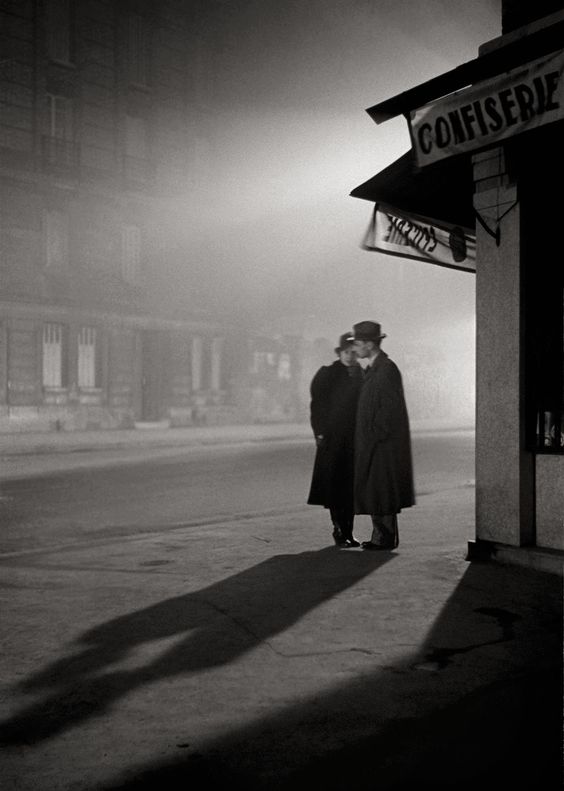
Out of curiosity - and since now I am proud owner of a Museum card - I went to a local Jewish Museum. The main reason was to see the photo exhibition of an artist whose work intrigued me, but actually the museum itself was so interesting that I almost forgot why was I there. I have almost exited, when I remembered there is also a temporary exhibition tribute to this guy. Fred Stein was German photographer who was haunted out of Germany and France by Nazis and eventually found a new start in US where he became quite well known. Just reading the details of his biography sounds like a movie - together his wife, he escaped Germany in a nick of time (the son of the factory owner warned him that Gestapo was asking questions about him), their little apartment in Paris was a haven for artists who slept, ate and held long discussions there and when the couple eventually escaped occupied France, they were hiding in the bathrooms of trains. Still, they started a new life in New York where he continued his photographer work and eventually changed his focus from a street photography to portraits. I find his work enormously interesting and wonder can street photography work today, in atmosphere of fear and suspicion, when people would not welcome a stranger taking photos of them?


Somewhere in the collection, there was a interesting old, black & white photograph of a happy couple smiling together in some Paris bar. Apparently the only photo of them together. That was Gerda Taro and her love, Robert Capa. Both war photographers and very famous in their time, specially for their work in 1930s Spanish Civil War - in fact, Taro died in action, while shooting army retreat. In this photo exhibition they were quite a few pictures of smiling Taro, who for a while lived with Stein and his wife in their Paris apartment - she is immortalised on a series of black and white photos as a vibrant, young woman (and quite a beauty) living in unusual and dangerous times. That one particular picture of a smiling, happy couple somehow intrigued me and made me curious to do some more research about her. The story could make a very good movie or a novel.


This was a long-postponed read, a birthday gift from a dear friend and something that I planned to read for a very long time. In her time, British writer Mary Renault was famous writer of immaculately researched historical novels set in the world of ancient world - admired for her writing style, Renault was apparently also very well known amongst her LGBT readers for describing same sex lovers in her books, which actually was perfectly natural in ancient Greece. This personal fact I would normally not even mention, considering that I believe that talent is a talent and whomever Renault loved in her life is her private business, but it looks as she is something of a LGBT icon - for describing gay characters in compassionate and even poetic light - and this is actually curiosity because Renault was from older generation that kept lid on private lives and would not associate herself with any movements. According to Wikipedia: "she was suspicious of identifying oneself primarily by one's sexual orientation" - which is exactly my opinion and it means that Renault and I would probably get along just fine, if we ever had imaginary dinner in Durban, where she moved with her female partner. So Renault is very much known amongst a specific part of her cult audience, but herself was not involved in any protests or anything, in fact if you look closely, her female characters are not exactly positive. Judging by this (my very first Renault novel), ladies are actually evil and manipulative. We probably must keep Renault in her times.

"Fire from Heaven" is about Alexander the Great and his formative years, up to the point where he becomes king. This is not just some writer sitting around with a bottle of wine and flying on the wings of a wild imagination, but Renault actually did serious research - at the end of the novel she quotes references by Plutarch, who is our only source about Alexander, since all records by his own contemporaries have perished. So things that she have described are known in history, hers is only a style - and what a style that is! I would genuinely place her somewhere between Robert Graves, T. H. White and Mary Stewart - giants of historical/fantasy fiction who all had their own particular voice. The only reason why I don't think of her highly as say, Marguerite Yourcenar is because Renault can be (in my personal opinion) so extremely cautious when dealing with her gay characters, that I would read the sentence three times and still was not sure what am I reading. I understand she was from different generation and very, very touchy about it, but this specific signposts and hints are too complicated for me. Take for example this sentence: "Hephaistion thought, I am in the King’s gift too, a favour he can take away. Presently, having no more words, he offered instead the sadness of Eros, for this at least brought sleep." What does this mean? Am I imagining things? What IS the sadness of Eros? All trough the novel we witness beautiful friendship between Alexander and his friend Hephaestion and we are told that everybody suspects they are lovers but everything was always left unspoken and now suddenly there is the sadness of Eros?
Renault's writing might be a little bit too vague for me - she has excellent, flowery style and is a master of describing the atmosphere and the place - but to be honest her Alexander was so idealised that I had a constant gnawing feeling that he is just a symbol, not a real character. He was constantly described as a young God whom everybody loves and idealises, his golden locks and strong muscles and noble character and the divine smell of his armpits - and everybody has sex except him, because he is not that kind of guy. His parents are far more realistic - I had a genuine affection for his father, one-eyed Macedonian king Philip (whom history conveniently remembers as a bully, in comparison to glowingly blameless Alexander) and was terrified of his perpetually angry, scheming and manipulating mother Olympias. Curiously, the main reason why this novel is remembered and loved - gay bromance between Alexander and his friend Hephaestion - interested me far less than the story itself. I read fiction as escapism and for me its all about the plot (or the style), not so much about identification, since my favourites are not necessary main characters but some supporting person who might come and go on one page. There is enough action, passion and intrigues here to make it into a very exciting movie (or even TV series) - though it took me a while to go trough Renault's writing, I might explore some more of her writing, since this was actually a beginning of a trilogy. I might even need to re-read this one again, with different perspective next time.

"The Father" is adaptation of a highly successful French stage play "Le Père" that had previously won truckloads of international awards and have been staged in Paris, London, on Broadway, in Los Angeles, Australia and in more than 45 countries. Nothing of this would ever come to me if was not for Anthony Hopkins who has won "Oscar" for this role, against highly expected Chadwick Boseman. I have seen Boseman's role in "Ma Rainey's Black Bottom" and he was electric - however, his one scene can't compare with full-length-movie virtuosity of Hopkins who switches between charming and menacing to lost and weeping. It was really tour de force and sensationally good role for any actor and I must say, I have never seen Hopkins acting better. True, in "The Remains of the Day" he might have been more reserved and in zillion other roles he showed different types of personalities, but this one is extremely moving.

The movie was directed by its original writer Florian Zeller who came on brilliant idea to show us dementia from the point of the view of The Father (Hopkins) - because he constantly forgets where he is and often gets disoriented, the space around him changes suddenly - the rooms in apartment switch and now he is in a waiting room of a hospital. Even better, his daughter Olivia Colman goes into the kitchen and comes out as a completely different actress (Olivia Williams who later comes as a nurse in a hospital). People around him are not who he expected them to be, he rages, laughs, argues and constantly fidgets about his hand watch that he suspects people want to steal. The whole story kind of goes in circles, where we slowly understand that he suffers from dementia and his long suffering daughter keeps him in her own apartment (with her marriage falling apart under pressure) while trying to arrange caregiver who might endure father's nasty personality.
Its two-people show: Anthony Hopkins is heartbreaking as elderly eccentric who obviously was previously a strong man and a commanding personality but now is just a frail, old man holding to some ideas about still bossing people around. He even confides to a caregiver that younger daughter Lucy was always his favourite, not Colman (who is listening, in tears). But Lucy is nowhere around and he wonders why she doesn't come to visit him. Its very refreshing to see Olivia Colman out of period costume and she is excellent - she does not have to say much, because her role is one of a long suffering daughter who keeps the burden of the world on her shoulders. She does not have to scream and shout to project quiet tenderness and affection for her father. But we are aware that she is falling apart under the pressure and that eventually she will have to place him in the institution.
I must say that the movie affected me very much - left the cinema disoriented and had to take a long walk to go back to my senses. And its wonderful when movie can affects us so much, this was not just some entertainment but genuinely great art. I recommended it to everyone and will probably see it again.

