13.10.17

"Behind Green Lights" by Otto Brower (1946)


Well, who knew - "Rashomon" could have been inspired by this obscure little detective mystery that also uses premise of several characters telling their points of view. I could almost see little wheels turning in brain of Akira Kurosawa while he let it all simmer and than cooked his own creation, after all this is what all great artists do. That this now forgotten 20th Century Fox movie is neglected and mostly unknown makes it even more interesting.

Right from the start we are pulled into delicious period piece, this is initially stereotype black and white detective story set in a police station and filmed mostly indoors but it all gives it a perfectly right atmosphere and charm - movies like this were made almost like on factory track, without great ambitions or pretensions, cinematic equivalent of pulp fiction crime paperbacks - and I dare the viewer not to enjoy it once you are comfortably set in front of the screen. Police lieutenant Sam Carson (William Gargan) works amongst corrupted staff and nosy reporters who are all fast-talking, hard-boiled and obviously make his life unbearable (crimes themselves appear less complicated than these Hyenas). When new case arrives literary on his doorstep, Carson faces moral dilemma as circumstances are set to compromise his principles - if he cooperates, he might even get promotion but we understand that he is good guy and will probably follow his conscience. Even though the latest victim was obviously a nasty creep, suspicion falls on two beautiful dames whom lieutenant must handle carefully (Carole Landis was magnetic) while his co-workers basically do everything to make it even more complicating. "Behind Green Lights" is delightful little cake of movie, not exactly film noir but almost there, I guess just too many comic gags keep it from being true suspense. There is a wonderful turn by elderly flower lady Flossie (Mabel Paige) who is perfect example of how veteran actors often found their way into movies and stole every scene.


12.10.17

Old pop festivals - Split '74


Clash of the Titans, as this year's competition brings head-on two über-strong gladiators against each other, with results that both Tereza Kesovija ("Sunčane Fontane") and Oliver Dragojević ("Ča će mi Copacabana") had massive success with their respective songs. Up to this point, Dragojević was always somewhere around (as member of bands More and Dubrovački trubaduri) but to my knowledge this was the first time he really took spotlight and from now on he will be unstoppable. In hindsight, his song seems to have been inspired by equally irresistible latin-sounding "Tebe nitko ljubit neće" recorded previous year by Đorđi Peruzović on his one and only LP album "Mojoj Jedinoj Ljubavi" and its interesting to compare these two. Usual suspects were also present - Mišo Kovač, Radojka Šverko, Dalibor Brun, Pro Arte and even venerable godfather Ivo Robić - but surprises were artists who brought some fresh air, like gentle duo Buco i Srđan or bands VIS "Fortuna" ("Sto ljudi, sto ćudi"), Aspalathos Brass ("Dojdi mi, dojdi") and Mladi Batali (with very young and pre-fame Đurđica Barlović) who had some contagious, lively hits that defined summer.

Amongst the rest, this was the year when our local version of The Carpenters (Grupa 777) started and Slovenia have sent another wonderful artist (Elda Viler) on competition - unlike previous year where Slovenian singers sung Slovenian composers, Viler had song written by Slobodan M. Kovačević who was mastermind behind More and it sounds just as it could have been done by Meri Cetinić. More was also on Split this year but they had their own hit single ("Bakalar") performed with guest appearance by Đani Maršan. Another hit single absolutely worth tracking down is " Ponoćno sunce" by Đorđi Peruzović not only because its unforgettably beautiful ballad but because it also has energetic B side ("Hej, sviđaš mi se, mala") co-written by singer himself and Ljiljana Petrović. Even now-forgotten Mahir Paloš is actually quite good and he sounds very much like young Mirko Cetinski. Album ends nicely with spirited "Di su oni dani" tailored specifically for this occasion and performed by Žarko Dančuo, its just right kind of celebratory singalong that audiences of this festival always loved. 


11.10.17

Old pop festivals: Split '73


Along with similar festivals in Zagreb and Opatija, Split was firmly established as one of the biggest seasonal pop music events in a country. It also had a twist - from its earliest beginnings it promoted local dialect and cultural tradition of life on coastline, with occasional pop hit or two that would define the whole summer. It's easy to make fun of ubiquitous subjects of this material, on the other hand there is a certain charm to it and these countless songs about  sea, sailors, ships and good old days were often soundtrack of our childhood summer vacation memories. Around this time it still functioned as international music festival with foreign guests, but this method will cease soon and focus will be on homegrown artists.

In 1973 Split music festival was already accepted as bastion of mainstream schlager MOR music and even though we had burgeoning rock scene with its angry young talents, it was here that biggest radio hits were promoted - critics could smirk all they want, but audiences just couldn't get enough of people like Mišo Kovač, Tereza Kesovija and Radojka Šverko who represented inoffensive, family-friendly TV entertainment. Artists represented here were usual suspects, habitually promoting newest material by composers as Stipica Kalogjera, Alfi Kabiljo and Đorđe Novković who would regularly tailor songs specifically for this audiences and conforming to certain standards of what  was expected of this occasion - when people talk about good old days when festivals still mattered, they forget that such contests rarely dared to bring something radically new, which means that most successful were songs that cautiously followed stereotypes. That even outside composers like Jože Privšek and Mojmir Sepe from Slovenia would bring material perfectly indistinguishable from the rest of competition just shows what a strong image this festival had. Artists that were less prominent but nevertheless interesting were Mladen Kozjak and Nevia Rigutto who might had better chance for exposure if this institution didn't so openly support small group of favorites that concentrated around this stage from year to year. Amongst the singles released from this year (and not present on LP album) were those by  Đorđi Peruzović, pop bands Delfini and Mladi batali but by far the most unusual and memorable was lovely local eccentric Toma Bebić with "Tu-tu, auto, vrag ti piz odnija" which was so mad that it sounds light years before its time. If this was some old family photo album, Bebić would be my favourite cousin, grinning and winking amongst formal and proper relatives suffocating in their starched collars. 

10.10.17

"Sunrise: A Song of Two Humans" by Friedrich Wilhelm Murnau (1927)


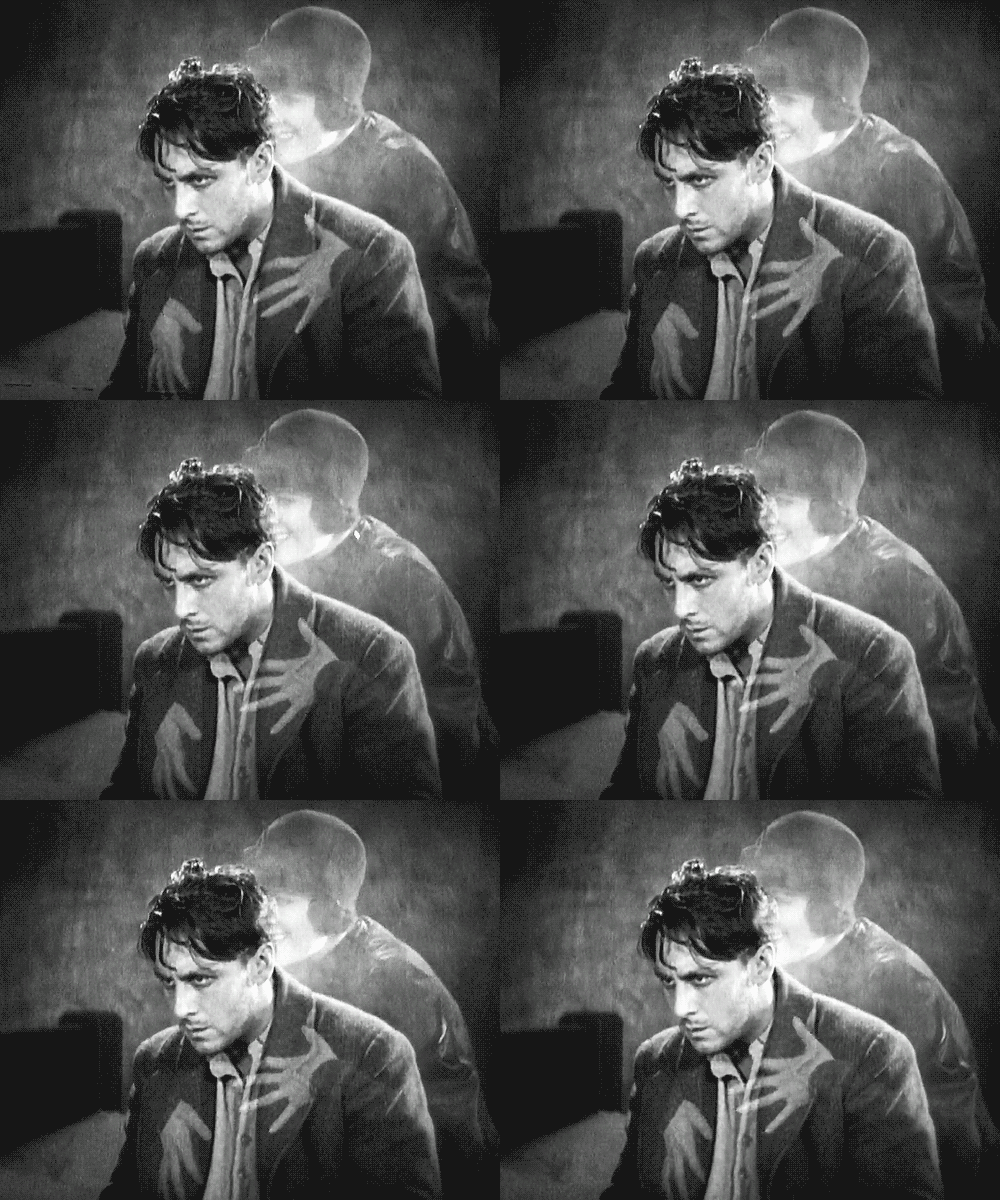
I absolutely love "Nosferatu" and was so bowled over with "Faust" that initially I saw it twice in a row but this particular movie, made as Murnau arrived in Hollywood (and awarded with several first ever Oscars) left me sort of underwhelmed. It is clearly a work of visual genius and in every frame one is aware this is Murnau, but the fact that he is now out of old continent and transplanted in a new world with its skyscrapers, machines, trains and jazz orchestras means that certain fantastic, dream-like quality is absent - the visual language is distinctively Murnau but the story happens in present time (well, 1920s America) so we are not dealing with myths and legends but with modern people (unless one takes them as representations of everyman and everywoman, as suggested in their names - The Man, The Wife, The Woman From the City and so on) and the story, oh the story, is so decidedly simplistic that it really bothered me. Half of the movie I wondered is this how great European director conform to Hollywood standards and makes everything so cartoonish, just to change my mind in a second half - he did create unforgettable piece of work by wrapping it all in a highly sophisticated imagery, but than again, he could have done it with Donald Duck as well.


The story - my main problem - is so featherlight that it almost defies description, since it could be explained in two lines. Roger Ebert understand and defends this by saying "silent films had a language of their own; they aimed for the emotions, not the mind" and its true that our venerable ancestors worked in a different world, where symbols and pictures had to explain what was happening on the screen (movie is silent but it has a highly effective music score). Like a snake from Eden, The Woman From the City (very good Margaret Livingston) comes between a happy couple and the rest of the movie is how love conquers all. There, it is actually one sentence. During 95 minutes Murnau proceeds to milk this extremely simple premise to weave his own distinguishable magic by adding layers and layers of ingredients - the more I think about it, the more I am impressed with final results because he really managed to create something unforgettable. Of course he had than unprecedented weapons on his disposal, huge budget and technical wizardry (movie is wonderful collage of special effects, techniques and superimposed images) which was all recognized by contemporary critics who praised his ingeniousness. The main actors are impressive as well - not so much Janet Gaynor (although she won Oscar) who is one-dimensional stereotype but her husband George O'Brien who has much more space to brilliantly display all sorts of emotions, from lust, madness, remorse and grief to gentleness and affection. (He is also one of those extremely rare silent era actors who appear stunningly modern even today) There are plenty of supporting characters, very effective in their small roles, including the photographer, barber, manicure girl and manager of hair salon, all of them perfectly tangible and rounded little miniatures in their way. Once I get over the overt simplicity of the story, I just might watch it again. 


Old pop festivals: Opatija '70


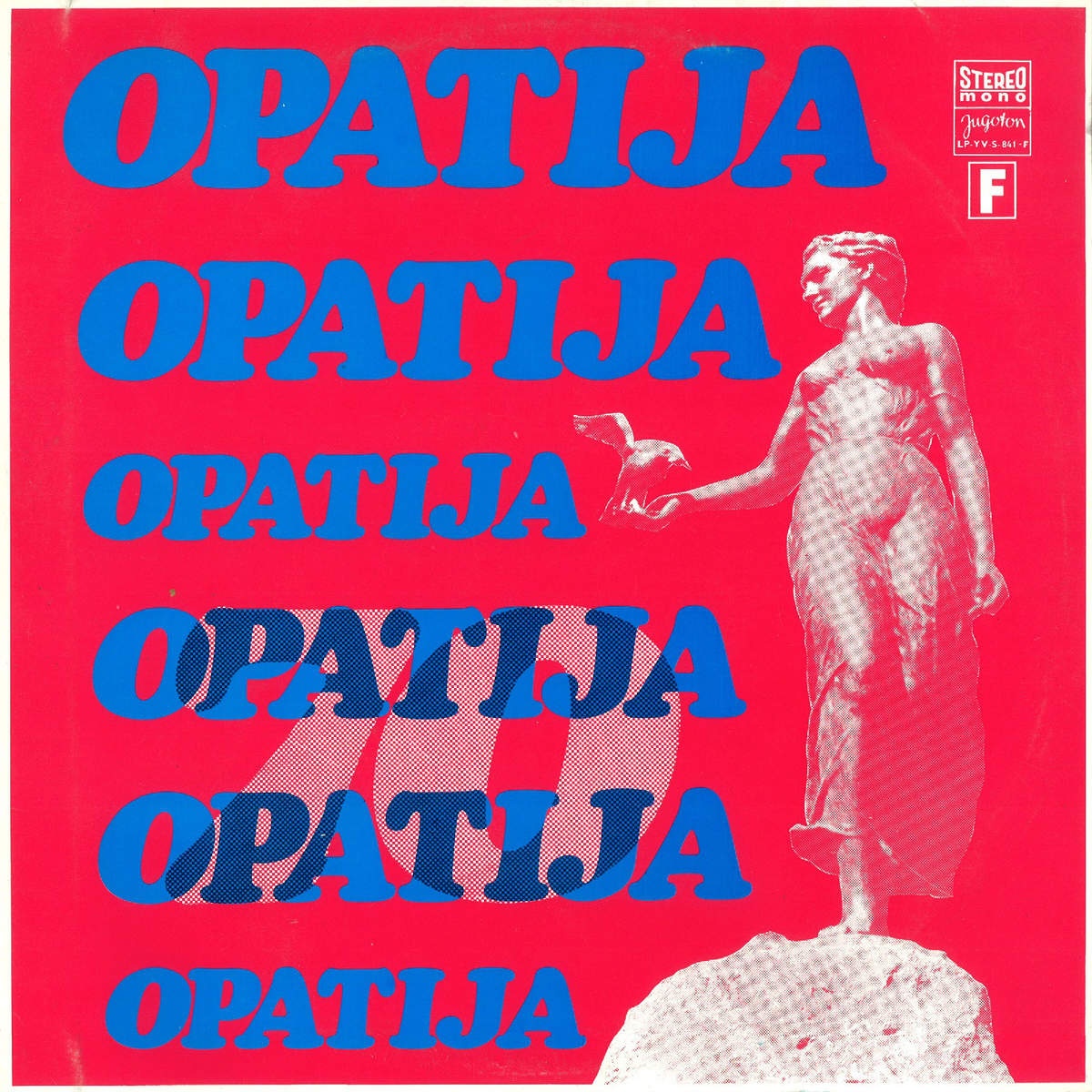
One of the best years in a long tradition of this classy festival, Opatija '70 brings together past and present of than-current local music scene in one delicious LP album that actually still lives up to its reputation. For once, scattered singles and different versions of same material as recorded by other performers don't really matter because what is here is exceptional and worth hearing again. Naturally, it was all about mammoth orchestrations and sweeping strings but this is how it was back than. Arrangers and conductors were falling over each other in attempt to surpass each other with inventive ideas and there are some really stunning moments hidden along the way.


The album opens with young Krunoslav Kićo Slabinac blasting his way trough a solid ballad he wrote himself and almost everything that follows represents cream of best names in the business at the time. From Ibrica Jusić and Đorđi Peruzović to Gabi Novak and Zdenka Vučković, it appears everybody was excited and primed to show their new material. Composer Miljenko Prohaska had excellent, jazzy ballad "Zbog jedne davne melodije" that really stands out as one of the classiest offerings here, it was performed by both  Višnja Korbar and Zdenka Kovačićek but its less known that song was originally offered to Josipa Lisac who declined because she was more interested in something else - "Oluja" by composer Zdenko Runjić was a biggest shock and revelation of the whole festival and even though we had alternative as performed by Mladi Levi, Lisac put such a strong stamp on a song that it was forever since associated with her. It could be said that Lisac ushered rock under the guise of Trojan horse on this festival. It stand out like sore thumb amongst other performers and it could only be compared to Dado Topić roaring on equally sedate Split festival same year.

7.10.17

Old pop festivals - Split '72


This is official LP album with studio recordings of new songs promoted on pop festival Split '72 - however, it doesn't really represent the cream of the crop because most promising, memorable and catchiest material was released as hit singles and there were around dozen of them (including biggest hit "Di si bija kad je grmilo" by charismatic Đorđi Peruzović) so perhaps this is not really correct description of what was really happening that year in Split. Considering that commercially appealing radio hits were elsewhere, this could be interpreted as somewhat misleading collection, nevertheless it has been saved for posterity but listener needs to understand the concept - big hits on singles, the rest here on LP album.

Even without important songs missing, we still have handful of classics: composer Đelo Jusić tailored lovely "Noćna muzika" for quasi-renaissance band Dubrovački Trubaduri and Mladi Batali brought real pop hit "100.000.000" on a stage basically set for MOR schlagers. The rest is not by any means bad, its just not particularly outstanding - selected artists were ubiquitous at the time and they all have their routine (slowly building crescendo) but there is one name we need to highlight and this is sandpaper-voiced Toma Bebić who is such an oddity and eccentric that in this schmaltzy surroundings he appears like a Martian. Bebić was local artist with cult following who never really had a chance in this circus but his songwriting and personality are incredibly appealing and it seems he was simply born too early - like some Croatian version of Tom Waits he would be enormously successful today but back in 1972 he was oddball. Zvonko Špišić is also slightly interesting but his song sounds too much like derived from Charles Aznavour to my ears. For real music archaeologists I suggest to track down a single from Split '72 recorded by young debutant from Sarajevo Zdravko Čolić ("Stara pisma ") not because its exceptional - it follows every cliché in the book - but because its interesting to hear him moment before he exploded as a supernova. Here he was still relatively unknown but just a year later Čolić was a household name with legion of frenzied following. 

6.10.17

Guilty pleasure: TV series "Lucifer" (2016)


My younger friends suggested this, since they enjoyed it and I took it with a reserve as it is usually me who comes up with interesting movies and they absolutely love car crashes, horror and everything instantly gratifying - perhaps its simply that they belong to younger generation, used to super fast visual effects while I grew up in some earlier, ancient era and to my embarrassment I usually become aware of this when we watch something together and suddenly there are never ending scenes of trees, rooftops and panorama - than we know the movie is old. Actually I expected this to be a horror - hence the title - and approached it carefully but it turned into something else completely.


The premise of "Lucifer" is that God's son dodges his position as controller of underworld and decides to enjoy life amongst the mortals under the guise of nightclub owner right in the middle of Los Angeles. In his present form, he is attractive, charismatic, apparently irresistible to women and incredibly wealthy but he also regained some superpowers - he can make people admit their deepest, hidden secrets. By chance he becomes assistant to female detective Chloe Decker with whom from episode to episode he solves crime cases but this is kind of side story - crime cases eventually become simply overused cliché and we are far more interested in relationship between Lucifer and detective, who are both attracted and intrigued why this is happening. Lucifer can have any woman that he want (and they wonder around his nightclub with annoying plentifulness) while detective is the only one who remains immune to his charms. Of course, there are also multitude of supporting characters who wonder in and out of the story - Decker lives apart from her husband (also detective), Mazikeen is amazon-like demon who faithfully follows Lucifer and occasionally fights like a wild cat,  Amenadiel is Lucifer's older brother (therefore also God's son) who insist on his return to Hell, Dr. Linda Martin is therapist who wants to help Lucifer but takes his stories as metaphors and simply won't believe what he tells her and there is also a charming forensic scientist who helps in crime cases. 


I was instantly smitten and charmed with "Lucifer" because main character is so irresistibly witty and funny - Tom Ellis is so perfect for the title role that I can't imagine anybody else in it. He has looks of course, but that is not all - in the right places we are aware of his intelligence, sensibility and vulnerability. Just as I always wondered, the role of evil demon has been forced upon him and he takes great pleasure in punishing the criminals, because this is what he was created to do. He also have certain weakness for humans and often helps them, while simultaneously bantering with detective Decker - he is constantly sharp witted and extremely funny and also he never lies which we as viewers understand but other characters don't. If one needs to describe him, he would have been dashing Noël Coward transplanted into modern time.


Constantly frowning and somehow predictable detective Decker is mostly conventional representation of hard-working policewoman and someone who this series needs but other supporting characters are far more likable and interesting. Right now I am on the second season, where all the characters somehow became friendly and the whole story takes decidedly comic turn - never mind crime cases, they all got solved and we know that Lucifer is immortal anyway - it could have been my wine or that I simply genuinely enjoyed it, but last night I treated myself to a binge-watching this serial and chuckled, giggled and laughed out loud many times, honestly loving how the characters interact amongst themselves. The fact that they all became one big friendly gang thrilled me to no end and I just couldn't get enough of it, silly as it might be, It's just perfect entertainment.

p.s.
yay, they KISSED and I laughed out loud from joy


"Moj Pajac" EP by Senka Veletanlić (1963)


Classic example of early 1960s local pop discography that - outside of festivals - depended on foreign originals, often taken literary note for note and arranged with great care for homegrown market. What is highly interesting here is where on earth people got ideas from, since communist Yugoslavia had fairly firm grasp on borders and it was difficult to get popular records from the west - hence, musicians would cover anything from movie themes to jazz standards and country hits, but Italian San Remo was mostly alpha and omega of everyone's repertoire. So we definitely wouldn't know "King of clowns" as such, but were familiar with "Il Re Dei Pagliacci" that immediately got covered in Zagreb by Zdenka Vučković and in Belgrade on this record. Same for "Lara's theme" that got versions of both Nada Knežević and Tereza Kesovija, almost 90 percent of local recordings turned out to be covers. Our very own rock pioneer Karlo Metikoš basically promoted his rock idols that local audiences wouldn't know otherwise. 


Senka Veletanlić is now remembered chiefly as older sister of her more famous sibling and for the longest time I accepted common perception that she was less interesting of the two, but this cutest little EP recording made me re-consider and re-evaluate this: instead of judging her for what she was not (expressive, booming alto like her sister), perhaps we should focus on what she was and Senka was darn fine pop singer in her own right, with considerably lighter and softer sound, not without its own particular charm. Thoroughly enjoyable and even ebullient (some say she was the first really modern singer of her generation) she is not cutesy, nor sentimental like her colleagues but slightly detached and very, very effective. For example, in other hands "Summer Job" could have all sorts of hiccups and gimmicks, but Senka shuns such tricks and relies on beauty of her clear voice. "Warmed Over Kisses" is a cutest little country and western tune, while for "La Terza Luna" we go back to Italian recordings, in all probability either Neil Sedaka or Paul Anka who at the time had some very successful Italian releases. 

5.10.17

"Dolores Claiborne" by Taylor Hackford (1995)


Recently I re-visited "Misery" and remembered what a great actress Kathy Bathes was - so without much procrastination I decided to watch "Dolores Claiborne" again and must admit it is even better than I remember, in fact, in certain aspects is far more exciting that "Misery" which was brilliant but far from realistic - this movie is more disturbing as it deals with real-life situations and deep scars that threat to completely destroy people's lives. 


Hard-boiled journalist (extremely unlikable Jennifer Jason Leigh) returns home after fifteen years to check out on her mother, accused for murder. Its all déjà vu as many years ago police had already investigated another case where mother was also involved and detective Christopher Plummer never got over how he couldn't pinpoint the blame on her, but this time he is determined to put her behind the bars. Kathy Bates plays the mother and she relish the role of a lifetime - "Misery" might be far more known but that was just a caricature, here she is able to express hope, joy, sorrow and everything in between as a hard-working, no-nonsense woman who have nothing going on for her in life except strong hands to go trough life stoically and as she suffers silently, all the injustice had to be swept under the rug because life is simply too hard for self-pity. Surprisingly, this story comes from a novel by horror master Stephen King who for a change shift gears into unexpected but perfectly plausible psychological thriller and I must say that recently my appreciation of his writing talent radically widened, as he is obviously capable of writing far more than just horror. 


"The Good Earth" by Pearl S.Buck


Honestly, I never expected that I would enjoy Pearl Buck as much as I did - editions of her collected work were ubiquitous presence in many homes during 1960s but now they are mostly collecting dust and Buck herself is rarely discussed, as she is generally perceived as relic from another era. Which is strange, since I find her writing exceptionally beautiful, evocative and powerful. Her speciality were novels about early 20th century China, the subject she knew very well as she grew up there and saw it all herself firsthand - her loudest detractors are Chinese themselves who get very angry with her descriptions of poverty, struggle and hard life but I say fiddle-de-dee to all that, these unforgettable novels are not focused only on that, she also knowingly writes about old traditions and way of life that has long disappeared. 

Main protagonist in "The Good Earth" is poor peasant Wang Lung who toils, sweats and bleeds for his fields, but our hearts are far more concerned about his silently suffering wife O-lan without whom he could never survive all the ups and downs of such life. Its extremely hard existence, constant fight for survival and there is simply not much time or energy left for affections or gentleness - when modern critics judge Pearl Buck as subjective, they don't take in account that culture, tradition and basically hard life itself shape people's behaviour. From my own experience I can recall some peasant families in my corner of the world, where lifetime of hard work created extremely hard-boiled people who took life stoically and never cried in front of anybody - it doesn't mean they didn't have feelings, but this was never discussed or expressed. The story is basically very simple but gripping and I could just not wait to continue reading until the very end. I kind of have great affection for Pearl Buck right now.

Blast from the past: book series "Vjeverica"


If I was given a freedom to collect library of everything I have ever read (almost possible now in a virtual world, where on Pinterest I kind of started to play around with idea of assembling book covers) it would all have to start right from the beginning - children's books, picture books, comics and of book series "Vjeverica" (The Squirrel) that was alpha and omega of my childhood. It was the most popular edition for children's literature for 30 years (from 1957 until 1994) and countless generations of kids were introduced to joys of reading trough these books. Wonderful Grigor Vitez was main force behind its start and right from the beginning we had titles combining local, homegrown writer with international authors. Of course as a small toddler I had no idea about the reasons and choices (exclusively official language, no local dialects, no religion, no bad influences from the West) in fact what got my attention were often beautiful book covers which thrilled me to no end and even today I love them dearly. "Vjeverica" valued and promoted local talents but often included foreign authors if Vitez (who had strong political clout) decided they were suitable - so we got classics of children's literature like Brothers Grimm, Hans Christian Andersen, Bambi, Heidi, Peter Pan and The Wonderful Wizard of Oz along with few titles of Erich Kästner who got accepted even in post-WW2 Yugoslavia, partly because his books were banned and burned by nazis and partly because they were wonderful anyway. Inclusion of "Pinnochio" was not unexpected, but adventures of onion-boy "Cippolino" by Gianni Rodari was something so fantastic that I remember it to this day. Naturally, local authors were also very prominent - it was a wonderful platform to promote homegrown talents, like Fran Levstik, Ivana Brlić-Mažuranić, Milivoj Matošec, Ivan Kušan, Vesna Parun and Slavko Kolar who were like Gods to me, I just assumed everybody knows these people. 


From the late 1960s the main editor became Ana Kulušić under whose direction "Vjeverica" went trough its golden years - Antoine Saint-Exupéry and his unforgettable masterpiece were published than, but focus were mainly local authors so we got Sunčana Škrinjarić, Nada Iveljić, Anđelka Martić, Dubravka Ugrešić and Zvonimir Milčec, as well as several very appealing books of poetry for kids ("Miševi i mačke naglavačke"). Last chapter came with new editor in 1984 but at that point I was already too grown up to enjoy "Vjeverica" and didn't follow literature for kiddies anymore - around the same time the illustrators changed so this didn't appeal to me. What is still in my heart are titles and book covers from early 1970s that I cherished while growing up and this morning I was browsing internet in search for them, even started collecting them on Pinterest with greatest affection.


4.10.17

Old pop festivals: Split '71


It seems that music festival in Split was always immensely popular, from its earliest incarnations it presented fair share of classic pop hits even although occasionally it showed tendency to slide into certain cliché that reflected perhaps not so much its audience as much as calculations of composers who expected what might work, in this case relying too much on drinking songs performed in local dialect. What was a clever gimmick once, became trademark of Split festival and we all kind of got used to it, understanding that amongst the bunch there will always be at least one or two really standout tracks - but you have to cope with endless stream of songs about the sea, boats, vine and sailors. And some more about figs, old olive tree and anything poor mother found while scratching the bottom of the barrel to feed countless hungry children. Don't even let me start about tears shed because girl got married to someone else, as cad/sailor had better things to do while sailing he seven seas. What is really interesting is how Split festival never had aspirations for launching genuine pop hits - they happened almost accidentally but for most part the stage was set for MOR, family friendly entertainers while occasional rock performers (Dado Topić with Korni grupa) were exception. In comparison, festivals in Zagreb and Opatija had at least slightly opened door for something slightly radical but on Split everybody toed the line. 

Highlights on 1971. festival were two completely opposite sides of the spectrum, like two bookends pointing at somewhat contradictory directions where Split festival could possibly continue. "Proplakat će zora" was classic, old fashioned weepie about unrequited love that always worked so well on this festival and since it followed every known rule from the book, it was enthusiastically welcomed by audience conditioned for such material - it also made a superstar of Mišo Kovač who from than on basically built his enormously successful career out of this kind of music. "48 uri kad bi traja dan" on the other hand, was a true pop hit that one could dance to and is by far the most modern sounding song on the whole festival, performed with irresistible casual charm by great Đorđi Peruzović who is in fact, the real reason to listen the whole record today. Its very interesting to speculate how would direction of the whole enterprise continue if artists and composers followed this lead, however Split festival continued well-trodden path of schlagers with local twist and public usually responded warmly to it.

Between these two, other artists are interesting only as historical artifacts representing what Croatian popular music was back than - waltzing trough songs about loving parents, little boats, big boats, sailor sons and husbands, they emote theatrically and no doubt listeners enjoyed them but none is outstanding as aforementioned examples. People as Vice Vukov, Miro Ungar, Tereza Kesovija and Radojka Šverko seem perfectly content riding the waves of hugely orchestrated melodies, while younger artists with rock background Krunoslav Kićo Slabinac and Josipa Lisac bravely try to fit in all of this but they don't really belong here. Only pop band Pro Arte approaches pop sensibility but their song is just masked like pop, in its heart this is still pure schlager with maudlin lyrics. Several artists not represented on this LP got their own singles (Bojan Kodrić, Ibrica Jusić, Novi Fosili).

Old pop festivals: Zagreb '69


t started as curiosity and developed into real hobby, where with utmost attention and even affection, I went like Alice in the rabbit hole head down into research of old, scratched recordings from the music archives - anything that was released during 1960s and 1970s that I could get my hands on, I would carefully listen, no matter what genre (from traditional folk to rock and everything in between). Of course I knew the most important artists, so called cornerstones but I wanted to understand what else was happening and who else might have lurked in the background neglected and forgotten. I sought this particular recording for the longest time until it eventually became available as download on I tunes and it was my first ever purchase there, wonderfully clear and without any scratches, it made me ridiculously happy. The fact that I lived and worked abroad definitely influenced this nostalgic trip, although I always loved them anyway but its different when one is listening local, home-grown music somewhere in another corner of the world, it feels far more poignant and heartfelt.

When pop festival in Zagreb originally started in 1954. it was planned as a showcase for composers and their new work - singers were just necessary evil and it shows in the fact that back than only two singers performed all the material (Ivo Robić and Rajka Vali). It took some time but eventually organisers took different approach, although for a while new songs were introduced in two versions, just like on San Remo. After certain period in early 1960s with its irresistible cha cha and mambo refrains, Zagreb festival continued to grow and metamorphose, embracing new trends and presenting new talents, while simultaneously celebrating some veterans like composer Alfons Vučer who certainly defined the decade.

Wonderfully eclectic, Zagreb '69 presented combination of tradition and new pop sounds. There was always a tendency to make this festival into something grander and more serious than just entertainment, so the main award went to Vučer (his 30th award) although his bombastic ballad (sung by Vice Vukov) actually sounds nowhere interesting as some newer, more uplifting songs with a beat. For example, debutant from Macedonia Ljupka Dimitrovska came with wonderfully sunny Macedonian song "Go čekav letoto" that is completely delicious slice of 1960s pop. If majority of artists took a careful steps (Miro Ungar, Milan Bačić, Stjepan Jimmy Stanić) with results that were perfunctory but not particularly exciting, there were still some beautiful surprises, like jazzy "Nada" by delightfully anachronic vocal quartet Vokalni kvartet Branka Kende or two ballads that deservedly became classics - Drago Diklić and his own poetic "Igra života" is masterpiece, while "Pahuljica na tvom dlanu" became on of the most unforgettable songs for Ana Štefok. Of note is also "Vlak bez povratka" where former child star Zdenka Vučković (backed by pop band Indexi) attempted to show that she had grown up and she actually sounds pretty good. Definitely worth mentioning is that 1969. is year that chance was given to new, young talents and even if Josipa Lisac and Boba Stefanović had admirable turns, their real showcase is just around the corner. Not included on LP were Gabi Novak, Arsen Dedić and young Ibrica Jusić ("Još uvijek ne znam neke važne stvari") whose songs were released on singles.


3.10.17

Josipa Lisac in New York


When earlier this year, on St.Valentine's day my all-time favourite Croatian artist Josipa Lisac celebrated 67th birthday, I mused here how unusual it is for a pop singer to have such impressively long career - particularly here on these territories where music veterans are practically endangered species and the business itself usually ruthlessly sidelines older faces in order to explore something constantly new. By definition, pop musicians come and go, with generally one important highlight after which if they are lucky, they might experience latter-day revival where new audiences discover them. Since we basically have no precedents in such cases and no rules about how exactly the pop singer is supposed to age gracefully trough the years, the times and trends, it would be perfectly logical to assume the person will probably at some person cease to be relevant. Perhaps it is so, in cases where somebody experiences really huge, meteoric rise and is over-exposed in media to the point of saturation or if their work gradually loses steam and inspiration. Some decide to play safe and eventually find themselves in artistic cul-de-sac where audiences simply don't find them interesting anymore. Others even give up after a while, unable to repeat previous success or unwilling to change with times - usually you hear them complaining about younger generations and how ignorant or disrespectful they are towards them, as that award from 1965. empowers them to a life of admiration. 

Completely alone and remarkable amongst handful of our Croatian music icons, Lisac has carved her own way trough ups and downs of the business and looking objectively at her 50 years of career, one can recognise certain aspects that might have been instrumental in achieving her present status as still-standing warrior. For one thing, right from the start she showed clear disdain for following any commercial trends - if all the herd went to one direction, she went another way and bravely experimented with various music genres even if critics at the time didn't understand or support her projects. That she was blessed with unique voice is actually of less importance than it seems - many other artists had their own sounds but dared not to explore them or to evolve further. Being selective in choice of collaborators and material might be far more significant, as Lisac always had a good ear to spot gifted musicians and if the first half of her legend was cemented trough now classic collaboration with Karlo Metikoš, for the last twenty six years or so she continued holding on the the same high standards as before, picking the material with great care. Treating her songbook as a precious body of ever-evolving art and presenting it in different variations instead of repeating herself might be another factor - not content to became just another golden oldie, Lisac never allowed herself to became simply nostalgic singer from another era but pushed her material towards constantly experimental edges and in process intrigued younger musicians who seems to always recognise her adventurous spirit. What media always focuses on - her ever changing visual metamorphoses - is in fact far less important than the unexpected musical directions and choices she embraces. How effortlessly Lisac mastered the craft of always being interesting and even provocative, is clear when her colleagues try to follow the same example and fall flat on their faces, because her charisma allows playful reinventions where other artists just look silly or imitative.

Back in February I wondered how much further Lisac can go at this point, but I shouldn't have worried - not only that she still works as much as she wants (at the age when most of her contemporaries are long forgotten) but she got herself a huge hit collaborating with another new, cutting edge band "Chui" (in a song that is quite ambitious and almost symphonic) and presently I see her playing in Chicago, New York and Toronto. I have no doubt that audiences crowding these concerts are ex-patriots who expect nothing more than nostalgic trip but were probably startled with the way Lisac keeps her music fresh and completely different (personally even myself sometimes I can't recognise introductions to songs on her concerts, which is exactly just what she intended). It's very hard to write about her without using phrases like "unique" or "special" since journalists have wrestled with this from 1968 onwards but its a status she worked very hard to achieve and managed to stay relevant against all odds. 

2.10.17

"Faust" by Friedrich Wilhelm Murnau (1926)


Murnau's 1922. "Nosferatu" is still one of my all-time favourite movies - not just amongst silent movies but in movies period - so its a bit odd that after idolising that particular movie for so long (I even went on a screening with pianist playing music once and loved every moment of it) it took me forever to sit down and treat myself with "Faust". Perhaps I just had to be in the right frame of mind to enjoy it, who knows, in any case treated myself I did and was amazed how much I loved it. Hey, I watched it twice just so I could enjoy some scenes again!

What both movies have in common in a certain magical, fairy tale quality that this particular director apparently knew how to create - lot had been said and written about German expressionistic movies and how these artists went far beyond populist entertainment into genuine untested waters, where movies became work of beautiful art, still sizzling after all these years. But where "Nosferatu" was a creepy nightmare, "Faust" is not really scary nor it was director's intention - this time we have cautionary tale inspired by well-known literary (and allegedly historical) origin, however the budget was much bigger so everything was beautifully elaborate and ornate, almost every scene is a joy to watch and its hard to pinpoint particular highlight as everything feels like a highlight, from the very beginning where Mephisto surrounds the little town with his black wings and sends the plague on the citizens to the very end where true love finally saves Faust immortal soul. Stunning imagery galore - makes you wonder what would Murnau have done if he had the same weapons on his disposal just a few years earlier ("Nosferatu" survived only as a bootleg and it was supposed to have been destroyed) - there are really some darn magnificent moments, too many to count here. This is art of the highest order.


Actors are great too - Gösta Ekman and Camilla Horn are so brilliant as tormented lovers that is hard to imagine anyone else in these roles. French music star Yvette Guilbert has excellent turn as a shrewd, greedy and silly aunt but all the eyes are on Mephisto. Now, I never understood what was the big deal about Emil Jannings until now, he is absolutely magnificent and so evil that is impossible to forget his eyes twinkling in the dark night at the crossroads when Faust first summons him, or his face when he holds the contract.  Strangely enough, although the movie was silent, I was so absorbed in it that I swear that I could almost hear all the noises - the doors creaking, the windows opening, the fire burning, the gust of the wind sweeping - this is the first time that I had such experience. What a unforgettable movie, real masterpiece.