29.2.16

"Saving Mr. Banks" by John Lee Hancock


Its easy to be cynical and claim there's nothing more sugary and saccharine than Disney making a movie about Disney but this was done with such grace and style that it actually quite won me over and I must admit being a blubbery, teary mess at the end. It is also a decent fictional (?) portrait of two real-life characters and look behind the scene when classic children movie "Mary Poppins" was made.


Famous British writer P.L.Travers (Emma Thompson) finally gets persuaded to visit Hollywood and consider selling rights of her novel "Mary Poppins" to Walt Disney (Tom Hanks). Travers is shown as pedantic, uppity spinster accustomed to get things done her way but we understand that underneath her eccentric exterior she is proud, dignified artist afraid that her beloved novel will be sacrificed for money and financial gain, therefore she is determined that she has artistic control and final say in creation of the movie, which means she basically blocks almost every suggestion and every step during the making of the script. Because she arrived in Los Angeles already convinced this is a sell-out and a bad idea, Travers is adamant about the way movie should look, insist on every detail and is horrified with Disney suggestion that this should be a movie with music and (gasp) animation - her attitude makes creation of the movie almost impossible because Disney and his team of script writers and composers basically can't do anything without her approval and if she feels "corralled" into doing this, her new colleagues feel similar hostility towards this joyless, nitpicking woman who not only don't know how to relax and enjoy life, but also won't really participate in creative process. The movie cleverly shows how from her perspective, everything sunny California offers, this typical British woman finds vulgar, offensive and showy.

In flashbacks we see Travers childhood in Australia and deep scars left behind, unconditional love for her beloved father (excellent Colin Farrell) who might have been irresistible charmer but in reality was embarrassing alcoholic unable to keep a job in a bank and who taught his "princess" never to trust money - for the rest of her life Travers kept dreaming about him and always saw money as evil that destroys people (hence her refusal to sell rights to Disney, she avoided this for two decades until she was financially stranded and had to consider it a option). Realising that there is something psychological that prevents Travers from accepting his offer, Disney have to find a way how to reach to her not as a canny businessman but as a human being and convinces her that movie will be a gift to countless children around the world. We finally understand it wasn't about Mary Poppins at all, but about fictional Mr.Banks (father) whom Travers saw as a imaginary portrait of her father and during the world premiere, watching it from the audience Travers breaks down in tears because Mr.Banks on the screen is everything her father never was. 


As an interesting curio, during movie final scenes we hear tape with original recordings made during creation of "Mary Poppins" - lo and behold, everything we saw in the movie actually was recorded as real dialogue, we hear nervous and apprehensive Travers commanding, demanding and refusing everything scriptwriters suggested. So perhaps this is not just fictionalised retelling but there is a truth in it. 

"Eugene Onegin" by Pyotr Ilyich Tchaikovsky


One of the very first things I did when I arrived back in my hometown was to check what's on in theatre, exhibitions, museums and concerts - after 6 months of sailing I was starving for something, anything cultural that I could feed my soul with, something to remember. The big disappointment was that tickets for Mozart's "The Marriage of Figaro" were sold out so I had to go for second option, Tchaikovsky which now in retrospective seems a bit absurd because Tchaikovsky actually came to be far more moving experience than pretty, bubbly and comical Mozart (whom I love dearly) could ever have been.


With dear friends in tow, I went on trough cold and foggy Zagreb towards beautiful, baroque building of Croatian National Theatre where audience was full of Russian visitors - we could clearly hear Russian language everywhere, it was obviously big deal for them. This particular theatre is a serious business, to my knowledge the only place in town that carefully focuses on opera and ballet (unfortunately, I would love to have opera playing everywhere) and the interior is also quite impressive, a full-blown baroque majestic extravaganza that reeks of Austro-Hungarian sophistication, long gone days of bourgeoisie and the place definitely have a special energy, you can almost feel it everywhere. I must admit that from the whole Tchaikovsky repertoire it is his operas that I am truly not so familiar with - loved and often played his ballet music - so I was bit apprehensive about the experience, thinking that this might just fly above my head and I won't recognise anything but luckily I was wrong.
                                       

As soon as overture started I closed my eyes and let myself get swept away in beautiful, gorgeous music that felt like some kind of soothing massage. When I opened my eyes, the curtain has already lifted and the stage was breathtaking - what a beautiful, beautiful, imaginative scenery! And how strange that everything that I always disliked about Amsterdam's opera (ultra modern scenery that clashed with the music) was just perfectly right here, in my own hometown - or perhaps my own idea of how opera should be staged is simply old-fashioned magic, with historical costumes and all shebang. Actually the scenery was modern but it was done with such imagination and style that it looked stunning, simple and with few changes it worked just right trough the whole opera - it was truly magnificent to watch, not to mention that music was divine. We struggled a little bit with looking at the stage and reading subtitles simultaneously (of course, it was in Russian) but at certain point one just get accustomed to it (or like in my case, you just say, to hell with it and simply listen Russian language). Where in my childhood I remember operatic stars always being old, fat and looking nothing like romantic heroes at all, this cast was a joy to see as well - in fact, Onegin was actually ass hole of the play and the best music & characterisation was reserved for other roles, specially Tatyana (excellent, wonderful Valentina Fijačko whose letter scene was virtuosic) and Lensky (Stjepan Franetović whose "Kuda,kuda" aria was a highlight of the evening and we all just wallowed in pity for him) but of course main character (played by impressive Ljubomir Puškarić) was brilliant, its just that right now I can't really recall any music sung by him because he was such unlikable role. 


Contrary to my expectations, the whole evening was magical and we loved every minute of it. Why on earth the opera is called "Onegin" and not "Lensky" or "Tatyana" I have no idea because they were the true heroes of opera, but than again I don't remember Pushkin original so well so perhaps composer simply had to follow he poet's idea. I am listening bits and pieces of this opera for days now (with 35 operas in my collection, I still don't have complete "Onegin" so far) and still floating in the clouds from this beautiful experience. Unfortunately it seems there are no other operas on repertoire anytime soon (at least nothing classical that would appeal to me, just some modern pieces) otherwise I would, given chance, visit opera every week. 


25.2.16

Ništa tuđe nije mi strano (Arsen Dedić)


Ništa tuđe nije mi strano
tuđa lova, tuđe žene
što je nekom drugom dano
to se odnosi na mene

ništa tuđe nije mi strano
ni imanje, ni oruđe
ljubim voće neubrano
jer je meni slađe tuđe

ja se tuđom slavom
tuđim perjem kitim
mislim tuđom glavom
tuđom kitom kitim 

"Anonymous" by Roland Emmerich


Oh what a brilliant movie - and to think that it took me forever to actually watch it, probably because other things sidetracked me along the way (books, work, etc) but maybe this is just the way it should be, now I am on vacation and relaxed enough to soak everything in properly.

The subject is - at first glance, but only superficially - the real identity of person behind Shakespeare plays, the theory that fascinated me for a long time and in case you wonder, you can read more about it HERE. I was always intrigued with the thought that those plays were not just a public entertainment but a clever way to present current dangerous political power games, dressed as historical plays and audiences at the time could easily recognise who the real characters were. Even though this movie suggest it was one single person (Edward de Vere, 17th Earl of Oxford) it sounds more realistic that it was all combination of various people who used Shakespeare's name to go public with their feelings and opinions while keeping their identity secret, as it was considered scandalous to dabble in such low entertainment as theatre, still a place for commoners and not for aristocrats in than puritan England that saw sin in everything. (Than again, would different people all write in one style?)


Reading between the lines, it is much more than who-wrote-Shakespeare because it points at power games: even those in power are powerless.
Walking inside his labyrinth garden (the movie is full of symbols) de Vere appears as powerful aristocrat but he also depends on whims of Queen Elizabeth who herself is cleverly manipulated by her advisers. Everything is really an illusion, the real power is hidden behind the scene. 


Visually, the movie is stunning. I loved the panoramic view of Elizabethan London and its muddy streets, the fascinating, re-constructed looks of Globe theatre, the staged fights between dogs and a bear (another symbol - dogs attacking the powerful crown) and naturally the cast is all first class specially elegant and noble Rhys Ifans as de Vere, Rafe Spall as opportunistic and greedy Shakespeare, Trystan Gravelle as envious and spying contemporary competition writer Kit Marlowe and equally fascinating duo of David Thewlis/Edward Hogg as father & son advisers to the queen who actually knew all the political secrets and pulled all the strings behind the throne, including bringing new king to the power. The best of all is a opportunity to see real life mother and daughter Vanessa Redgrave and Joely Richardson in the same movie, playing older and younger Elizabeth, truly a cinematic gift in itself - watching Redgrave gazing trough the window, lost in thoughts about her youth or being moved by theatre plays is truly unforgettable, what an actress where without big gestures and with just simple glance or expressions she is capable to move our hearts. Even though the movie at certain point becomes almost a Greek tragedy full of unexpected twists and turns, it moved me profoundly to tears. That it didn't achieve great worldwide success and went on mostly unnoticed (with occasional raised eyebrow) just shows that modern cinema audiences are simply not used to think anymore. The presence of Derek Jacobi is not accidental as he is one of the celebrated Shakespearean actors of modern times and famous supporter of argument that William Shakespeare was not a real person behind this work.


24.2.16

Božo Vrećo/Halka


Last night I did something blasphemous and actually switched on TV - since I am too busy reading, writing and listening music, it is something I can easily live without and in fact I am proud that during my last 6 months of sailing it never even occurred to me to watch it - however, there was some show with my beloved Croatian singer Josipa Lisac invited so I had to see her. The subject of the show were people who are trailblazers, originals who succeed in spite of their surroundings. In all probability these people had it hard, because majority never immediately accept those who stand out too much from the crowd, for various reasons (looks, originality, eccentricity, whatever). I was almost afraid this will be some freak show, because I heard about some Bosnian bearded guy in a dress and watched in apprehension but everybody in the audience (including me) were in for surprise.

When time came for his entry, Božo Vrećo appeared in a full regalia, covered with tattoos, big beard and wearing a long dress that completely overshadowed even great Lisac herself (his own mother often jokes that he looks like he is actually Lisac's son) - we all stared with wonder in this most unusual apparition and than he started singing. OMG. I actually thought that I had a stroke, because there was such a strong disconnection between my eyes and my ears. The guy sings like a dream, like an Angel, with incredibly beautiful voice, doing all those intricate and difficult ornamentation's typical for Bosnian Sevdah music (kind of local Fado, extremely soulful style that goes back for centuries way down to Turkish invasion of Balkans) and to be honest, his singing and voice are nothing less brilliant than any of the celebrated Sevdah giants. Now, I came from completely different part of the country and it took me decades to slowly discover Sevdah, because it was something associated with rural, mountainous Bosnia and her cultural tradition far away from me. There is also a very bad reputation connecting new "folk" artists who perform new music very popular with masses (often weepy, cheesy hits) but Sevdah is pure form, true traditional music and is a thing of wonder & magic. I had already discovered Sevdah titans like Zaim Imamović, Himzo Polovina, Safet Isović and majestic Nada Mamula (and Beba Selimović) and they all deeply affected me, it is kind of music you get drunk and weep, often also beautiful poetry (with half of ancient Bosnian expressions I don't understand). There is also a new, young singer Amira Medunjanin who also carefully follow this tradition but this guy was completely new discovery and we were all forced to accept his wondrous, God-given talent in spite of his most unusual looks. 


Of course I did my quick Internet search and found out that this singer has been around for few years already as a part of traditional Bosnian folk group Halka and judging by his first pictures, he was initially just another slim and willowy young thing who somewhere along the way metamorphosed into full-blown whirling dervish (and very androgynous indeed) but is this a clever marketing trick or his real inclination is something we still have to decide for ourselves. What is definitely sure is that guy possesses truly magnificent, natural and beautiful voice, cherishes traditional music and even composes his own Sevdah (that sounds exactly like ancient) and probably encounters disbelief and surprises on daily basis. Half of audience is shocked, another half delighted - I must admit falling into second category because as I am listening Halka recordings right now, I would love his music even if he is blind, one legged hunchback. 

I have deep suspicion that TV show was actually carefully planned  introduction of Božo Vrećo to large Croatian TV audience - he was not only incredibly gifted but also charming and natural guest and for once I have to admit that even Josipa Lisac was overshadowed by him, which was not a small feat because she is celebrated national treasure and veteran who impressed & influenced countless generations trough decades, but this time all eyes - for once - were not on her.


23.2.16

A Gentle Tribute to Arsen Dedić


Just as I was slowly getting ready to pack away and leave my (frankly my dear) exhausting job, colleagues were asking me (with a just a little bit of envy) what will be the first thing I will do upon my arrival home. And I surely surprised them by saying that the very first thing will be to check what's happening around town, because although I am surrounded with luxury gifts, what really matters to me is a food for soul & heart & the brain, nothing material. This is quite unusual and it just shows how my perception of the world is different from people around me, who mostly can't see further than new pair of shoes, new watch, clothes, handbag and such - I guess we all treat ourselves with what makes us happy, one way or the other, so what matters to me are not material trinkets (because they are, after all, just material trinkets that will end up as another burden) but pleasure I get from seeing and hearing something that would inspire me and I might remember it and keep it in my heart long afterwards. So my answer was, I will treat myself with something that I really crave for and I had to deprive myself from, sailing from one part of the world to another, I will find some exhibitions, theatre, concerts and such to really enjoy my vacation and have something comforting because as much as we need material food, we also need food for thoughts, it has to be some balance. My work colleagues were slightly surprised but they probably expected this from someone who never drinks with them in a crew bar and spends his nights reading books - only Chinese colleague said something about her town having nothing as cultural repertoire, which surprised me, perhaps she simply wasn't looking properly into it.

So the very first thing I did upon my arrival was to excitedly check what's going on in my hometown and faced with Mozart opera in a National Theatre (no tickets unfortunately) and depressing Russian play (that goes on for 3 hours) what popped out at me was the best possible choice - evening in a small theatre, a tribute to my beloved songwriter/poet/singer, late Arsen Dedić who passed away last year and I cried bitter tears in some Napoli pizzeria when I  found out about it. Tickets were quickly reserved, friends informed and we all went there trough the rainy mid-week evening, expecting ourselves to be the only people in the audience, because evening of poetry and music probably does not appeal to everyone. 

To our biggest surprise, the wind & rain & cold evening did not stop the small theatre to be almost completely full - the word of mouth combined with gentle  affection certain generation of middle-aged, urban and culture-loving audience feels for Arsen of their youth was the best possible recommendation and we hardly had place to sit. After all, he was our national treasure, the man who not only sung and composed some really beloved music but also published   collections of poetry and in fact, was one of the people who established this very theatre we were visiting that evening. Earlier this year there was already a concert tribute from his wife & son, so this evening the performers were his old friend, singer Ksenija Erker and a guitarist. The idea was to create a small, heartfelt little happening, like something one would expect in a living room, with just Erker gently reminiscing about Arsen and her guitarist providing music accompaniment - the interest for these concerts was so huge that eventually the theatre decided to move them in to a larger stage and if I understood correctly these concerts are constantly sold out. 


Very simple stage nicely lighted up, welcomed guitarist who started the evening playing a famous theme for TV series "U registraturi" that we all knew and loved, Arsen composed this decades ago and it set the tone for the whole evening, with tears welling in my eyes immediately as I knew we will all wallow in nostalgia from now on. Why is it so that we only cherish our heroes once they leave us and always assume they will be here forever? Erker than joined the guitarist on a stage, she is in her 60s now and naturally looks & sounds completely different than in her 1970s heydays but whatever the years have taken away, the sparkling charm replaced it all because she truly is a extremely lovable and likable person - for this evening she decided to combine her favourite music composed by Arsen with sweetly nostalgic anecdotes about him and their lifelong friendship. Completely aware that some other, more celebrated or bigger names will eventually say their evaluations of Arsen's huge body of work, Erker said her intention was to give gentle, small tribute to a man who she  personally knew as a good friend trough the years and who was not only responsible for her start in music (she started singing in a children's choir on his 1960s recordings and as young hopeful singer was singing backing vocals on his records long before he composed her very first hit) but whose songs followed, inspired and comforted her trough the years. To prove this, she sang (among other things) Arsen's song "Otkako te ne volim" (Since I don't love you) hinting at her recent divorce and without explanations we all understood her. What surprised me most of all is how effective and strong the whole evening was - at moments it was pure magic, affectionate connection between audience and performer - even though there were no usual concert traps of choreography, lighting and special effects that we expect from live performances, in fact they mostly appear just a routine while this was purely heartfelt and beautiful evening, definitively the best choice I could have make. I recognised every single song Erker sang and laughed at little stories she shared about Arsen and their friendship (he might have been a curmudgeon but was always charmed by her) and best of all, was aware this is a wonderful moment right now and I know it and enjoy it very much. Very rarely I have experienced such moments and they are most treasured, relaxed and happiest moments of my life. 


22.2.16

"The 12th Planet" by Zecharia Sitchin


Since I grew up with Erich von Däniken and later loved books by Graham Hancock it was just a matter of time when this book will come my way - chronologically, Zecharia Sitchin comes somewhere right between them, as he bursted on a scene with this best-selling book in the middle of 1970s and his writing fits right up my alley because I was always sucker for a theories about ancient astronauts. This particular book made a huge splash and as expected, brought a wrath from academic circles so the guy has quite a reputation for being weirdo who proposes outrageous theories and so I approached this book with some reserve, thinking it would probably be too wild to accept, to my biggest surprise it was actually very interesting and quite griping read.


Zecharia Sitchin was not just your next-door neighbour obsessed with aliens but in fact had some strong credibility, was well educated journalist who could read ancient Sumerian clay tablets and came up with some really interesting theories - I was impressed mostly with the way he connected dots between civilisations of Rome, Greece, Egypt and ancient Mesopotamia, finding not just similarities between them but pointing towards ideas they all shared and how it all points towards the oldest kingdom of all - Sumer - where the roots of the language, religion and legends apparently came from. Every God from the pantheon of Romans, Greeks and Egyptians was already known in ancient Sumer under different name, Zodiac constellations, calendar cycles of 12 months, even the number of the planets in our solar system was already known to Sumerians. They were actually aware of Asteroid belt ("bracelet") separating planets in our solar system so it is really mind-boggling to realise this sophisticated level of astronomy and astrology was actually higher way back in the ancient past and eroded later. 

Sitchin cleverly introduces some truly interesting historical points before he drops the main bomb - finally focusing on Sumer, he comes up with the idea that Sumerians were introduced to all this knowledge by ancient astronauts escaped from planet that was destroyed by some collision (hence Asteroid belt still visible in our solar system) and who mined Gold on our planet for their purposes, establishing bases in what is now Middle East (hence first, ancient civilisations). Looking back at the Bible, creation and global flood stories (similar to many religions, with variations) Sitchin claims that we humans were "created" by genetic manipulation in order to provide "Gods" with working force for mining - echoes of this ancient work in the mines are still present in stories about "hell", which Graham Hancock also mentions - even if all of this sounds quite wild, it was fascinating to read because the book cleverly connects dots and links, although I am aware that Sitchin might have just misinterpreted ancient symbols and he might have saw what he wanted to see in these clay tablets. Even if Sumerians actually wrote something entirely different, the book was surprisingly  easy to read, was quite thought-provoking and I understood where Sitchin points at. 


p.s.
latest news that fit nicely with my essay
http://www.sciencealert.com/this-ancient-babylonian-map-of-jupiter-just-changed-history-as-we-know-it

Classic of the month


"The Wonderful Visit" by Herbert George Wells

Recently I have read a collection of short stories by Herbert George Wells and although it was not exactly what I expected - famous as "father of science fiction" he was writing what was basically "Twilight zone" of his time, not exactly science fiction as we know it today - the collection was intriguing enough for me to return to this talented writer and I decided to check out something fairly obscure, in fact the novel that is almost completely forgotten nowadays when Wells is remembered mainly for such works as "The Time Machine" and "The Island of Doctor Moreau"  (not to mention legendary "The War of the Worlds" which is probably his most famous novel and I have not actually read it, naturally because I must have been busy with trashy celebrity biographies).


Imagine if the real Angel falls down in our human world.
First, he would get shot of course.
In this short and truly brilliant little masterpiece Wells plays around with the idea of how would people react and accept somebody who is obviously a heavenly creature (with wings and radiant face) - with biting sarcasm, wit and a deep feeling of social injustice in the world, Wells places his Angel in Victorian England where majority of people are either preoccupied with class distinction, proper social behaviour, manners and clothes or so self-centred that they simply don't recognise Angels for what he is. Bewildered and surprised with humans who appear cruel, selfish and aggressive, Angel has to learn about such things as pain, hunger and fire from the only person who recognise him (his host, vicar) while the rest of the village ridicule him as someone who is either retarded or a liar. Even at a social gathering, when he plays heavenly music on a violin, the audience couldn't care less because they are preoccupied with flirting, gossipping or everything else that has nothing to do with music. The week this poor Angel spends in human world is enough to drive him into deep depression because it is worse than the dark nightmares Angels have when they occasionally dream about human world (Wells cleverly uses mirror image to explain that just as humans sometimes dream about Angels, Angels also sometimes human world in their nightmares). Not only that the novel deeply touches me for its interesting message that is still valid today but I also sense "The Wonderful Visit" in a way being predecessor of "The Little Prince" (written almost half a century later) because just as Little Prince ask some important questions about human race and their behaviour, this Angel is also completely unaware of people's intentions and can't understand why complete strangers react to him with such fierce anger or arrogance, when he has done nothing to provoke them and is not familiar with these feelings. Faced with his child-like innocence, even his friend vicar starts to question his own life and is deeply disturbed with the way other people treat what is obviously a heavenly creature. 

This novel is also start of something new in my blog - from now I will make sure that at least once a month I read a true classic in order to expand my literary horizons a little bit. I know lots of the titles just as names but for various reasons get sidetracked along the way - there is simply so much books floating around - this way I won't feel guilty if I enjoy something trivial later, because I always have a "classic of the month"

8.2.16

"Attila: The Hun: A Barbarian King and the Fall of Rome" by John Man


The other day I was talking to one of my work colleagues about curious fact that some places in Europe (like Greece) have nothing in common with languages around them, while Hungary for example has mysterious similarity with the language spoken in far away Finland.
By some chain of association, I have also mention fierce warriors who swept over the whole continental Europe trough what is today Hungary and in fact, one of the oldest documents mentioning my hometown Zagreb is written at the time when these warriors invaded Kingdom of Hungary so King Bela IV gave Zagreb a tax free certificate as a gratitude for giving him protection. Which inspired me to start reading this history book about Attila The Hun also known as "Scourge of God".

To my biggest embarrassment, I realised immediately that apparently I have mixed up not just the names and people, but centuries as well. Bela IV did run for his life during invasion but from Tatars and that was 13th century which I knew - the big bad guy at the time was Genghis Khan who ruled Mongolian Empire. Attila The Hun happened few teeny weeny centuries before that and he became byword for cruelty in the Roman times - there was no Hungary yet and although it was the same geographical location, Hungarians arrived some 400 years later. However, Hungarians still remember Attila as their proud and fierce ancestor and I have seen the art describing him in galleries of Budapest. Now this is quite interesting because the guy was a terror for the rest of the world but Hungarians somehow remember him as a brave hero, so there you go, it all depends on perspective.

What I have learnt so far;
Attila The Hun has absolutely nothing to do with current peoples of Hungary - he belonged to a nomadic warrior tribe of Xiongnu who were northern neighbours of China and they made their way to the walls of Roman Empire that was already split in two. Since Romans wrote down their histories, naturally they considered everybody else barbarian so the memoirs, letters and documents usually describe Huns and their charismatic leader as bogeymen - in fact, it was a simple case of two completely opposite cultures that saw the world differently and probably despised each other. The Huns galloped trough Europe, pillaging, burning and basically intimidating everybody into paying them "protection racket" just as 20th century gangsters did much later - Balkans were criss-crossed, thoroughly destroyed and burned to the ground, while big cities like Constantinople paid for "protection". It seems that at first both Attila and his brother Bleda (both princes, nephews of previous king) shared the rule, but at certain point Bleda disappears from the scene and author John Man strongly suggest fratricide - it would not be unusual or unprecedented but we hardly have any concrete proofs about anything (except Roman gossip) so at this point I started to suspect that authors imagination started to run away with him. We might be able to pinpoint a certain dates, to describe the Hun warpath and which directions they went trough but as for their intentions, logic's and reasons it seems to me too far fetched to even attempt to explain them - the book is interesting as a history lesson but author kind of loses me every time he starts to romanticise the King of Huns who used to impale his still-living victims on poles and let them die slow and agonising death as example to others - I understand Huns had their own ways, traditions and perspectives, they probably cherished bravery, horsemanship and such but to our modern day sensitivities cruelty is still a cruelty no matter how exciting or romantic it might look to John Man. A perfect example of the place where my opinion strongly divide from author's is this: "I think he had a sudden smile that could melt rocks. To be in his presence would have been to feel charisma in its original, theological sense, the power that flows as a divine gift and turns an ordinary man into a leader." This is in a strong contrast to a memoir of Roman scholar Jerome who wrote "they  (The Huns) took pity neither upon religion, nor rank nor age nor wailing childhood. Those who had just begun to live were compelled to die and, in ignorance of their plight, would smile amid the drawn swords of the enemy" which is truly horrible picture of attacking army slaughtering kids who giggle not understanding what is going on around them - I don't see anything brave or heroic here, it sounds very much like ancient gangsters destroying everything on their path and basically stealing everything their culture was not able to produce. 

------------------------------------

Just finished reading and it was quite enlightening, because author clearly loves the subject and knows his history.
I guess it is inevitable that a writer is fascinated with the subject of his biography so it kind of makes sense that John Man comes across as starry eyed when looking upon Attila The Hun but he is also surprisingly realistic later when he discusses what happened trough the centuries and how it came that for different places and peoples, Attila and "The Hun" became synonyms for different things. Basically one myth grows from another until the whole story gets a completely different focus and real human Attila is completely covered with all kinds of romantic, religious and nationalistic ornamentation's - somewhere along the way "The Hun" became a synonym for Germans which makes absolutely no geographic sense as real Huns came to Hungary via Asia and current Hungarians boast descent from Attila who lived in the same territory some four centuries before their arrival. The last two chapters - dealing with Attila's unexpected death (explained as God's punishment by Christians) and the whole aftermath of his legend were the most interesting. I might even look out for some more books by this author because his enthusiasm is quite contagious. 

29.1.16

"An Apple a Day" by Joe Schwarcz


As a welcome change of pace and subjects, my current reading is something completely different from Fantasy, angels and demons - a collection of essays about the powers of food, what exactly we are putting in our mouth, misconceptions about "healthy food" and a lots of interesting little facts mostly unknown to wide audiences brainwashed by media & advertisements. Deep inside we think we probably know that there is nothing better than fresh products directly from a countryside but really, knowledge is most of the time only a matter of perception - this is why people like Joe Schwarcz come so handy because he knows what he is talking about and is entertaining without sounding too preachy or serious (in fact, guy is extremely funny and not complicated at all). 

So far I have learned that;
Apple actually has natural nail polish remover (acetone) and a embalming fluid (formaldehyde) in it, but in such small quantities that it shouldn't alarm anyone. Poison after all, is a matter of dose. Aspirin was taken as a prevention for heart-attack but it also caused a lot of death in children whose parents took this advice too seriously. Apparently an ordinary Apple has around 300 chemicals inside which scientists claim actually prevent tumors. 

Tomatoes are extremely good for you but not fresh - contrary to my own logic where everything is the best when raw and unspoiled by cooking, Tomatoes are beneficial when cooked because heat releases nutrients that in turn might control cancer cells. Lack of Tomatoes in your diet will reflect in reddening of the skin. And it may be especially helpful on long-distance flights, where a potentially life-threatening condition called deep-vein thrombosis can occur. Sitting in one position, such as in an airline seat, without moving for extended periods increases the chance of blood clots forming in the legs. These clots can travel to the heart or lungs and cause a catastrophe. So when on a long flights, go for Tomato juice!

Cranberries for some reason work extremely well against Bacteria that usually get stuck in humans urinary tract - it simply doesn't allow Bacteria to stay there and it gets washed away with ordinary Cranberries juice. It seems it has similar affect on stomach therefore working effectively as anti-ulcer treatment, protect teeth from Bacteria that cling to them when we eat Sugar and in general works miracles on human bodies. Of course commercial juices are full of Sugar so if you really want to experience health Nirvana, you should stay away from Sugary Cranberries juices and get yourself a real (sour) deal. 

Grapefruit has a bad reputation because it cancels effects of medicine taken (imagine that!) and this is why it has ben taken off daily menus in many hospitals. At the same time it levels Cholesterol, reduces the risk of heart disease and generally speaking has a good effects on humans - however, it does not when taken with medicine so it Grapefruit growers are in a bad position because they still have to convince the world that this particular fruit is actually good for you.

Blueberries rank at the top of health charts because of their color - something in that color actually works very well for us, improving our night vision, preventing blood-clots and slowing aging in our brain cells. It might have some effect on aging process in general but so far all the experiments were done on rats and my guess is that small doses of Blueberries eaten in cakes & pancakes & sweets won't actually work as a magic, you need to eat much, much more (on daily basis) to actually get some positive effect.

Citrus fruits might have excellent effect on cancer prevention, however, its all based on lab rats again and even though it works miracles on them, you would need to drink twenty glasses of orange juice per day to get same dose that rats get in one shot (no wonder they suddenly run on their windmills) so until someone finds out how to actually make this work and what doses should be given to people without getting their eyes yellow from vitamin C, it is still just a theory.

Fish - pregnant women who consumed about 300 grams of fish or seafood a week gave birth to children with higher tested IQ scores.
It is still unknown why exactly is it so but it has good effect on our brains, though it has also being noted that certain fish has way too much mercury so its really up to you. It definitely has some effect on depression (countries with high fish intake have low rates of depression and countries with low intakes exhibit high rates), dyslexia, attention deficit disorder, hyperactivity and Alzheimer’s.

"Good Omens" by Terry Pratchett & Neil Gaiman


The End of the World is coming and two immortals (angel Aziraphale and demon Crowley, both on opposite sides) who for thousands of years knew each other as enemies-who-became-friends decide that it would really be a pity to destroy the world where they already feel so comfortable. So they both work on educational influence on a little boy who is supposed to grow into Antichrist - however, there was some comic baby switch in a hospital so the boy everybody predicted to be Antichrist is actually a perfectly ordinary boy and real Antichrist is someone else completely...

This is a collaboration between two writers - Terry Pratchett & Neil Gaiman - although I can clearly feel much more of Pratchett in here. Gaiman obviously enjoyed this and both probably giggled and laughed a lot as they described all those zany characters. The novel actually sparks with a certain kooky humour which is very typical for Pratchett. For some reason I had never truly warmed up to him and after I did some serious soul searching why is it so (after all, he is a successful writer and had created the whole Pratchett universe of novels & characters) my conclusion is that it feels simply too silly for me - it is very funny at the times and yes, I found myself occasionally chuckling but perhaps I prefer my novels to have a little bit of darkness in them. Not that I believe that every book has to be life-affirming, thunder-and-lighting, carved-in-stone truth about life, sometimes its just fine to enjoy lighthearted literature for the sheer sake of escapism but in my opinion is that Pratchett takes this lightheartedness to extreme and it makes me feel like I'm reading children's books. To be honest, so far I read only two pieces by him and they didn't won me over or convince me that I should read some more, like for example I had with Gaiman. Now I had read three Gaiman novels one after the other so I think this was enough for time being - this collaboration cooled me off - it is time to switch the gears and read something completely different, either non fiction, history or Science Fiction. "Good Omens" was very fluffy and lighthearted so now I need something more substantial.

"American Gods" by Neil Gaiman


Imagine that every traveller, sailor, adventurer, emigrant and a slave who ever came to America brought their own religion with them. Each of these spirits, demons, Gods and deities thrived as long as people worshipped them and remembered them in their prayers or sacrifices but once these people died out, disappeared or simply forgot their ancient religions, old Gods came to be abandoned and now are surviving only disguised as ordinary mortals, living ordinary lives and visible to handful who don't even remember their proper names. New times has brought new Gods - Gods of TV (media), credit cards, Gods of technology and the inevitable war between them is coming, the big storm is brewing.

Ex-prisoner on his way home finds himself entangled in war between old and new Gods. He becomes employed by mysterious figure who appears as cheerful con man but he actually might be Odin himself, travelling across the country to convince old Gods to take one last stand and fight against new Gods. There is a whole bunch of ancient Gods joining them in disguise of ordinary humans - from Thoth and Anubis, Kali and Queen of Sheba to Slavic Gods Czernobog and Bielebog, three The Zorya Sisters and even African God Anansi. In the middle of it all is a mysterious little town that prospers while all the nearby towns die out and its citizens unaware that someone sacrifices all the children who went missing trough the years for the sake of town's peaceful existence. 

Neil Gaiman is my new discovery - after I read and than immediately re-read his book "The Ocean at the End of the Lane" with the biggest pleasure, I was assured that here is someone with a definitive genius and interesting voice, in fact for the first time in my life I said to myself "I wish I could write like this". As usual I do it all backwards, discovering this brilliant writer from his recent work and now going back to his earlier novels - "American Gods" was published all the way back in 2001 and got showered with all sorts of literary awards, it is truly a masterpiece of Fantasy, no wonder even mighty Stephen King praises him and yes, I do find Gaiman occasionally sounding like King's younger brother. Where King is dark and creepy, Gaiman can be light-hearted and perhaps more compassionate to his characters, though both writers are not afraid to look in some very dark corners of human psyche and both love to roam in a certain twilight zone between life and death. In fact, the whole question of life and death is a grey zone for Gaiman who toys with it and reader can never be sure is character's death truly ever final, as his Gods/demons/ghosts/humans swiftly travel between these places. I seriously expected that 2016 will be my year of Science Fiction but so far my literary choices got really sidetracked big time and nothing really went as planned - which in itself is beauty of discoveries - naturally I am immediately right at the start of my next book by Neil Gaiman so Science Fiction will have to wait some more. 

18.1.16

"The Ocean at the End of the Lane" by Neil Gaiman


Encouraged by my last read - something current and contemporary as opposite to my usual unearthing of classics - I decided to check out the book that was constantly floating somewhere around me, in fact I start suspecting that the Universe nudges me towards this book because I was finding it again and again everywhere I looked. Not that I knew a thing about Neil Gaiman, honestly his is the name I was not familiar with. It all changed drastically now, because dear reader, for the first time in my life I finished the book and than re-read it again from beginning to the end.

Apparently it was meant to be a short story and it starts shaky - there are heaps of praises (so called "blurbs") on the book cover, but they all somehow pointed me in a completely wrong direction, promising some dark disturbing thriller and "long forgotten secrets from childhood". Honestly, either I watched too many crime TV serials or this advertisements got me confused, either way it was absolutely not what I expected. There is a relatively slow initial chapter dealing with somebody thinking about past but the real start of the book is on the page 9 as the new chapter starts and the main protagonist recalls ... "Nobody came to my seventh birthday party." From here onwards, we follow this little, lonely unnamed boy who loves nothing better than his world of books and sees the big world differently than grown ups and this is part of magic in Gaiman's writing: he somehow recalls that children have their own way of seeing things, something we tend to forget as we grow up. Whatever happens later (and a lot happens in this magnificent and short book) little boy explains it in his head the way only children would do. When he meets a 11 year old girl from a neighbourhood farm and she is clever way above her age, he asks he how long was she eleven. This was (for example) just one of hundreds of little touches trough this magic book and truly it is a wonder, what a discovery, it turned out to be one of those brilliant small masterpieces that in my heart leave far more excitement than anything super-hyped and massive. At certain point the book becomes absolutely gripping fantasy with supernatural beings all over the place (including the neighbours!) but in the centre is still a little boy and his understanding of the life around him. What a beauty, what a thrill, what a discovery.

"Unbroken" by Laura Hillenbrand


Another Christmas present - now, under normal circumstances I would probably not really go for WW2 literature because I have quite a strong dislike for anything to do with weapons, war and such. This phobia goes so far that I won't even watch war movies - its not only that I have experienced war first-hand but since I can remember, I was fed with stories about WW2 and Holocaust so at certain point this simply became a subject I wouldn't touch with a pole. My own experience of the war and the whole explosion of colours it brings out of usually ordinary civilians (fear, sadism, selfishness, heroism, compassion, xenophobia, cruelty ... list is never ending) makes the whole subject quite traumatic and it is not something I approach lightly as a entertainment. 

However, I was aware that this book was on top of New York Times Bestseller list for quite some time. 
But with so many other things to read about, I would probably not really go for something about WW2 - until the book was given to me for Christmas and since there is nothing like holding a real, physical book in hands I decided to leave my virtual library for a while and give this a chance. I was actually almost sure I won't like it, that the subject is not for me and it will probably bore me with some technical details about planes machinery - to my biggest surprise I dived in it instantly and read first three chapters at once, marvelling at Hillenbrand's exciting and matter-of-fact style that bridges the most riveting journalism with passion of a true historian. 

This is non-fiction (generally my most beloved genre) biography of a Louis Zamperini, the son of impoverished Italian emigrants who somehow focused his wild youthful energy into sport and instead a under aged delinquent he promised to be, became celebrated runner who actually represented his country on Olympic Games in Berlin 1936. Just as he was planning to continue his training and compete again in 1940. the WW2 started and Zamperini found himself in Army Air Forces in Pacific that was completely swarmed with Japanese and sharks. At this point of the story Zamperini and his young fellow soldiers (basically all kids in early twenties) started to experience some seriously dangerous situations and book is so addictive and thrilling that I consciously steal time off from my sleep just to continue another chapter. I am honestly surprised how exciting and compulsively readable this book is because I expected that this is not a subject for me - than again, it connects biography and history so perhaps it appeals to me from that angle. Honestly, the only other WW2 book that I ever remember reading (besides obligatory school literature which bored me to tears) was "Tales of South Pacific" by James A. Michener and unforgettable as it was, this is actually much, much better. I am seriously addicted to this one and enjoying it each night when my work finally finishes after midnight. 

------------------------------------------------

Wow, this was truly a unputdownable book - it is 7 a.m. and I had just finished it.
Not just skipping fast, but reading it thoroughly, with greatest interest and fascination. The parts in Japanese concentration camp - harrowing and never ending as they were, I squirmed nervously as I read them. I chewed my peanuts and almonds frantically as I read about prisoners starving. Everything is this book affected me so much that it followed me in my dreams. Than I would wake up and read some more. I perfectly understand that survived prisoners of war had a serious problems with adjusting to later civilian lives - it is a strange feeling to walk in the sunny streets, surrounded with regular civilian people who have no clue about what you've gone trough. So I do sympathise with all of them - my own experiences, thought not exactly in same circumstances but traumatic nevertheless - are similar. It was excellent, highly dramatic book and though story itself was not a pleasant one, it was impossible to put it down. Just realised it took me actually just a few days to read it - and this is with my work schedule, where I can only read after midnight. 

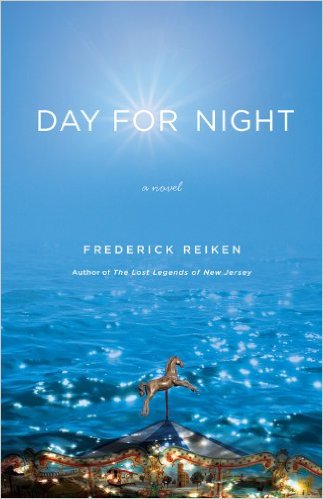
"Day for Night" by Frederick Reiken


This was a Christmas present.
There is nothing more welcome as a gift to me than a book (or a music, movie) BUT what to give to a 100% bookworm who reads an collects his whole life? When it comes to my current choices, I usually roam where inspiration leads me and follow towards whatever suggestion, idea or a recommendation might point. Sometimes the best intended gifts might simply not be the right choice for me, as proven a few years ago when I was given than brand new trilogy "Fifty Shades of Grey" (which my roommate had bought as Christmas present completely innocently because it was very popular and the lady in the shop suggested as a best seller) than still stands unopened somewhere in the corner because I simply didn't have a heart to throw it away. This Christmas my current work colleague faced a small choice in a Aruba's bookshop and bravely decided to go for something written recently and to trust all those glitzy awards and usual advertising tricks on the cover. I was thrilled, to be honest, because I love books + never heard of this one. 

It turned out very interesting, though I was very suspicious initially because I didn't like the voice of the character at the start - it sounded just as annoying and superficial as majority of the people I meet trough my work (me, me, me and some more me) until I realised (around chapter three) that this was actually a very clever trick: every chapter is told from a point of view of a different person, so each of them have completely different way of expressions and thinking. A spotty teenager, neurosurgeon, retired widower, FBI agent, pop singer, it unfolds Rashomon-like into a story that eventually connects different destinies, lives past and present, even far away places. I guess the main idea would be how our lives are all connected one way or the other. Kind of how your life story could be told from different perspectives if various people talk about it. Which brings me to my favourite question - what is truth and are we a person we think we are, a person we strive & imagine ourselves to be or a person others see in our place? Well, I enjoyed the novel up to the point but not really because of the story as much for the idea of each chapter having a completely different, fresh voice. This was done with excellent style and grace, I must admit the author showed even brilliance by using so many completely opposite ways of thinking and different perspectives. As for the story itself, I felt it a bit meandering and unfocused because it started in one place and it went to several others until it closed at something completely left-turn - it all had some sort of conclusion, I guess, but again it was the writing style and not the story itself that thrilled me.