27.3.13

"The Door" (2012) by István Szabó


Last night I watched not one,but TWO episodes of "Life on Earth" and than, having another sip of mulled vine, decided to check out this new Hungarian movie with Helen Mirren.

Intrigued with the idea that Mirren, after all her high-profile work and awards chose to act in a Hungarian movie instead of making millions for high paid cameos in some blockbuster SF, I almost forgot the director - István Szabó who years ago directed one of the best movies I have ever seen, famous "Mephisto" where Klaus Maria Brandauer sold his soul to Nazi party in order to prosper. Being Hungarian, Szabó knows everything about the fight of ordinary man with a system and I expect something similar this time.

However, Szabó glosses over some very obvious opportunities where danger of political involvement might potentially bring disaster - this time he is focused on  difference of how we see our acquaintances,friends and neighbors, in short, what do we actually know about people we see every day. In the centre of story is grumpy old maid (Helen Mirren) who serves as a house help for rich couple living in a comfortable house on the other side of the street - though is clear the couple lives without any financial problems and have much higher position in a society, Mirren's character slowly becomes master of the house and everything depends on her. Mirren is brilliant as she completely dominates everybody around even though she wears rags and aprons most of the time - if you compare her costumed "queenly" roles from not so long ago, you are aware her charisma is by far above such trivia, she simply has a great cinematic presence. The big part of the plot is how she - clearly uneducated working class woman who despises politics and religion (and her superstitions border on paganism) jealously  and fiercely guides her privacy and nobody is ever allowed to enter trough her "door" - her neighbors and employees can always count on her but no one is allowed in. Even local police is frightened by her.

Fascinating as it was,the movie than moves into maudlin territory - trough series of flashbacks and occasional outburst of temper, we learn about scars from Mirren's past and why she is the way she is.  At this point I couldn't help but to think about similar old lady neighbors from my own life who appeared harmless and slightly eccentric but in their solitude nurtured fear, suspicions and old-age dementia. And as the movie progressed, I couldn't for the life of me understand why would anybody bother with such cranky old turtle who only scares everybody around. Szabó suggest that Mirren is intellectually superior to her employers but I was not buying it - her limited life experiences only made her bitter and suspicious about everybody's motives and she strictly refuses anybody's opinion or help. Yes,there were some fundamental questions posed here - old age, right for one's privacy and right to die if the person chose so - but Mirren's character is so close to old age dementia that towards the movie I lost any sympathy for her. If she refuses to open the darn door even to her neighbors who want to help her, well good riddance, she made up her choice. The very last scene is so pathetic that its simply embarrassing.

All the best about director, his cast (everybody is dubbed in english) and of course hats of to Mirren who was adventurous and brave enough to move into non-commercial but artistically satisfying direction. I lover this woman,but not necessary the character she plays.

26.3.13

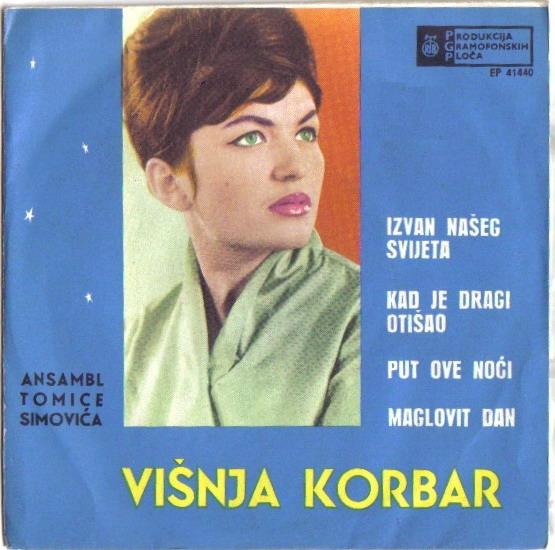
Višnja Korbar - Izvan našeg svijeta (1963)


Korbar debuted on the big national stage just a year earlier (pop festival Opatija' 62 - this was the time when festivals were rare,glamourous and had wide media coverage) with a moody ballad "Jednom kad odem" that presented 20 years old singer like some world weary torch singer in film noir setting - it just shows how far we were from current music trends.

For her recording debut (strangely enough,not in her hometown "Jugoton" but in Belgrade's "PGP RTB") Korbar got a swinging band (led by Tomica Simović) but again,for a girl who is merely 21 this is a very inappropriate choice - not that I think she should do something chirpy, but somehow all these american songbook covers are approached as ten commandments - even when orchestra is swinging (as much as they could,band is functional but not exceptional or innovative)  Korbar is wooden and so serious that her naturally pretty alto voice sounds strangled, subdued and strangely mannered - obviously Gershwins and Cole Porter were not her natural environment. It has to be noted that many of the singers of that time sounded very much alike on records so perhaps there were expectations how one should sound on the radio - clear diction and all - however, this little EP recording does not present Korbar in the best light and I am not 100% sure what she exactly thinks about her recording debut. French chanson and even croatian traditional folk suited her much better than "A foggy day in London town" no matter how much she would have liked it differently. This is not a jazz recording. It's a schlager singer doing jazz impersonation.

Vacation!!!


Finally - VACATION!

Only those who work like me, seven days a week, non stop, brutal working hours (often from morning to late after midnight) can understand and appreciate what it means to wake up each morning with a time on my hands and no obligations looming on horizon, no place I have to be at exact time, no inventories, price changes, standing all day long or dealing with customers who would like to buy something "inexpensive" (read: 1 euro,if possible) . The only thing that surprised me somewhat was the fact that I couldn't wait to escape to my countryside retreat and found it covered with snow. At the end of the March! So much for the Spring, oh well.

Not that anybody would bother me anyway, but I had locked all the doors and pulled down the shades (my friends joke its because I live in windowless tiny ship cabins all these years) and protected from storm outside, I watch my documentaries, listen ancient croatian schlager music (or occasional classical piece)  going trough my book collection and sitting by the fire while something is cooking on the stove.

The first thing I selected to watch (or re-watch) was a DVD Box titled "The Movies Begin" which is a five-volume boxed set with very,very early black & white movies I ordered online many years ago. It is a wonderful document about very early beginnings of cinema with lots of goodies thrown in it, of course they are all silent (with added piano music or occasional comment) and the one I always return to is of course masterpiece "A Trip to the Moon" ("Le Voyage dans la Lune") by early french film-makers, brothers Méliès. It was probably inspired by Jules Verne and a huge success in its time, I think its actually the first (saved) "movie" instead of just a little snippets we have at the beginning of the box. The whole box set is so rich, that I usually enjoy it only in the little doses (I must also add wonderful "The Great Train Robbery") but other DVDs from the box deserve re-watching again as they are divided between "Experimentation and Discovery", "The European Pioneers", "The Magic of Méliès" and "Comedy,Spectacle and New Horizons". Some of this ancient cinema pieces are very short, other last a little longer - there is occasional piece like documentary-like "Moscow in the snow" that looks like something from a dream and I watch it fascinated. Real time machine, with long gone streets and faces looking back at me from the movie camera.


Back to documentaries - instead of checking any of the current blockbusters, I decided to enjoy what I like most and selected classic 1970s "Life on Earth" by David Attenborough. Of course in the meantime documentaries had changed and today everything moves faster & has computer animation - it is in fact this old fashioned TV presentation that I enjoy so much and so far I had spend two wonderful evenings sitting next to a stove watching Attenborough climbing the rocks and standing with his feet on some corrals in the Pacific explaining what he holds in his hands. Probably I have seen it all as a child but this is the first time I have time to see it all as adult and enjoy the explanations (he is informative and intellectual without being patronizing) so in a way this weather has been good to me. 

8.3.13

"Pan's Labyrinth"


"Pan's Labyrinth" was without any doubt the best movie I have seen this year so far - another movie that escaped me before as I was constantly sailing, working and doing other things - if I remember correctly it won Academy Award and rightfully so because it has all elements of true classic movie no matter what language it was made. I really wonder how did I miss this one the first time around, either I was at sea or (more possibly) my working colleagues were more interested in action movies - maddeningly, they all have some collections with Stallone or Schwarzenegger but hardly ever someone collects movies worth truly seeing. 

Back to "Pan's Labyrinth" - the main protagonist is a child Ofelia who is daydreaming above her fairy tales books while the civil war rages around her. All kind of cruelty is going on around her, soldiers killing each others, people living in a fear, mother re-married a sadistic army captain who in turn is focused to fight guerilla soldiers hidden in a forrest close to his army base. We are aware that times are dangerous but Ofelia is not - like so many children lost in books,she has built her own magic world where fairies invite her into enchanted forrest, the king of underworld is waiting for her and magic creatures expect her to solve difficult heroic tasks (all of this is visible naturally only to her). The "magic" parts of the movie (done by perfection) are contrasted to "real" life where killings, fighting, fear and torture are parts of daily life. Eventually these two worlds collide in a only possible ending that comes as surprise though we could all probably expect it. 

What moved me the most (besides visual beauty of the movie) was the understanding director and script writers had for a children psychology - as a children we all live in our own fantasy worlds (specially kids who are book readers) but this is somehow forgotten once we reach adulthood and move to "reality". To be honest, I don't think I've ever really moved to "reality" since I spend at least half of my day in daydreaming anyway. Creators of this movie understand that children have different point of view, often created as a protection wall against the world (probably like here) - adults have no patience or understanding for this, as shown in several scenes where Ofelia is harshly criticized for actions that they can't understand. Of course, she was told by fairies. I perfectly understood Ofelia since I was kid like this myself, living in my own world, perpetual visitor to a local library and often cruelly reminded of a difference between real life and my books. 

Thinking about the movie this morning, I realized that I don't really know spanish cinematography besides internationally celebrated Pedro Almodovar - we all know about him and somehow unconsciously assume spanish movies are "like that". But he must have been very special and original to rise above hundreds of other directors in his country (not to mention in Europe and than internationally) so my perception was probably completely wrong, Almodovar is only one. Thinking how many "other" spanish movies I have ever seen (besides Almodovar) I realized it could probably counted on one hand, I need to do some research about this. 

"Mary Reilly"


Last night I literary stumbled upon a movie I have not seen previously before - "Mary Reilly" - one of those movies that somehow slipped under my attention,God knows was it because my nomadic lifestyle, constant moving & traveling or simply I was not attracted by main actors, however now I gave it a chance and surprisingly found myself mulling it over in my head even this morning.

It is a interesting re-telling of a famous 1886. novel "Strange Case of Dr. Jekyll and Mr.Hyde" by Robert Louis Stevenson that was a huge bestseller in its time and supposedly freaked out even Queen Victoria - a case of split personality (good and evil in one body) later celebrated trough theatre and movie adaptations - each time a new re-telling would move away a little bit further from the original so today it seems nobody is aware of a main twist in a story, that not until very end we find out that both Dr.Jekyll and Mr.Hyde are in fact one person. This is the way novel was written originally and it was the main mystery of the story - later in theatre and in the movies the role would have been played by the same actor so with time it has lost its element of initial surprise.

Back to the movie. 
It is a re-telling so of course we approach the story from a completely different angle - in fact, several main characters from the novel are completely erased here (Dr.Lanyon, Mr.Utterson) or some other like Mr.Enfield are shown in a second. This movie is all about the story as seen from a perspective of a "maid" (who was completely in the background of the novel) and it also gives an interesting starting point to other,future movie adaptations of the famous literary classics where we could possibly follow the story as re-told by other characters. No wonder Disney is just around the corner with another adaptation as told by Dr.Jekyll's little dog, few mouses and a street cat. 

What I really enjoyed about the movie was the way certain long gone era was brought to screen - everything is happening in a scary, grey, cloudy and misty city bustling with ugliness, nasty screaming people, dirt everywhere except in a Dr. Jekyll's clean house that must have been seen as a elegant Haven to poor servant Mary Reilly. Of course the house itself is not so safe as we find out later, neither it has a particularly happy atmosphere - five servants are working hurriedly and silently around Dr.Jekyll, running up and down the stairs for him, polishing his shoes,ironing his shoe laces and what not. But I was fascinated with a clever way movie makers reconstructed the whole victorian era without showing anything particularly historic - we simply know when the story is happening without seeing much. The costumes, the furniture, occasional horse carriage, inside of a whorehouse, everything was done by perfection. The way house servants are silently and submissively working around the "master" carefully avoiding expressing their humble opinions, clear fear of losing the job that hangs above Mary Reilly's head as she works from the early hours up to the evenings, the little details thrown here and there, I found them excellent. 

Naturally as the movie was made relatively recently, it had to hint to Mary's troubled background - of which Stevenson never bothered to mention as he only wrote about doctors, politicians and aristocracy - script writers were inspired to guess she must have been impoverished and tortured (movie hints, abused) child who escaped poverty and probable death from starvation with life in permanent work (" in service") and would do anything to stay safely indoors. As shown in the movie, Mary Rilley is a little bit too delicate to really be a house servant - if she was really a child from the streets who survived by her own wits, she would have been more similar to brassy servant who sleeps in the same bed with her, not a genteel servant who is shocked to walk in the streets and can hardly wait to came back in the house. 

The main reason why I avoided this movie for such a long time were main two actors about who were so omnipresent in the cinema for the last several decades that I lost any interest to ever see them again. Sorry Julia Roberts and John Malkovich but its a clear case of overkill. At certain point it really felt like I can't see the movie without at least one of them playing in it. And yes, they are famous and celebrated and its all right but please move over and give a chance to somebody else. So I approached the movie with certain suspicion but it turned out fine - as I said earlier, the costumes and atmosphere (perpetual fog) made it up for everything else. I could think about hundred other actors in the places of genteel, aristocratic and melodramatic Julia Roberts (highly unlikely house servant) or nervously twitching Malkovich but supporting actors were fine and I was delighted with scene stealing cameo by Glenn Close who put more spirit and humor in her five minutes on the screen that both main actors together in a whole movie. It is a interesting gothic thriller and I could easily recommend it even if it lays too heavily on big budget Hollywood stars - but ideas in the script were interesting and I loved a fresh look at the old literary classic.

"The Stranger's Child" by Alan Hollnghurst


Another book recommended (in fact, given to me as a gift by dear friend) was Alan Hollinghurst's " The Stranger's Child". 
I was vaguely aware of author's name, probably saw it somewhere in bookshops - I am sure nobody had ever mentioned him to me since 99% of my working colleagues are not reading anything. So I approached "The Stranger's Child" with curiosity, not knowing anything about it except that its recommended.

Nice surprise. 
It turns out Hollinghurst is one of those rare writers more about the style than the story itself - like Umberto Eco whom I reading because of the wonderful style but hardly follow what's going on, Hollinghurst has a particular, very original approach to his characters more like a movie camera that circles around than usual straight line used by so many writers who don't understand there are many different ways to tell the story. For example, at the very beginning of a chapter Hollinghurst dives immediately into a sentence "She'd been lying in a Hammock reading a poetry over an hour" without any explanation who is "she" and than proceeds from there on. Its up to a reader to follow chapter to chapter as the story circles in a smoke clouds trough several decades. It is a british relative to "Rashomon" with the same story told from different points of view, except that here Hollinghurst mixes in another addition, a very relative issue of time and what it does to our memories - at the very beginning we got a hint about secret relationship and than later trough subsequent chapters (each set in different decades) survivors try to remember (or to hide) what they exactly knew about it. There are so many interesting questions posed here - never mind the story itself - for example how much can we rely on our memories as they are mostly impressions, besides several people might have completely different memories about the same subject. Secrecy of relationships and curiosity of others about it. Loves lived and imagined. Lives lived in loneliness. Old age and bitterness. Family and its chains. Even though occasionally I got a little bit lost with ever-changing decades and characters new & old, I enjoyed the book very much and in fact I believe this is kind of the novel that deserves repeated reading in order to enjoy it more. Highly recommended. 

15.2.13

"Afterwards" by Rosamund Lupton


Recommended by acquaintance and it let me wondering at first, as it is definitely a novel I would have chosen myself - 'does he really think I would enjoy this kind of book?" - not knowing a better description, I would call this a "domestic thriller" as its written by woman about a women and obviously targeted for a female audience. This means it shows author's perspective as really focused on home, children, furniture, school and circle of friends - in short, a bit limited perspective. It doesn't really go into description of a washing machine but I felt it behind my neck. After initial doubt, however, I kept on reading because there was a interesting story somewhere deep inside - Lupton might have been deep into mundane everyday reality of raising a family but she did knot those characters into quite a gripping thriller that kept me guessing and reading deep in the night. 

A plot's main twist is that it is followed by two characters who are not here - after disastrous fire,both mother and a teenage daughter are burned and badly hurt in a hospital from where their spirits follow "afterwards" of the story and how the family,friends,relatives and suspects try to unravel what actually happened. They can only hoover above "real" people but this also gives us opportunity to follow the story with almost movie-camera presence everywhere since "spirits" can float anywhere without limits. It might sound original but alas it is not - years ago I read "Lovely bones" by Alice Sebold and she was the first writer to use this kind of plot twist. 

Lupton had knotted enough of main and supporting characters into the story to make it into fairly interesting thriller (I could not guess the main baddie until the very end) but the most surprising part was occasional unexpected tenderness she expresses towards main character's family - unexpected as this is crime story after all - there are some really strong and emotional pages that even got me choked a little bit,specially parts about a little boy (who turns out to be a main suspect) and few others. Quite a surprise I would probably not noticed by myself.

"Entangled" by Graham Hancock


Graham Hancock is british journalist who writes non-fiction books about ancient mysteries, new age and forgotten history - not only I love the subjects he covers but his writing is very engaged & passionate, therefore I actually buy his books without reservations. In the past, I have read "Fingerprints of the Gods: The Evidence of Earth's Lost Civilization", " The Sign and the Seal: The Quest for the Lost Ark of the Covenant" and "Supernatural: Meeting with the Ancient Teachers of Mankind" (the last one was my absolute favorite and could read it again) - now recently I stumbled upon his first fiction novel "Entangled". Actually I should have been more careful when I'm buying books, because, you see, I was not even aware it was fiction - had I knew it, maybe I wouldn't bother.

Hancock's name was the best possible recommendation so I bought the book without realizing (until much,much later) it is not his usual non-fiction work about ancient civilizations/aliens/mysteries. It is actually a fiction work, a novel. My disappointment was so big that I left the books aside for months until I finally decided to check it out. Several things are recognizable Hancock, namely the way he connects ancient civilizations, mysterious Amazon potions and human unconscious mind - he wrote about this in his previous work but here he uses it as a part of his fictional plot. It is a adventure story that connects two characters who live in completely different eras, namely 21 century girl and her stone age counterpart - the only way they can be connected and fight together against mutual enemy is trough drugs or magic potions that alter mind (during these sessions they are both guided by angelic presence but its clear this is just one of the many faces of spiritual being). Since he tries to follow two parallel stories sets in different time zones, Hancock juggles between two different centuries which is a bit annoying as reader is never allowed to relax in one time and simply enjoy the story - just when you start really getting into it, another chapter brings you back to present time and so on. Stone age story (reminiscent of "Clan of Cave Bear") was actually gripping enough to make me skip the other story completely and just read the chapters about Neanderthals. Another thing I disliked was - the language. In his non-fiction work Hancock is very passionate, convincing, energetic and enthusiastic, very well informed and obviously stands behind his words. Here, creating a complete fictional world, he writes very much like script for an action movie - for example, his characters would say "What the fuck?" - a lot of swearing - where non fiction work had a sense of wisdom and adventure, his fiction novel feels a bit adolescent, with swearing, sex and graphic violence. I shouldn't really complain as I read the novel in a few days and couldn't put it down (he leaves the end open for possibility of sequel) but still it wasn't what I expected from Hancock and I wish he continues writing non fiction instead.

"Fall of Giants" by Ken Follett


After reading "The World Without End" and "Pillars Of The Earth" I thought Ken Follett was a genius, however as I finally finished "Fall of Giants" I might re-think this.
It is a overtly ambitious WW1 saga that feels too much like soap opera - on few occasions I had actually felt bored and left the novel on the side to start reading it another time. When I'm reading the book just because I want to finish it, its not a good sign. Follett obviously thought it would be a good idea to picture WW1 by juggling characters from different social backgrounds, countries and continents, however the fact that these characters are roaming the world and meeting again and again seems a stretched a bit - too often it was simply artificial and unbelievable. English lords are mingling with russian peasants, american politicians with german officers and so on. I mean, the world might be small but not so small. The novel might be successful as TV serial (it begs for small screen, with thousands extras and war scenes) however it bored me - I learned about WW1 already in the school so the book did not unearth anything new - I will not bother with sequels simply because I don't care for the story or main characters. 

If you think this is good, check out the novels by James Michener who is master of the saga-genre and who would have completely different job out of this same story.

18.1.13

"Dnevnik jedne ljubavi" - 40 years


It has been 40 years since cult rock album "Dnevnik jedne ljubavi" ("The Diary of One Love") was released in 1973.


This fascinating,original and inspired work of art was completely new idea at the time when our local croatian discography was still in tender age - quick look at contemporary charts shows that as nation we still preferred easy-listening, festival compilations, folk melodies from various ensembles and corners of Ex-Yugoslavia, revolutionary songs about WW2 and music with greek or mexican flavor. Solo LP albums by one artist were rarity (singers were mostly represented on singles or compilations) and even than mostly compilations of previously released material. Not that we did not have rock artists - during previous decade in the 1960s there were literary hundreds young "beat bands" trying to find their voices as opposition to mainstream,most of them inspired by western pop sound and singing covers of international music stars. From one of those "beat bands" young and self-assurred Josipa Lisac came along, urban city chick with a strange deep alto and apparently refusing to play money game - even when she performed on 1960s pop festivals her music was moody and melodramatic. 

Composer Karlo Metikoš (who until than was a big rock star and in fact rock pioneer in Ex Yugoslavia) and lyrics writer Ivica Krajač have built "Dnevnik" around Josipa's unique voice, imagining a complete story of one typical love affair as told trough ten thematically connected songs - a young girl dreams about her future, feels excitement of her first love, ups and downs of relationship, break up and make up, another new start and realization that in the future relationship would have to be built on mutual trust. It is actually a kind of mono-rock musical with Josipa Lisac brilliantly expressing huge diapason of emotions, finally ending with defiant "Kao stranac" ("Like a stranger") where she demands of her lover to be honest with her, or else. 

Definitely very original and unusual for its time, "Dnevnik" was collaboration of the whole team  - Metikoš (music), Krajač (lyrics), Brane Živković (arrangements), Lisac (vocals) not to mention huge group of backing musicians that reads as "who's who" in than-contemporary rock elite. Its basically "Josipa Lisac and All-Stars Band" topped with unforgettable black & white cover photo by Jozo  Ćetković. Even the inside cover with hand written lyrics shows that first letter of each song represents the singer's name. On the backing vocals were classical singers Anica Zubović and pop singers Ksenija Erker & Zdenka Kovačiček, though latter voice was so powerful that Kovačiček is the only one audible. 

I have actually read contemporary review written by rock critic Dražen Vrdoljak at the time of album's release - its very cute to look back at it from this perspective, because here we have "rock critic" (in a communist country) reviewing very seriously local rock LP album that had no competition in national scene. If I remember correctly, Vrdoljak praises the idea, backing musicians and everybody involved but is not so sure about singer's mannered voice and hopes that this "affectations" is just a passing phase. Well, just to show that Lisac at the age of 23 was already fully formed, I can only quite another rock journalist who 40 years later calls her a "mother of vocal affectations". 

"Dnevnik jedne ljubavi" had stayed in print for 40 years now. Generations of listeners grew up with it, learned all the lyrics, lived with it and introduced this music to their kids. The authors themselves continued their lives and careers with changeable luck - if backing rock musicians eventually lost their battle with time and got forgotten, three main architects continued working together and collaborated on theatre stage with rock operas "Gubec beg" and "Grička vještica". As for singer herself, Josipa Lisac used her debut album to definitely distance herself with pop festival past and built her future in pop/rock direction.From now on she was known as our own "rock lady" and future generations would never mix her up with other mainstream, easy listening performers - I remember how surprised I was to discover that in fact at the very beginning Lisac sang on the very same festival stages as Ana Štefok, Višnja Korbar, Gabi Novak or any of old-school singers, basically she was a rock outsider in a bunch.

As a teenager growing up in 1980s I don't remember Lisac looking back at her debut very much. She was too happy with her recent new work and was promoting new hits, with just occasional glance at "Dnevnik" as concert encore to satisfy the audience. But all those subsequent studio albums, hits, TV shows, magazine covers and awards were quickly forgotten once composer Karlo Metikoš died in 1991 - from than on Lisac is on a mission to keep his memory alive and had returned to "Dnevnik" almost exclusively. As much as I noticed, she had selected several songs from this album and performs them in a various "clothes" on every concert. Somewhat half-heartedly she also occasionally records new material but its clear her best work is now behind her and she is focused on "Dnevnik" as a totem. It works wonders still - music and lyrics are brilliant as ever and after all these years I have not found any croatian female singer to seriously challenge Lisac. I am not sure will she ever work with same lyrics writer again or invite all-stars backing band again as back than, however composer Karlo Metikoš got posthumous "Porin" national music award and recently his own street in Zagreb. Lisac herself had kept her head very high all those years and never succumbed to commercial temptations - distancing herself from cheap music trends she kept relatively low profile and got "eccentric" image along the way but her style and reputation as artist never suffered.She would forever stayed associated with this materpiece.

Interesting note: kids today might discover "Dnevnik jedne ljubavi"  and love it, however I hear everybody claiming its the best rock album in Ex-Yugoslavia. While its definitely true that its one of music masterpieces and cornerstones of our local,national rock, I wonder how much young generation actually knows about music back than? There are several interesting rock LP albums released around the same time that deserve re-introduction, like works by  rock group "Time", All-Star collaborations on LP's by Tihomir "Pop" Asanović (his "Majko zemljo" is basically continuation of "Dnevnik" sound),Drago Mlinarec  or "Idexi" - they had all worked very successfully and had released inspired works where often they would collaborate with each others. Just look out for Josipa on albums by "Korni grupa" or Tihomir "Pop" Asanović - she was sensational "special guest" even back than! Yes, "Dnevnik" is masterpiece but I urge everybody to check out the competition because there is a lot of interesting music to be discovered. And while you are at it, check Hungarian rock singer from same time called Sarolta Zalatnay - she was hungarian Josipa and her early 1970s music is no less powerful.

11.1.13

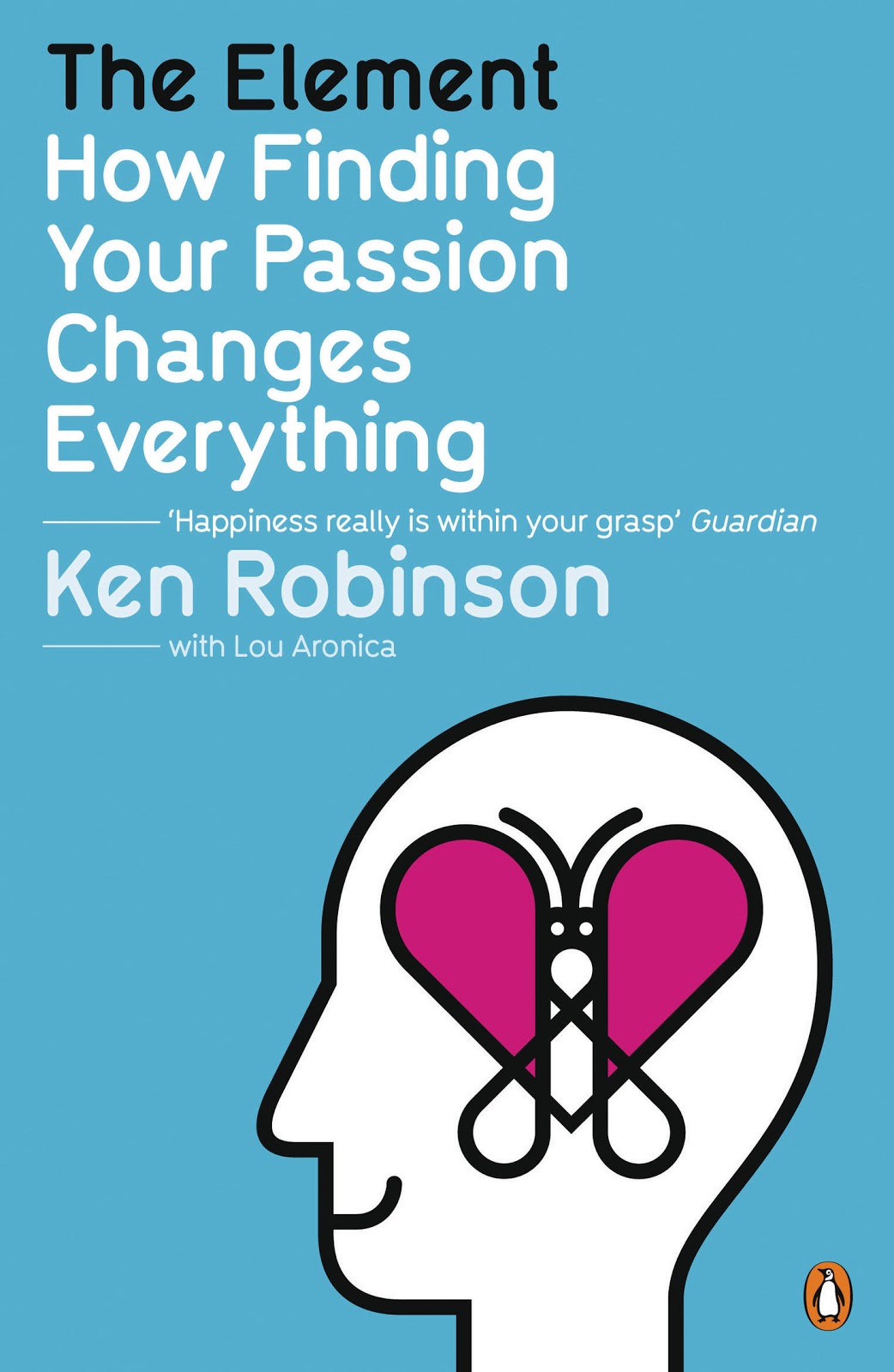
"The Element" by Ken Robinson


Very interesting and inspirational book about finding one's real path to happiness - Robinson understands we are all born different and have different talents, therefore he points that our educational system with boxing everybody in the same standardized boxes does not really work as children often have completely unique and various interests and intelligence can't be measured. Trough stories about people who actually achieved something despite surroundings (family not approving, health issues and so on) he explains how we could find happiness trough following what our hearts tells us - along the way he explains the difference from being professional and amateur, the importance of nurturing the hobbies and how to enjoy our little "oddities" simply because it is something that makes us happy. If everybody around you find its "silly", "childish" or "immature" Robinson points that obviously one has to simply ignore surroundings and enjoy what makes us happy because its our natural response to spirit. Only rare people are lucky enough to combine hobby and profession, however the rest of us might nurture wonderful ideas and pictures in our secret lives and this books explains why it is so important never to give up the inner child.

Croatian music in Vienna


At the very beginning of 2013. I would like to look back and write a few words about a wonderful series of concerts during November 2012. in Vienna,Austria.
It is something I would have covered as a journalist with the greatest pleasure - had I stayed in that professional waters - alas, now I am simply reading about it from a distance via internet and still mulling over in my head.

I would not dwell here on historical/psychological background of our connections with Vienna - croatians were always fiercely independent and stubborn about not being austrian servants, however the fact is that aristocratic, legal and administrative centre were not in provinces but in Vienna and Budapest. And now, like a child who wants to prove himself to parents, we are re-visiting Vienna bringing music,culture and art of our young & independent country. Trough November 5 to December 6, croatians musicians were performing in different concert halls around Vienna during "Festival of Croatian Music" - apparently this is already 8th of these festivals, something I was not familiar with - and presenting our cultural heritage to audiences outside of national limits. 

It was truly important and serious affair - combination of national pride and a bit of show off that actually I find very sweet, since Croatia is small country with turbulent recent past full of negative news, so here we have handful of people fighting the windmills and focusing on something positive. Artists represented were hand-picked in order to show little bit of everything - classical musicians rubbed shoulders with jazzers, choirs with rock musicians, we even had a classical piece composed by current croatian president Ivo Josipović!  If only I could have been a fly on the wall on these concerts! Had I been on land instead of sailing my way around Mediterranean I would surely visit every single of these concerts and talk to musicians and what it meant to them to play in Vienna. 

Who played and what - for some reason I see that musicians leaned heavily on Mozart (probably expecting this would have been appreciated in Vienna?) but everybody had spiced up their repertoire with some national jewels. 
ALEKSANDRA ŠUKLAR played Boris Papandopulo. 
AMADEUS TRIO ZAGREB played Beethoven and Tchaikovsky but also our own Bruno Bjelinski. 
Soprano LIDIJA HORVAT DUNJKO sang Haydn, Mozart, Frescobaldi and Bizet but also added ancient 17 century croatian composer Vinko Jelić. 
Brass band “SIMPLY BRASS” went for Bach, Holborne and Haydn but added young croatian composer born in 1976.
GORAN JERKOVIĆ conducted a choir "IVAN FILIPOVIĆ" that performed Tavener, Tchaikovsky and sacred works next to our own composer Joško Ćaleta.
Flute-quartet „4SYRINX“ played Mozart,Grieg and Bizet along with croatian composer Mladen Tarbuk.
MATEO GRANIĆ and MATEJ MEŠTROVIĆ played Brahms, Bach,Mozart and Saint-Saëns along to Jakov Gotovac and Ljubomir Kuntarić (Meštrović also had his own piece).
LIDIJA DOKUZOVIĆ conducted choir „ČIPKICE“ that had brilliant repertoire of traditional songs from different corners of Balkans. 
BORNA ŠERCAR had his own Jazz trio performing pop songs in jazz settings.
SRÐAN BULAT (guitar) played Rodrigo and Albéniz along to our own Papandopulo and Frano Parać. Now this is interesting because many,many years ago when composer Frano Parać was still a young rocker, he led a "beat band" where main vocalist was Josipa Lisac. Today, after more than 40 years Parać is a classical composer whose works are being played in Vienna and Josipa herself was a guest on this festival, representing pop-rock side of croatian music. 
Presented as JOSIPA LISAC & BAND, my all-time favorite singer and her guys played selection of hits from her now legendary career and received excellent reviews in media - surely big portion of the audience must have been Yu-nostalgic, people who loved and worshipped Josipa decades ago when she was unique presence on national rock scene - however, apparently she did impress even the austrians, which does not surprise me as I think her talent knows no limits and she is a world-class singer who happened to be born in a small Croatia. 
Wish I was there!

23.12.12

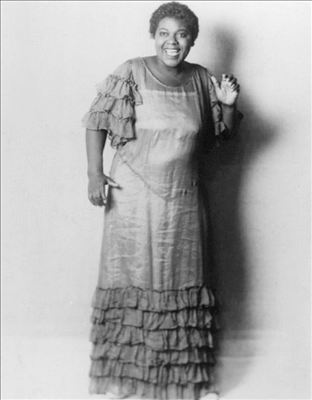
Bessie Smith


Bessie Smith lived just a relatively short life on this earth, but she left a deep mark and a spark that still shines decades after her death - alone among her contemporaries, she is the one remembered from her generation as a trail blazing personality and a talent that still has power to move and impress,thanks to many recordings still available,cherished and played today. Surely, she was not the only one - there were literary a hundred of black female singers at that time and naturally,Bessie must have been influenced by some of them, however her example lead the way - not for nothing her deep,powerful voice gave her a title "Empress of The Blues" and she was absolutely untouchable in her position. If nothing else, once listener get accustomed to her style and talent, this might lead to exploration of other voices of now forgotten 1920s "classic blues" idiom when sassy female singers were the biggest music stars, long before men with guitar re-shaped blues into something completely different (today we associate genre with man-with-a-guitar music).


The very first time I heard the name "Bessie Smith" was probably during my teenage years when I listened Janis Joplin - Joplin was rock singer and therefore something "cool" to listen, along the lines of music like "The Doors" or Jimmy Hendrix. Apparently Joplin was a lifelong fan and even paid for Bessie's tombstone,however it took many years before I finally heard some early demo recordings where Joplin sings blues copying Bessie note by note (and I found it sweet and cute,lonely girl from Port Arthur channeling long gone black blues singer who was definitely not in fashion). Another mention was in connection with Billie Holiday who listened Bessie's recordings in bordellos of Baltimore as she swept the stairs (in her autobiography Holiday would claim she would clean around just to hear those recordings) - I could never exactly hear Bessie in Billie's singing,because Bessie had a deep, powerful earthquake of voice and Holiday was a gentle little squeak compared to her. But now I understand that the older woman had a strong, earthly honesty that appealed to young Holiday and this honesty communicates with listener even today, despite of ancient recordings.


Some twenty years ago I finally laid my hands on Bessie Smith compilation. It was on a tape and titled "The Collection" (I have it on CD now) where her music was presented as a career retrospective, going from very first 1923. hit "Downhearted Blues" to her last 1933. recordings - it took some time before I got used to tiny, muddy sound of now-primitive sound of 1920s recordings but once I got into it, I never got tired of them. Like a message from time machine, Bessie's strong, powerful and massive voice sang about love,passion,heartbreaks and loneliness - she might have recorded them in 1920s but there was nothing old-fashioned about her message or honesty, this woman was real as anything around you as you listen to her music. Of course, some of her experiences as a strong black woman of 1920s were not really connected to my life (and she did had a soft spot for cruel lovers who would beat and abuse her) but on some unconscious, human level she communicates strongly about emotions we all know and experience one time or another in out lives. When she sings "see that long,lonesome road, Lord you know its gotta end" it really breaks your heart, because we all know and understand that feeling of questioning the whole point of existence (a point we all come to in lives). Its this message that communicates so strongly with everybody curious enough to explore her ancient recordings, that still echoes and has a power to impress no matter where on earth you live - in Denmark,young Chris Albertson was impressed enough to became fan and write a definite biography of her life.


I LOVE the music of Bessie Smith - that massive voice backed with plink-plonky piano (usually Clarence Williams) and on later recordings, bunch of the best jazz musicians like Louis Armstrong, I never have enough of it. Maybe its a paradox, because most of her song are downbeat (at least lyrics wise) but they make me happy - she is so strong and powerful that even in the blues I hear defiance, singing along and feeling good. Recently I finally invested into CD Box with her complete recordings and this was the best Christmas present to myself, as many of these recordings I never heard before. Since Bessie introduced me to the whole "classic blues" genre of 1920s and I had discovered many other blues singers who followed her, its very interesting to hear her cover versions of other people's songs - I am still on first CD and already she had recorded songs by Ida Cox and "Ma" Rainey,not to mention "Downhearted blues" that was originally done by Alberta Hunter. There are several double CDs in the box so I made decision to enjoy them slowly month by month and I am very happy so far. 

14.12.12

My new CDs


The places that I visit these days are cold and windy - not much fun to travel on the Mediterranean these days - if the rest of Europe is covered with snow, coast towns of Italy, France and Spain are just icy & freezing. Only Barcelona seems to keep sunny,smiling face and is always the most beautiful and exciting port that we visit. It also happens to be the place with excellent CD shop that somehow resist closing down - there are few in downtown area, despite of trend of CD shops to close down and disappear as people buy music on line or simply download somewhere. I am old fashioned,so I like to buy CDs with liner notes,photos and informations who played where and when,its important to me. 

So - here are some of my new purchases.
Little Richard's first two LPs from 1957 and 1958 are now released on one CD and I love them dearly. I probably wouldn't care for them several years ago, but in the meantime I've heard many of his contemporaries and can understand what exactly he was doing and how it continued to influence other artists. He combined several exciting ingredients into his own musical style and its really good. Strange his moment in the sun seemed to have been relatively short and he never again got this white-hot inspiration like in 1950s.

Bobby "Blue" Bland's early recordings are now available as "The Duke Sides 1952-1960" (sub-titled "Little Boy Blue") and its excellent introduction of his classic work, how and why he became legend in the first place. I already have some of his work from 1960s and beyond but this is the first time that I hear this material. He wails backed by excellent guitar playing,horns and big orchestra - in my opinion this is in the same league as B.B.King's classic work, first rate and I really love it despite the fact that most of songs are lyrically downbeat (but curiously they are very upbeat musically). You click your finger to Bobby's heartbreak stories!


Same thing for Bessie Smith Complete Recordings Box set. I loved Bessie for many years now (listened her more than decade - or had it been two?) and enjoyed two compilations of her work - "The Collection" was released long time ago as part of "Columbia Jazz Masterpieces" and  two-CD "Essential Bessie Smith" not long after that. Of course she worked in 1920s so she had never released LP albums, her singles were sporadically re-discovered by every new generation and compiled just like music by Billie Holiday - who in fact, often mentioned Bessie as her main inspiration (I think it was Billie that turned me on to Bessie in first place). Back to CD Box - as I browsed in Barcelona's CD shop nothing particularly interested me until I saw this Box - Heaven sent for classic blues connoisseur like me - well,I did not have money to buy it immediately but waited next week and than walked back for my Christmas present for myself. It wasn't even particularly expensive - in fact it was very affordable, considering this is box after all with COMPLETE RECORDINGS - I enjoy it very much in spite of the fact that she sings the Blues and lyrics are mostly downbeat - this music suits me so much that I feel it in my bones and suspect I used to live in 1920s. 

Latest purchase was Mina (what else to buy in Italy) and second of her multi-lingual trilogy. Recently I wrote about her spanish-language compilation and yesterday I bought english one. Not convinced this is the best way to introduce her to my english speaking friends, because her particular magic somehow gets lost in translation - whatever is passionate and dramatic in italian, sounds somehow empty banal here and though the voice & music are exactly same as in original recordings, I suspect its better to stick to italian originals. 

Essay on Bessie Smith coming soon.

9.12.12

"Yo soy Mina" - Spanish recordings by Mina


Compilation of spanish re-recordings by italian pop goddess - she frequently released singles focused on specific markets,for example "Brother Bear" had already collected all of her 1960s german recordings on a rich single CD. Majority of these recordings were released during Mina's golden years (early 1970s) when her voice was at the peak of its beauty and power. Similar to twin projects in english and french, this one is titled "Yo soy Mina" ("I am Mina") and has some of her best, classic work but this time with spanish lyrics - as expected, its not so much different from italian originals, in fact it follows them note by note except that it is sung in another language.
But oh,the music - penned by such giants like Mogol,Lucio Battisti,Sergio Endrigo and Gianni Ferrio,it is literary a who's who of best in italian music - melancholic stunners as sung by best voice in italian pop. Even in another language, Mina is strong, powerful, expressive and virtually untouchable when it comes to this kind of material. There is a big chunk of her 1974. LP "Mina®" which raises question was spanish release of this album planned but never realized? The most interesting songwriters on this album were Shel Shapiro/Andrea Lo Vecchio who wrote songs that suited the lady like a glove. Two interesting spanish-language rarities are included here, both from late 1960s - one is beautiful "Canzone per te" by Sergio Endrigo, another collaboration with Astor Piazzola "Balada Para Mi Muerte" that in itself is recommendation enough for purchase of this CD.