21.5.12

Farewell Donna Summer

Donna Summer passed away.

So many things I could write here - she was important as an early music influence in my life (I believe her "Live and more" was one of the very first LPs I ever bought), disco queen and pop star who defined the 1970s decade.
For me, as a teenager growing in Eastern Europe she was smiling face from LP cover, a beautiful lady that initially confused with Diana Ross but quickly learned to love her strong,powerful voice and of course it was trough her that I was introduced to disco - a love that lasted a lifetime.
Being far away from US media I didn't initially know much about Summer - except her music - and learned the story more-or-less much later. There was a rich discography to be discovered, her muscular alto belting everything from disco hits to ballads, rock and even occasional jazzy standard. Surely, she exploded on international music scene because of sexy,breathy gimmick called "Love to love you baby" and worked hard for many years to move away from that embarrassing image - interestingly enough, when she moved away from disco, her career suffered and since than she had spend decades trying to repeat that first success - the voice stayed the same,material was not. In fact, I must admit I disliked her later music almost as much as I loved the 1970s albums.

And now she's gone, forever into a legend. Most of us were completely unaware that she was ill. And it's fitting that everything bad is forgotten, outpour of genuine grief sincere all over the world and everybody is suddenly aware what a beautiful and talented lady Summer was. We might forgot her a little bit, with all the other stars competing for our attention and getting more media space, but Donna Summer will always stay Disco Queen Nr.1

14.5.12

John IV Laskaris


In my last blog entry I wrote about the book that I am currently reading, "Istanbul - the imperial city" and noted that I was amazed with brutality of life back than. If you look at the way emperors disposed of their enemies, queens intrigued in order to get their sons on the throne and so on, you soon realize this by far overshadows anything romans did.
Interestingly enough, author John Freely don't really pay much attention to this and cooly describes amazing episodes from history of Istanbul - probably the way writer should do,detached and cool as cucumber - but as I read one chapter after another,I was shocked beyond words with cruelty of the ruling classes,than how quickly masses would turn against the same ruler they crowned yesterday. While John Freely describes what happens and than simply goes on to another story,I had to pause and re-read again what I just read because I couldn't believe my own eyes - note how detached and calm Freely is while I get all upset.

To illustrate the point,here is the story of ten year old John  Lascaris who was the last of the great imperious family Laskaris. His father died and boy was supposed to be ruler when he grew up,but grand duke Michael Palaelogus got child imprisoned and than blinded on his 11th birthday,just to make sure competition is completely out of the way. Two church leaders excommunicated new emperor out of the church than the third welcome him back in the church with the great pomp and celebration in Haghia Sophia. John Freely goes on with the story, never to mention again what happened to the blind boy but I really got upset and tried to find some information about him on the internet - he had spend the rest of his days in the monastery,secluded behind the walls and living in a shadow world under the name Joasaph. In 1290 he was visited by Andronikos II Palaiologos, who sought forgiveness for his father's blinding of John IV three decades earlier. What was his later life like? Did anybody ever remembered him? He was just 11 year old boy whose father died and monks took care of him! I was deeply upset with all this.
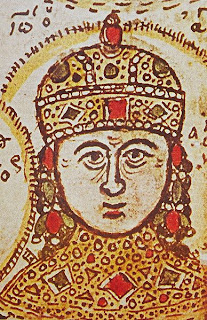
Of course this is just one of the many stories from the book. Blinding,mutilating and killing competition was very common back than - when Mehmet III came on the throne, the first thing he did was to order all of his 19 younger brothers to be killed so his throne is safe from competition,following the same tradition as his father and grandfather did before him! Not to mention war with the bulgars where in 1014 emperor Basil blinded 1500 captives and sent them back to Bulgaria, leaving one in each hundred with one eye so they could reach home. There was one emperor who was disposed and his nose cut, but he later returned on the throne nose-less anyway (if I remember correctly,he had golden nose instead). Perhaps it makes thrilling reading but surely it was very dangerous world and reality for people who lived back than - and not just royalty but ordinary people as well,since nobody protected them - one sultan was alcoholic murderer who used to roam the streets in drunken stupor and simply kill for fun whoever happens to walk on his path.I actually can't wait to finish this book now because it just upsets me.

1.5.12

Istanbul - the imperial city by John Freely


It's already a part of tradition that I always find and buy a book about the places I visit - fortunately Istanbul have not one but two excellent english bookshops in the central area (same owner) that cater for tourists, visitors and diplomats - there is a nice selection of books about Turkey and Islam in english so I selected "Istanbul - the imperial city" by John Freely as my first introduction to this beautiful and exciting city, since I don't know much about its history except basic informations.

So far I am really enjoying it - not too much space was focused on early settlers but very soon author moves on to explain it greeks and roman roots that have left much more traces than people who lived here before. Right now I am at the Chapter 12 and romans are in full swing - lots of interesting and brutal anecdotes about emperors being killed by mobs and queen mothers having their tongues sliced (!), noses cut off and such stories. We also get informations about all the important palaces,temples and public buildings built around this time as well as occasional story about ordinary people who lived there, famous courtesans, saints, priests and soldiers who were remembered in history. Very gripping story and I am truly enjoying it - and so far its still a roman city, at this stage of the book muslims are only distant treat from far away.

Ike & Tina Turner "Dynamite" (1962)


Where Ike leads super-tight band, Tina channels Little Richard and The Ikettes provide spirited backing vocals.

It's all great fun and Turners sound as they are on a roll, as they might have been in the first excitement of their success. 

Of course, these recordings sounds very simple and primitive compared to later more sophisticated work, but it must be pointed that Turners never again sounded so happy and enthusiastic. Tina is in the spotlight but there is one song ("Won't you forgive me") where she actually duets with hubby in a interesting attempt to go commercial and cutesy.

Millie Jackson "Still caught up"


Sequel to excellent "Caught up" album that finds Jackson returning to her role of "other woman" - her singing is passionate and music strong but the idea is not so new second time around - this gives edge to previous album simply because it was first. Perhaps its just me,but she seems to talk much more here which gets tiresome after repeated listening.

La Belle "Chameleon" (1976)


Frenzied r&b from mad soul sirens who split soon afterwards.

You would be pressed very hard to find better,bigger or more powerful voices anywhere around of the time of this release. Ballads are forgettable but when sisters start to gallop, they are invisible ("Who's watching the watcher", "Gypsy Moths") and just to make a point how far they are removed from their early girl-group beginnings, Patti ends the album with a soaring ode to cunnilingus.

Etta James "Tell mama"


One of the classic soul albums from 1960s and highlight in artist's discography, this album finally matches fierce vocals with right material and excellent musicians.
Almost every song here is soul classic and expanded version unearthed some more goodies ("I got you babe"!) recorded around the same time. 
Plenty of horns and James is on fire.

Isaac Hayes "Joy"


Seduction music before Barry White.

It is patented Isaac Hayes sound where he whispers,groans,moans and basically enjoys his black stud/pimp/ladie's man act (that can be both convincing or comical, depends on point of view) .Musicians are excellent but after a while it really does start to sound repetitive and bit embarrassing - these are not so much songs as much as soundtrack to some imaginary porn movie, with every sound imaginable. Unwittingly, I played this at work and got some strange looks from customers. Makes you wonder what was all the fuss about Donna Summer's "Love to love you baby" about - it was already done on this album.

Ike Turner "Here and Now"


Notoriety brings r&b veteran back in the studio (if not exactly in the spotlight) and he delivers gutsy blues album that reflects on various music styles he played decades ago. There's a little bit of everything and if it sounds familiar,it's because Turner recycles his old ideas (did he really thought nobody would notice?).

His singing is lousy as usual but instrumentals are smoking hot and newly recorded "Rocket 88" is great fun.

Irma Thomas "After the rain"


Melancholic - not surprisingly,considering the time of its recording - and reflective r&b album by New Orleans music legend who sounds warm and comforting as usual.

The most interesting thing about Thomas is that she never over-sings - her singing is deeply felt,soulful and simple,completely lacking ornamentation young singers use today. This makes her old-fashioned and original at the same time.

James Carr


Overshadowed by commercially more successful singers in the 1960's James Carr was nevertheless as good as any soul star of the decade - his "Dark end of the street" is in the same league as "When a man loves a woman" by Percy Sledge - this collection of singles presents Carr in the best possible light,as a powerful, expressive singer who was particularly strong at dark,dramatic ballads. 

His excellent version of "To love somebody" reminds us what a interesting and talented composer Barry Gibb was before disco came along.

Esther Phillips goes country


In one of her incarnations Phillips was a country/soul singer following Ray Charles in his path: her soulful cover of "Release me" was actually a hit and it would lead Phillips to record covers for the rest of her career. 

Her unusual, sweet & sour voice was actually very good match for country music and Phillips milks drama out of every heartbreaking ballad. Arrangements and backing choruses are squarely, corny and absolutely typical for the time but artist is so original that she lifts the material on another level. 

Since she was heavily influenced by Dinah Washington,this is probably the closest we would ever get to D.Washington country album.

Chaka Khan 1978. LP


Perhaps the most accessible entry in artist's discography - not only because of the monster disco hit that opens the album (& that I usually skip,it's over-used and over-played) but because everything is polished & radio-friendly. 

Khan is in full power here,sounding exuberant and happy. As usual,singer by far overshadows the material but this is somehow less obvious here than on the other albums. Disco Chaka.

4.4.12

Places: Izmir and Istanbul


Finally - Istanbul!


I wanted to visit Istanbul for many years, probably because it seems like I've been everywhere else except there - because of my job I travelled from st.Petersburg to South Africa, from Alaska to Australia and back but Istanbul somehow escaped me. Funny enough, growing up in Ex-Yugoslavia (back than) I learned about all the wars we had as historical wall that protected Europe from Islam and had apprehension about Turkey until people finally started to tell me that they had wonderful experiences there, so it made me curious - I've been to Kusadasi which was fine but that was just a small tourist port,Istanbul is something else.


Before Istanbul I visited Izmir that looks and feels very much like some nice elegant vacation spot on Greece - beautiful coastline,blue sea and high mountains on the horizon.

Somehow I never managed to move away from shops/restaurant district - probably because I work so much that I am basically exhausted and need just to sit in the sun and have nice coffee & lunch, maybe another time I will walk to historical centre. As for Istanbul I actually took taxy to centre (Sultan Ahmet area) and walked around Blue Mosque and famous Aja Sofia - did not bother to go inside because too many people were crowded around - also shops and restaurants around were delightful,I could spend at least a week there and still see new things. In my enthusiasm I planned different places for each time I visit Istanbul (Topkapi palace,Grand Bazaar and so on) but of course reality is different and look at me now,I am in Istanbul and needed to sleep & rest, "Starbucks" in front of the port might be furthest I will go this time.Hopefuly I will have time & energy trough next two months to see some more of this exciting city (I surprised myself thinking "I could live here" because it's a huge city and I always feel good in big cities).

Joan Baez 1960. debut LP


The Album-that-has-launched-thousands-of-imitations presents very young but already dead serious and determined Joan Baez in a sparse voice & guitar frame, singing traditional folk songs that in 1960. came as a breath of fresh air to everybody tired of heavily orchestrated pop music of the time.


In a industry still crowded with arrangers, big bands and session players, Baez album was in its way revolutionary - deceptively simple folk songs could be played in any student room, had a romantic appeal of old-time stories (all those "maidens" gone wrong like in famous "House of the Rising Sun") and in spite of humble origins, this music sounded far more arty & literate than any of the hits of pop charts. Just listen to "John Riley", "Mary Hamilton" or "Henry Martin" and it's easy to understand why audience all over the world swooned to this strange album full of stories - even today, this music sounds haunting and hypnotic but it's not a communal experience, like all the best folk albums it's best appreciated when listened alone and it might even inspire you to pick up a guitar.


Baez of course was fantastic from the very first moment - she was probably born to do this.

Some might say she was too serious but her refusal to play the business game and pose as smiley cheesecake was a very strong attitude against commercialism that at that time polluted music. She would milk traditional songbook for a few more years,than turn her attention to contemporary songwriters notably one "unwashed phenomenon" who rose to fame because of her support. Half a century after its original release album still sounds magical - if her later albums sound squarely placed in their retrospective decades by than-current music arrangements, Baez debut it timeless because voice-and-guitar music could be played anytime,anywhere and still sound appealing.


Personal favorite: "East Virginia". Loved it from the first moment way back and still do. The closing song "El Preso Numero Nueve" hints at the future - Baez would not only re-record it for her spanish-language album but use it in her anti-war crusades. It might have been fight with windmills but it gave her dignity and purpose.