21.2.11

Grace Jones: Fame (1978)

Where cellophane cautiously tries to hide the fact that Jones is not a singer and she valiantly struggles with long lines that need bigger voice projection - yes,she has charisma and personality and will eventually become very interesting in her own off-beat way (but not here and not yet) - anybody could name at least five singers who would have no problems whatsoever with singing this but Jones always sound a little bit out of breath and like running behind the song instead of being at the helm of it.


Than modern-trick of songs sailing into each other without a break is today a cute reminder of disco-era,I remember this from my childhood. There is even a moment between the songs when it sounds like music will turn into "Turn the Beat around" but no,it is Jones own "Fame". "Autumn Leaves" was obvious follow up to "La Vie En Rose" and has Jones again singing in french with identical rhythm section and same percussion like on previous work.


"Am I Ever Gonna Fall In Love In New York City" has mildly interesting story line about a newcomer into big city,lost in the rush and excitement of new surroundings. Jones recites here for the first time,her voice so young but full of attitude. Almost like hearing baby Grace Jones.

As for other songs,they sound never-ending and probably were. The problem with this kind of production is that songs sound very much alike and as divided into A and B sides,you could play side A without even noticing it is actually different song.


Very soon Jones will re-invent herself and change approach to music,leaving disco behind completely. It is interesting to hear this but only to appreciate her later work even better. She did went a long way from this.

The 5th Dimension: Stoned Soul Picnic (1968)

Black version of "Mamas and Papas" with (gasp) far better voices and not one but two stunning beauties smiling from the album cover - and if that is not enough,you have songs by Laura Nyro,Jimmy Webb and Ashford & Simpson spread generously through very strong album with some seriously spectacular 1960s orchestration,strings swirling around singer's strong voices like Hurricanes and there are some clever touches everywhere that get listener's attention from the start (like unexpected happy Banjo in the opening song).


"Stoned Soul Picnic" is of course excellent song,pure delight here - it is actually lifted note by note from Nyro original and I can't say why lady herself did not top the charts because her recording is exactly the same - just give it a listen and you will hear basically no difference between them,maybe it is a power of voices united that gives a song a different glow,who knows? In any case they do glow and sound like a dream,there is a particular magic in these wonderful voices combined and everything about vocal arrangements and production is first-rate.


The cream of 1960s vocal harmonies,seriously.

Supremes: Right On (1970)

Considering that Supremes classic 1960s discography never went out of print,I always assumed their post-Ross was not interesting but this comes as shock.


Not only that I actually like Jean Terrell better (she has voice uncannily similar to Ross but with more bite and less cutesy),vocal arrangements and music here are far better than what Ross offered on her solo work at the same time. This actually sounds very much like best work of "The Flirtations" and that is a high compliment.

Terrell is out and front,girls (whoever they were) right behind her and music seriously grooves and moves in a new direction,still bouncing but cleverly staying in well-known Supremes comfort zone,if you need to describe it the best way would be to say it is current and modern but playing on Supremes well-known sound.


Never expected that I would like this so much - in comparison,their 1960s work sound like simple ditties compared to sophistication displayed here - true,it has different singers,producers and composers but whoever stays behind this can be proud,really great album. There is a CD box with 1970s Supremes out there and I am really curious to check it out now.


Highlght:

"Bill, When Are You Coming Back"

8.2.11

River God by Wilbur Smith


One of the small pleasures of traveling around so much is to find local writers/books/movies that I wouldn't know otherwise.
Wilbur Smith is the name I never noticed before,although I am life-long bookshop browser. Perhaps I was looking in the wrong direction or simply didn't know him,I clearly remember last year in South Africa checking out his novels in bookshops and thinking "hm,this sounds interesting" but this time I decided to give him a try. Boy,was it worth it.
"The River God" is his famous first (of many) books set in ancient Egypt and its a beautiful never-ending saga in full MGM splendor,with lots of chariot races,wild beast hunting, royal palace intrigues,travels on the Nile and so on - the main character is eunuch called Taita who is all-knowing force behind the throne and he gradually becomes more and more indispensable to royals with his wisdom and knowledge. The period is very well researched and it gives the reader almost the smell of the places,also noticeable is the author attempt to present the story from ancient Egyptian point of view,for example locals initial mistrust to arrival of new,unknown animals (horses) for whom they believe they are man-eaters. The novel was much better than I expected and it was a perfect escapism,I could hardly wait to finish my work and dive into world of old Egypt.
Luckily this novel was just beginning of several ancient Egypt novels with the same characters so now I know where to follow.

Fluffy pleasures

Some of the books I read recently - "Racist guide to South Africa" is a very funny little book by Simon Kilpatrick that goes about different people who live here.

Its absolutely hilarious and completely politically incorrect collection of essays on blacks,indians,whites and so on - blacks for example eat chicken beaks & legs which they call "walkie talkie". Indian girls are very beautiful until they get married and explode overnight (and they have incredibly long and pronounced sideburns). Local white "afrikaans" walk barefoot and have thick soles on their feet. Greek women all have moustaches and so on.It might be offensive to some but its all good-natured and obviously a joke book.


"Froth on the cappuccino - How small pleasures can save your life" by Maeve Haran is another fluffy little book that somehow appealed to me and I loved it,in fact read it in one sitting.Its a reminder on little pleasures in life and all those little moments that we treasure. I always believed that happiness is not something big and thunderous but in fact collection of small things and this book is something I could relate to.

Places: Durban


Contrary to name of this blog,I rarely ever mention places I travel through.

Maybe it's psychologically - my work is traveling and after years of living nomadic life I don't find it so new or interesting anymore,now I prefer to put down some inner travels,like what books I read or what music I listened,what moved me one way or another.

Than again,I said to myself "it's not fair towards the places I visit,I should not just take for granted all these travels that other people have only in dreams".

So here is Durban - my current place of work - it is a huge city on a Indian coast of South Africa,very very far from anything remotely close to Europe and I always find myself here in the middle of what is summer for locals but its winter elsewhere. Sure,there is excitement about walking around in summer heat when my friends back home have snow,and locals & buildings are colorful. There is excellent "marine center" called "uShaka" with aquarium,restaurants,shops and a famous beach,also lots of nice shopping malls like "Gateway" where you can spend the whole day browsing around and getting lost between floors and floors of offers (actually I prefer much smaller and more compact "Musgrave road" shopping mall because its simply more manageable for me,I dislike getting lost in these big places.

Everywhere I go,I always find bookshops & music CD shops - unfortunately they always push big names best-sellers I can get elsewhere but its thrilling to check out local music (I am still stuck with wonderful Miriam Makeba who is probably internationally best known South African artist) and as for the books my recent discovery is Wilbur Smith who is very well known South African author and he is VERY good.

Most of my colleagues right now don't care much about going out in Durban which is a pity because place is interesting if you know what to do and where to look: last year I even rented little plane and flew above the city,had a excellent view from above on suburbs and the centre. This year,contrary to what I expected,I was actually glad to be back and happy to see familiar places again.Sure,Durban does not match beauty of Cape town but it has its good points as well.

(Note to myself: I have to drag my colleagues out and show them some of my favorite corners of Durban)

8.1.11

King Oliver's Creole Jazz Band

Ancient recordings from the very dawn of early jazz.


The quality of recorded sound was still very primitive (electronic recordings will be introduced few years later,with sound much improved) so it takes some time for an ear to adjust to this jumble of what was basically ensemble playing together into a hole in a wall. There is nothing primitive about music and playing,though - sparks are flying when King Oliver and his boys are getting happy,once you get accustomed to this sound it is actually very rewarding because it gives you a chance to hear real New Orleans jazz the way it was played circa 1924. with a very young and apparently enthusiastic Louis Armstrong at hand. Listen to "Dipper Mouth Blues" and marvel at art of team playing in the best possible meaning of the word,it is a joyful noise in unison and at times it sounds even more exciting than Armstrong's later celebrated recordings with his own band. There is something about musician being young and full of vigor that cannot be replaced later.


So it is a time machine in a way,glance back at recorded history - I have soft spot for "historical recordings" be it old classical or recordings like these,to me they all sound wonderful and I enjoy them very much,the quality of the sound doesn't bother me at all because I understand the story behind it. Complaining about the sound would be the same as complaining that Tutankhamon's burial place don't have air condition,you just take it for what it is and what it represents.


At the very end of CD there are some interesting recordings by another band,"Red Onion Jazz Babies" (more or less same personnel) with vocals by very young Alberta Hunter who was moonlighting under assumed name of "Josephine Beatty".


Recommended for hard-core early jazz fans.

31.10.10

Celeste Rodrigues

Amália's younger sister had sweeter and lighter voice - not thunder and lightning as her older sibling,neither she tried to imitate her - and this CD compilation of her mid-1950s recordings turned out to be very pleasurable experience.


For the start, folksy melody "Olha a Mala" is irresistible,lilting tune that gets into your head and invites repeated listening, with just guitar and voice,it is a cutest little thing and floats around like a cloud,really far lighter and perhaps even more charming that anything older sister recorded. We all know Amália and her work,but to be honest she was - with few exceptions - most of the time dead serious,well Celeste has something of silver touch and although most of music here is without a doubt portuguese Fado,to me it sounds like the best of french chansons with simple melodies and waltzy rhythms. It is basically voice and guitar music,with some hand clapping and audible hand-beating on guitar,occasionally we hear accordion and joyous vocal chorus behind her ("Pode Ser Mentira") and live version of pretty "Uma Casa Portuguesa" is a riot,with audience enthusiastically participating,really a blast.


I have actually picked up this CD in a shop not knowing this singer is Amália's younger sister - simply liked what I heard - sometimes it is even better this way,as I really love this music and it's simplicity. Perhaps it's a sacrilege to say so,but I actually enjoy this more than older sister music - if Amália tears your heart, Celeste lifts it up. Sometimes we are in the mood for big drama and serious poetry,but there are days when pretty music is simply pretty music and believe me your heart will sing out together with Celeste Rodrigues.

30.9.10

The Art of Amalia Rodrigues


Just finished watching documentary about great portuguese Fado singer Amalia Rodrigues.
What a beautiful and charismatic woman!
And by the way,great music too - I was vaguely familiar with Rodrigues and knew her face from postcards around Lisbon but never really knew how important she was for Fado (or Portugal,for that matter) until I saw this movie. Since Fado is basically very soulful music and touches some nerves common to every one of us,with subtitles you might end up reduced to tears as it happened to me - what a music,what a poetry,what a soulfulness! It was (for some reason) "Estranha forma di vida" ("Strange way of life") that really got me and I cried,than repeated scene and cried again in orgy of sado-masochism. Well,after all this crying it's wonder I am still capable or writing but in fact it was a happy bawling - I enjoyed the documentary very much and was very pleased with my new Lisbon shopping,will probably treat myself with some good crying few more times.
Extras include several concert performances and film scenes with Rodrigues singing,notably that amazing "Barco Negro" that made her into international star. Even now,after all this time its still a hair rising moment,when she soars with that powerful voice everyone keeps their breath.
Documentary was very good - best of all,it completely avoided usual gossip stuff and focused exclusively on Amalia Rodrigues early success and rise from poor background into international superstar where she continued happily ever after,ending with all kinds of medals,awards and government bowing to her.By all accounts (and her own candid admission) she wasn't exactly bundle of joy - no wonder,since Fado songs are often mournful - and possibly spending a lifetime singing sad songs does it for you,appears whatever private depressions and sadness she might have had off stage,once she stepped under the lights she was at least closer to happiness. Towards the end of her life,as she got older,she actually cheered up a bit and during interviews looks relaxed,honest,lucid and even witty. Unfortunately this documentary was finished just right after her ultimate passing so she never saw it,but its in print ever since and its a really strong and respectful tribute to great music legend. She is a symbol of Portugal in a very much same way Edith Piaf represents France.

"Facile" by Mina

Interesting because it returns Mina in acoustic territory - not that she haven't already been there million times during her long career - this studio album is built around idea of gentle and simple acoustic background and it works surprisingly well. Since way too many of her albums in the last few decades were overproduced,it actually comes as a breath of fresh air to hear Mina singing without thundering rock guitars or synthesizers competing for listener's attention. This stripped-down approach unfortunately also clearly shows that magnificent voice is not what it was long ago and although she can sing circles around everybody in the business,at least to my ears it shows signs of wear & tear.

(Attention: it is very possible that every crack in the voice was intentional as expression,who knows?)

Otherwise lady sounds good and it's good to hear her again,although this album hardly brings anything really new - any of her countless compilations has her classics set in the stone decades ago and most of my italian friends don't really care for her recent work.


"Caramella" by Mina

Italian music icon who is now pushing 70 and still releasing albums on annual basis - you might either admire her determination or write her off as somebody who don't know when to stop.

Long ago,back in early 1960s Mina was symbol of happy and high spirited italian music - later,in 1970s she perfected another kind of image and since than is basically operating from her ice-queen throne as regal survivor and has immensely rich and mind-boggling back catalogue - visit any italian music shop and you would not know where to start exploring her discography.

Alas,since lady is not writing songs herself,she depends on "kindness of strangers",in other words new songwriters,arrangers and musicians - for decades she was something of a talent-scout and had uncanny ear to spot interesting new upcoming names. This also makes her albums hit and miss affairs - sometimes she would be inspired,other times simply not.


This new studio album titled "Caramella" unfortunately belongs to "not-so-hot" category for various reasons,main probably being that at this point Mina is simply not interested in pop music - musicianship and arrangements are brilliant and my guess this album will be more admired by musicians than audience. Everything sounds very slow,melancholic and a bit depressing - there are three duets here but as we know,today people don't even stand next to each other in the recording studio,what is the difference in having Seal or Dalai Lama as duet partner? There is a bit of lounge-jazz here and some aggressive rock guitars there,unexpected piece of dark & creepy music called "La Clessidra" that is actually quite good - at least shows that Mina is still ready to experiment and stretch wings instead of repeating herself - but ultimately the overall impression is of a tired and worn out singer who fights with the Windmills.

For hard-core collectors who need to buy everything she ever recorded.

Aafje Heynis

Years ago I got a nice present,CD by dutch contra alto Aafje Heynis - as it usually happens,I didn't get it at first and find her too serious and wooden (I must have been in completely different world back than) but eventually the right moment came (probably after I heard her contemporary,Kathleen Ferrier so I became familiar with this kind of music) and suddenly I re-discovered Heynis again,this time around thinking how lovely and beautiful she is.

Heynis belongs to post-WW2 generation of classical singers in The Netherlands and made nice little career out of singing Bach and other ultra-serious works - her recordings are not easy to find these days,but if you see them,grab them immediately,it's my recommendation. She has recorded for "Phillips" label through 1960s and lot of her music was on vinyl LP recordings,so look out for them in second-hand record stores - I have for example found unexpected recording where she sings title role in Gluck's "Orpheo et Eurydice" (1962) and she is absolutely stunning.

If you know Kathleen Ferrier,it's kind of very similar kind of voice - Heynis sounds very serious,committed and sincere. I wouldn't be surprised if she was deeply religious person in personal life,because her singing has very spiritual quality,very very lovely and calm at the same time. Perhaps what I like best about her music & singing is that she was recording classical work but not in theatrical way,hers was reflective and serene,slightly melancholic way and that is why it sounds timeless today.

To hear her serious,lovely voice soaring while backed only with church organ on some of Bach sacred songs is pure Heaven.

Too often I find today's recorded classical music simply gimmicky so it helps to look back at Aafje Heynis and remember what real quality really is,it's simply timeless.

Medieval Lives by Terry Jones

You know how school teachers can (and they often do) make history the most boring thing ever - well,here is a little,short and sweet book that would thrill anybody who was ever been bored in a school. Some 200 pages with very funny stories and anecdotes about real people in medieval times,as opposite to myths and legends later fabricated centuries later. Forget (almost) everything you have ever heard about Knights and dirty peasants and damsel in distress and such things - they wouldn't know what are you talking about,and as for knight's chivalry,well it appears it was only for the books - in reality it was the rule of the sword,kill now,pray later. In fact,if you have enough money to pay monks,they can pray for you so you can avoid the nuisance.

The book is cleverly divided in several chapters,each dealing with typical character ("Peasant","Minstrel","Outlaw" and so on) - it's all written in a very nonchalant way with lots of completely off-the-wall observations which will make you laugh out loud. There is a lot of humor here but also a lot of sadness and brutality once you start reading between the lines,after all,no matter how serious or unserious things might have been,it always comes to the same point: powerful and rich men were controlling less fortunate creatures,way back and today. Just looking at the treatment of women in medieval times (burned,raped,kidnapped,robbed,hanged) it makes you wonder how did human race survived at all.

It's very clever little book (and I wouldn't mind even if it's three times longer,because it's really easy read) but of course I am aware that things that looks ridiculous to modern reader now were very serious matter back than. After all,just imagine that in a few centuries someone writes a book about us.

The Last Day (Nicholas Shrady)

Because work often brings me to Lisbon,I thought it would be good to learn a bit more about the towns history and this book was a thrill - informative,interesting and easy to read without too many technical details,it gives clear picture of Lisbon the way it was before that fateful day in 1755. when earthquake,tsunamis and fire literally destroyed the town and how it was subsequently rebuilt again with heroic efforts by certain Mr.Carvalho who was given full freedom by king of Portugal,way too scared to act himself.

Sure,along the way Carvalho made many enemies and stepped on people's feet too often but you have to consider immense opposition from the church and aristocracy who opposed anything new,while he had to rebuilt city from the rumble of stones and along the way managed to get rid of Jesuits who brainwashed citizens into thinking that this was God's punishment and there is no sense in building anything new. Eventually King died and his successor was religious fanatic who punished Carvahlo and restored church but although Carvahlo died in exile,his work is remembered and when we walk through marble streets of Lisbon centre,we appreciate this - there simply wouldn't be any Lisbon the way it is today if not for him.

Nicholas Shrady writes very well and connects our reactions to natural catastrophes than and now - he also points that way back than as well as today,God's punishment is still used as explanation to these catastrophes. Listening to words of Archbishop of New Orleans ("We have reached a depth of immorality that we have never reached before") after recent devastations of hurricanes in that area,you would think we are still in old Lisbon and Jesuits are preaching their thundering sermons.

Somewhere in there there is also a short and interesting history of Lisbon itself,which gives you very good picture of the place it was before the disaster,how it depended on colonies in Brazil (and why this wealth never actually helped the country but was spent elsewhere) and what happened since.

The book starts at ends with same day,November 01, (the day of earthquake) clearly making a point in comparing the town than and now.

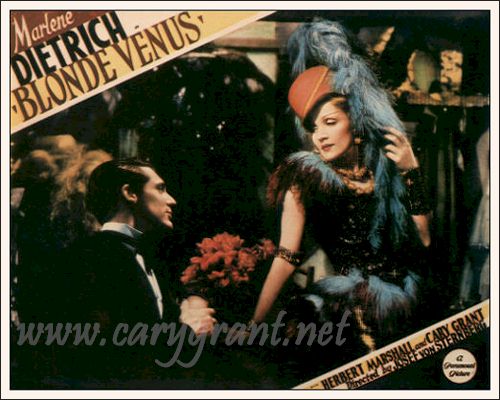
Blonde Venus (1932)

Later in life Dietrich dismissed her early Hollywood movies as "kitsch" and apparently she was thinking about this one.

The main problem with "Blonde Venus" is that it goes on forever and ever,when I start checking my watch it's not a good sign. I won't even mention words like "unconvincing" or "unreal" because apparently that was not Josef von Sternberg's idea of the movie in the first place.

Interestingly,the very first thing we see on the screen is a naked front body of a girl swimming nude in a lake,I wonder am I the only one who noticed this,it is done very tastefully and goes in a flash,I bet cinema goers at the time were surprised.

Script is rambling - the idea was to show off Dietrich as good german housewife who loves her husband and sings lullabies to her son,than out of necessity she return to her theatre roots and becomes a vamp who prostitutes herself to save sick husband. Any similarities with real people or situations are accidental,I suppose. What a coincidence,in reality Dietrich really was a german housewife who cooked sausages for husband and made career of playing vamps on the screen. Alas,she is totally fake as screen housewife and suddenly comes to life as a vamp - she might act caring mother who baths her child but it's not real,when she appears as glitzy saloon singer and puts hands on her hips,suddenly Dietrich comes to life. Because she is so totally in command of her vamp persona,it makes even less sense to make Dietrich character meekly return to her husband and family life,practically begging him to take her back - from the moment she start "making money" to her subsequent international success as femme fatale,she is absolutely her own woman and no one can tame her. But the script and production code of the time insisted she has to return to kitchen (because woman is only happy when sewing her husband's socks?) so to our embarrassment Blonde Venus capitulates,leaves her stage costumes & freedom and goes back to a idiotic husband who don't deserve her in the first place. It's almost painful to watch the end where beautiful Dietrich is lobotomized into return to the kitchen.

Herbert Marshall plays sick husband who takes money wife gives him without much asking but later changes his mind and becomes very jealous & self-righteous when it suits him,just to show who is real master of the house and to put suddenly confident Dietrich in her place.

Carry Grant is completely wasted here as a rich customer who falls in love with Dietrich and showers her with money - his role is bland and acting not better,to be honest,but somehow you forget him the moment he leaves the screen (in fact,even when he is on). He is simply not important here at all.

Unexpected threat is the sudden appearance of Hattie Mc Daniel who plays (what else) a maid who helps Dietrich to hide from policemen.In just few years Mc Daniel will be the first afro-american actress to win Academy Award for her role in "Gone with the Wind" so it's a joy to see her here.