26.9.24

"Becoming Ella Fitzgerald" by Judith Tick (2023)

Impeccably researched but ultimately a bit dry, the latest biographer of beloved "Fitz" falls in the same trap as Nadine Cohodas in her biography of Dinah Washington - namely, lacking info about the subject's personal life, the authoress focuses on every single documented concert performance and studio recording. So after a few chapters it starts to get a bit repetitive, because there is simply nothing much to tell about Fitzgerald herself, except yet another concert, another tour, another studio recording. Because Ella was (pardon the pun) elusive, we can admire her, we can love her but we can not pinpoint anything specific about her outside of the concert stage. There might be a possibility that the great lady genuinely had no private life, since she was always working - you never read about Fitzgerald enjoying some relaxed vacation or such, until the very end when Diabetes forced her into a wheelchair and she was simply not physically capable of touring anymore.  


I was initially a bit alarmed already in the foreword, because Judith Tick had a currently fashionable way of expressing herself as being not lucky but "privileged" for having access to archives - you know, the type who is always on some spiritual quest, "learning" and "changing the narrative". Thankfully she did not turned the book into anything but biography of a musician, even though she occasionally tries valiantly to describe her subject as activist, where Fitzgerald was by all accounts everything but. Personally I did not find it boring but I can understand that some readers might find it a bit exhausting.


Curiously, Thick completely ignores what might have been genuinely interesting part of the story - Fitzgerald's teenage years spent in New York's reformatory school with other juvenile delinquents where she was allegedly frequently beaten and punished - Thick just breezes over this and never elaborates how this might have scarred and psychologically  shaped the singer always known for her quiet disposition. (According to the documents, teenage Fitzgerald escaped the institution.) 

7.9.24

A gift from me to me, with love

As a birthday gift from me to me, I decided to bite the bullet and bought myself something that I wanted for a very, very long time - a real record player so I can still play my old vinyl collection. Even better, I found something online - a nostalgic replica of an old fashioned radio with record player on top (under the roof) with added CD and cassette player so nothing has to stay in dusty boxes anymore and I can indulge in cherishing my old collection. 


In my childhood, we had something very similar in the kitchen - it was an old fashioned radio and once you open the top, there was a record player there. I had discovered music via this old, crappy record player and played my singles non stop (the ones I got for the seventh birthday), later built a cute little vinyl collection that unfortunately got lost, along with many other things. Now as i opened some old boxes, I see some old LPs and was thinking "I might as well find some record player, since I still have records". And not just records, I also own cassettes and CDs because I am coming from another time when listeners were actually buying music in order to listen to it - there were no streaming services online, where is enough if you only know the title of the song - no sir, in my time you had to walk to a record store and browse with dusty fingers until you find something that appeals to you. 


Spotify had changed all of this and now we listen our music differently. I have almost completely stopped listening to the radio but I still enjoy Podcasts. So now when I have a brand new record player, I decided not just to dust off my old vinyl collection but to treat myself with occasional browsing in a second hand shops, which are very popular here.  In fact, I browsed today - and for the first time I was happy because I could actually purchase something. There were some self-imposed rules:

- nothing that is already available on Spotify (what would be the point)

- only the records that were never released on CD

- nothing too expensive (its only nostalgic hobby, after all)

- maximum € 10 at once

- records must be in passable condition 

- if possible, try to build the same collection I once had (that would be neat)


And immediately I am faced with the fact that my LP collection is hopelessly old-fashioned and uncool. But this is who I am. And my uncoolness is the deliberate part of my personality, since I always followed my own path and declined to follow the herd. This means that my collection will be mostly 1960s and 1970s oldies and this is perfectly fine by me, since it makes me happy. I did listen to my CDs from time to time, but now is the first time that I listened my old cassette tapes since 2004. That was exactly 20 years ago! The sound - must admit - is not the same as on some first class stereo system but to be honest, its perfectly fine for my little study room and the idea is simply to enjoy my old collection, not to impress anybody. + I am going deaf anyway + I don't need super clean sound for my collection of 1920s blues. There is a Blue tooth option so eventually I might figure it out, so far I tried to connect it to my Iphone and got spotify playing on the record player instead the other way around ha ha, well it takes some time. Happy Birthday to me!


6.9.24

"The Insidious Dr. Fu-Manchu" by Sax Rohmer (1913)


For a simple change of pace, I decided to try something else completely and turned my attention to a 100 year old pulp novel, originally published in magazines chapter by chapter as serialisation in magazines like "Colliers" and this explains why the novel feels like perpetual high-adrenaline adventure chase, since each chapter ends with a cliffhanger. It was a huge sensation of its time and inspired sequels and movie versions, but I'm afraid it did not age very well. 


Sax Rohmer (real name Arthur Henry Ward) perhaps wanted to write something similar to Sherlock Holmes novels, a story with two heroes who are both fighting the evil. In this case we have Sir Denis Nayland Smith (a sort of well-wheeled government agent who inspires instant respect from everyone he meets) and his accidental helper, Dr Petrie who actually tells the story from his perspective. Nayland has just returned from Burma - all tanned and worried about a certain dangerous individual who is danger for the whole white race (!) and here is where things go funny. I cannot possibly imagine how was it a 100 years ago, but in a present time this sounds fairly ludicrous - back than, it served the purpose of creating "us against them" perspective, where good guys fight an obvious enemy who must be different, as to easily distinguish it from "our boys". It would actually work better if Rohmer created an antagonist who can easily hide in a crowd, instead of making every single Asian character instantly suspicious - but who am I to say, Rohmer became wealthy and successful with these novels and it just doesn't make sense to judge a 100 year old novel by our current standards.


It starts fairly well and the game of cat & mouse reminded me strangely on French detective novel "Fantomas" (written more or less at the same time as this one) but at certain point it became repetitive - chapter after chapter, our guys follow Asian characters into a dangerous, dimly lit places and opium dens, just to narrowly escape sure death by poison, etc, etc. Each time mad genius of Dr. Fu Manchu almost gets them, but than something (or somebody) helps them so we continue to more chapters of exactly same premises. There is an obligatory young beauty who for no apparent reason falls in love with Dr Petrie and she usually helps when everything seems lost. Towards the end I even got a little bored, it might be that certain old novels (like this one, or "The Phantom of the Opera" from the same time) are just too old. 

25.8.24

God's children: Josephine Clofullia


Josephine Clofullia was a famous "bearded lady" displayed in a travelling show by P. T. Barnum. She was born in a small Swiss village, apparently lived quiet and unremarkable life until her mother died - this was beginning of her involvement with travelling circuses. It was probably a sheer necessity as there were not many options for single women + she had a very unusual handicap that would always isolate her from the society, so the offer of businessman P. T. Barnum was probably the best thing that could happen to her. 

19.8.24

Long walks and discoveries: Vlooienburg


I have mentioned on this blog several times how much I enjoy my walks trough old historical centre of Amsterdam and how much I admire the beautiful old houses - however, the more I learn about it, the more I realise that a lot of the old town was totally demolished (for various reasons) and what has survived was a complete accident, because the whole streets and neighbourhoods were moved away to create space for new buildings. The understanding that historical area must be preserved did not really occur before 1970s - before that, quite a lot of beautiful old houses were simply gone forever. I have already mention the area of Kattenburg where the whole street disappeared, but how about the whole neighbourhood that was gone?


Recent visit to Stadsarchief where they had exposition "Déjà vu" reminded me that actual photographs still exist about the Jewish neighbourhood that once existed around what is now Watterlooplein with Opera House/City Hall. From what we know, it was one of the few artificial islands in the city centre and it was overcrowded with the poorest Jewish inhabitants - it was also close to local Synagogue that still stands there. It was one old photograph on that exhibition that fascinated me (a beautiful view on the whole island from the tower of Zuiderkerk) and the impression stayed with me until I did some research and found an excellent documentary called "Vlooienburg, the history of a Jewish quarter".


https://npo.nl/start/video/vlooienburg-de-geschiedenis-van-een-joodse-wijk


What a joy! Not as in joyful story but as in archaeological discovery - apparently I am not the only one interested in the old buildings and the history of the city - the documentary was everything I always wanted to know about the now disappeared neighbourhood. It explains that the whole area behind De Blauwbrug was originally Jewish and how these particular Jews were actually relatively well-off until refugees from other places around Europe started coming in, making it a overcrowded slum. (Later some of these families would move to a new neighbourhood in the South of Amsterdam called Transvaalbuurt which had beautiful new houses and spacious rooms, but it was far away from historical centre with Synagogue) There was a large number of Jews from Portugal's city Porto and everybody had to adapt to the rules and traditions of the new city. 


Vlooienburg was an artificial island of rectangular shape and it had four blocks with tightly squeezed houses next to each other - it housed around 7 000 people and it was a very poor area, as Jews were prohibited from most of the crafts and were only allowed several options, including diamond cutting. Where for centuries Amsterdam was a safe haven for all the Jews escaping dangers, pogroms and inquisitions, it all changed in WW2 when Germans occupied the country and eliminated 75 % of Amsterdam's Jews. Not only were the inhabitants all arrested, deported and murdered but the houses were also pillaged (for firewood) and left empty and demolished until the City Hall eventually decided to turn the whole area in the parking lot, than used it to built a new City Hall & Opera House there.


What we now call Waterlooplein with its Flea market, was in fact a totally different neighbourhood and there is absolutely nothing left of it (except old Moses and Aaron Church) - in the documentary, archeologists were digging in a cesspits left behind these demolished houses and discovering traces of food, pottery and cutlery that showed traces of imports from Portugal and other places. I ended up watching not one but two documentaries about history of Amsterdam and had a great time.

5.8.24

"The Shell Seekers" by Rosamunde Pilcher (1987)


This is something I had on my reading list forever and always knew that I might enjoy it, but it just needed a proper time. As previously noted on this blog, my attention span is now stolen by internet but apparently this year I am doing fine with my reading - not as much as before, but still healthy - so encouraged by this, I decided to bite the bullet. For the first time ever in my life, I was a bit alarmed with a sheer size of the pages (500+) and yes, the book could easily have been shorter but never mind. 


First thing first, Rosamunde Pilcher was in her 60s when she wrote the biggest success of her life. She was writing steadily from 1949. without any great fanfares but it was in 1987. when, encouraged by her publisher, she took his advice and started a novel that covers a family saga that follows its characters trough a lifetime. It was a smash and it made her universally beloved name at the age of 63. What made her so popular was the affection that she invested in her characters, her wit, charm, understanding how the family dynamics works and how the greed in the family can wound and separate people. Perhaps the main reason why "The Shell Seekers" was such a hit was that here was a British authoress stating plainly and clearly that its ok to put a foot down and stop your own children from exploiting you forever. They are your children and you might love them, but its healthy to take a step back and have some distance from them. 


The main character here is Penelope Keeling who, at the beginning of the novel lives alone and retired in  a small cottage with her grown -up children contacting her only occasionally, when it suits them. Since they are never available, Penelope focus her attention on people near her - her new gardener and young girl who was recently orphaned - which creates confusion and anger amongst her children who are obsessed with family inheritance and how much could be made out of selling paintings of Penelope's famous painter father. The book title comes from a painting painted by her father, which she refuses to sell and is hanging in her living room. 


I must admit that I was smitten from the start - enjoyed it very, very much and even read a chapter or two at my work - those 500 pages could perhaps could have been shorter but I cried, I laughed, I re-read some sentences again and overall felt a warm, fuzzy, feeling of pleasure when you encounter a really well written book. I don't care is this a women's book or not - guys are totally supporting characters here, mainly to do the physical work, drive the cars, make the babies - what was really good was how well Pilcher understands what goes behind closed doors in every family - micro drama in a micro world, the secrets, the anger, the frustration, the greed. 


I particularly loved this sentence (spoken by Penelope):

""I haven't sold the panels and I may never sell them, but if I do I shall keep everything for myself, because it is mine, and mine to do as I like with, and the greatest gift a parent can leave a child is that parent's own independence."  

31.7.24

Fish problems


I am very sad and disturbed as some of my fishes started mysteriously fading away and dying.

I have aquarium for over a year now and can recognise the dreadful symptoms when the fish suddenly starts to hide behind the heater, this is usually a first sign that something is wrong and poor baby will soon die. I can't put in the words how much this saddens and stresses me out because my aquarium is the centre of my living room and it is here to make me happy, excited and delighted - these fishes are my babies, I selected them with a purpose and named each one of them so I can tell them apart. 


I was told that its not unusual that fishes occasionally die (it happens) but what bothers me is that at this point none of my first fishes (bought a year ago) are still alive - except two Cory catfish who are bottom feeders and I always called them "Twins" because they are difficult to tell apart. Why is it that the shop-bought fishes have such a short life span? A year and that's it. Look at this beautiful photo: these 3 babies were my very first fishes and none of them is alive anymore (as I am writing this, the black one, Sasha, is dying at the bottom of aquarium and I gently nudge him every now and than just to make sure he is still alive). A friend who has experience with aquariums suggested that it might be the fact they are probably imported and genetically weakened - he says that I should look for a local breeder with stronger fishes. 


I am heartbroken and upset, naturally wondering what did I do wrong and am I perhaps fussing too much around them - I change 20% of their water regularly, test the water, bring new fresh live plants, feed them just once (sometimes twice) a day in small doses ... now, I did some research on the net and everybody talks about overfeeding killing fishes - I give my fishes small doses and sometimes even steam green peas for them (that I peel, since fish can't eat the skin) just to make sure they have good, varied food and not only dry food - to be honest, this is probably the only one explanation I can think of, since during my vacation last year a friend came to feed them twice per week and they were perfectly fine without me fussing around. When changing the water, I always add a little bit of recommended chemicals that help against chlorine in our kitchen water - but since I lost 3 fishes in two days (and seeing another one hiding behind the heater) I am alarmed enough to change the water again, just to make sure everything is fine for them - this makes me so worried and unhappy. I decided to move away from this zoo shop and search for alternative, perhaps its not really about me but about poor weakened fishes who simply don't have long life span. I am so sorry, my poor dear Sasha. The three babies on this photo are Sasha, Ray and Peter. 


This was Sasha when I first brought him home, he was actually a very beautiful light blue boy with dalmatian-like spots and I always loved him very much, with time he grew up and changed into dark, almost black fish. 

22.7.24

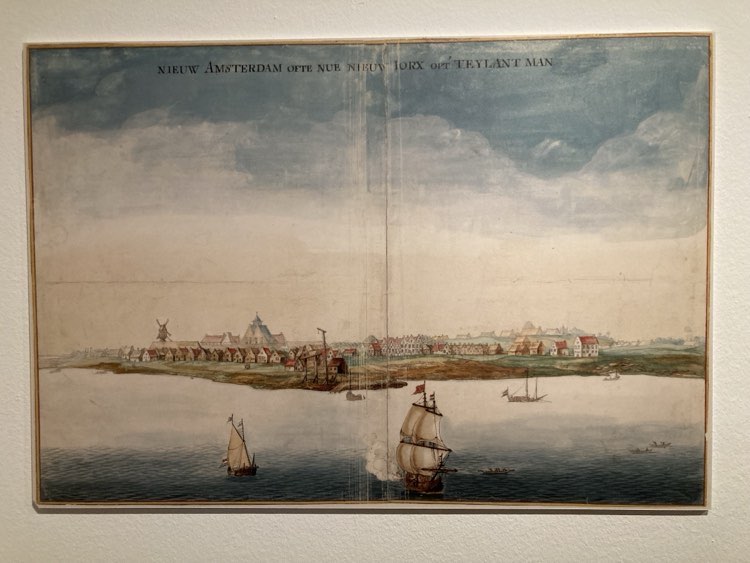
Exhibition: "Manahahtáanung or New Amsterdam? - The Native Story Behind New York"


One thing that I always loved about living in Amsterdam is the sheer variety of museums. At any time of the mont, there are countless wonderful museums and exhibitions around town and I use my annual membership to visit anything that strikes me as interesting. This particular exhibition is showing in a place that is a bit strange - previously used as a retirement home, it became "Hermitage Amsterdam" at certain point and for years it exhibited the art from the original Hermitage in St.Petersburg, until the start of war in Ukraine made this collaboration unwelcome. So the magnificent palace on Amstel became space where two wings are currently used by two different museums: one is called H'ART Museum and another Amsterdam Museum on the Amstel - the second one being a temporary storage for The Amsterdam Museum that is being renovated. Neither of these solutions is very successful, as the space often feels empty and I just wish that things go back to normal. 


While the original The Amsterdam Museum in Kalverstraat 92 is closed for renovation, some selected items are on display under the name Amsterdam Museum on the Amstel. It is literary just a tiny bit of their wast collection and now on one added floor there is a new exhibition that under normal circumstances would probably be displayed in a proper space in Kalverstraat. I always feel a bit frustrated with all these perpetual changes because it feels like a disruption of the original idea. And the word "temporary" is at this point stretching into years.


Well, the new exhibition itself is actually quite gripping. Its all about the native inhabitants of what is today known as Manhattan and was once called by the natives Manahahtáanung. The exhibition follows some drawings, maps and original artifacts from the times when Dutch colonists first came here to establish a new colony and the city New Amsterdam that would eventually become New York. This all happened exactly 400 years ago so it makes this exhibition timely. As interesting as it is, it also makes you feel sorry for duped original Lenape people who really had no chance against the intruders and are unceremoniously pushed aside. 


8.7.24

"The Art of the English Murder" by Lucy Worsley (2013)


I love Lucy Worsley - I have watched countless of her excellent documentaries, read few of her books and at least once a week I am listening her podcast "Lady Killers" so this book was really a no brainer for me, I knew it would be something that I will enjoy. Perhaps her particular charm works the best on TV because she is such a joy to watch visually - but at this point I could easily just read her writing and imagine to listen to her voice. 


Originally printed in 2013 as "A Very British Murder: The Story of a National Obsession" the book examines the origins of a typical British thirst for good, old fashioned murder and ponders when and why did it became accepted for a wide audience to enjoy this sort of grisly fiction. As expected, she is light & breezy (in spite of dark subject) and knows her history - after all, Worsley is historian - and the book is basically a walk trough the centuries of crime fiction. Everything is more or less as expected, except that I was fascinated with a completely off-centre information about puppet theatre:


"The peepshow, or its close companion the puppet show, did not yet have its modern-day connotations of light comedic entertainment for children. Many puppet shows were staged with all the weight and seriousness of tragedy. In fact, this was the medium by which people living in rural England were able to experience the best plays to be seen on the London stage, and the serious, adult-orientated puppet show was a vastly popular form of entertainment.


Puppet performances continued throughout the nineteenth century, until finally brought to a halt by improvements to public transport – once people could travel to their nearest town with ease, they became less interested in having the travelling theatre come to them – as well as the growth of the cinema. The First World War proved the death blow to the old puppet show families. With the young men removed, there was no one to carve the puppets, perform the shows, or drive the van. When puppetry was revived after the war, it returned as much more of an entertainment for children." 

24.6.24

"Wicked Little Letters" by Thea Sharrock (2023)


Two neighbours who live literary "cheek by jowl" grew estranged and the animosity between them eventually erupts in a local scandal, resulting in a court case gleefully reported by the press. The little town of Littlehampton is almost completely on the side of religious and righteous spinster Edith (Olivia Colman) while only the female police agent Gladys Moss (Anjana Vasan) suspect that perhaps the Irish single mother Rose (Jessie Buckley) might be the real victim. 


There is a tradition of small, adorable British movies created with tiny cast and limited budget that clearly stays away from big explosions, special effects and fireworks - something perfect for Sunday afternoon TV nap - like "The Duke" (2020), "See how they run" (2022) or "Empire of Light" (2022) where the main focus is on the good, old fashioned story and solid acting - Brits have that particular winning combination of semi-sentimental comedy that sometimes borders on serious drama and they also have some spectacular acting talents. I wanted to see this from the moment I heard about it, mainly because I love Olivia Colman and would always want to see her in anything she does. Strange enough, the only time I didn't really care for her role was actually the very first time I saw her in "The Favourite" (2018) for which she won Oscar - it might have been showered with awards but there's not one single positive character in the whole movie so it was a bit difficult to watch. Here she is a delightful spinster enjoying all the attention the press gives her as a victim of hate mail - she positively gloats over her description in the newspapers and everybody thinks she is such a noble sufferer. Everybody except the female police officer who suspect things are not what they always seems - but she is the first and the only woman in police force, where male colleagues basically ignore everything she says.


I thought the story was interesting enough to look it up online and yes, this has all more or less happen as it presented here. It is actually a genuinely interesting story, although I have no idea why on earth the producers insisted on multi-racial cast where there is absolutely no need for it - the original characters were all white and pushing brown skinned and black actors in 1920s story just looks completely artificial. This and behaviour of "Rose" (totally modern-day) is a bit far stretched and works against the movie. It feels more like obligatory ticking of the boxes than anything else. 

23.6.24

"The Puppet Masters" by Robert A. Heinlein (1951)


It is a distant future and after several agents disappeared during investigation of UFO report, top secret government agency (led by The Old Man) sends two top agents Sam and Mary to find more about what happened. They discover that alien creatures invaded planet Earth and attached themselves on the bodies of humans like some giant snails, usually on top of the backbone so they have full access to the brain. 


After some serious read, I was in the mood for entertainment. People read for different reasons and according the mood - sometimes I love to read something serious, other times I simply need a good escapism. And this was excellent! I have noticed that my acquaintance with science fiction genre is very superficial and often was intimidated with too many technical details, but this time everything was just perfect. I have never read Robert A. Heinlein before (apparently one of the giants of this genre) and even though the novel was written back in 1951, it did not diminish any of its qualities - Heinlein is a top master in his field and science fiction is all about imagination anyway. Yes, the idea was later used and re-used countless times (notably in the several "Invasion of the Body Snatchers" movies) but it did not take anything away from this novel - it felt as combination of a good, old fashion hardboiled detective story and alien invasion horror, with some elements of completely plausible (but easily explained) technical informations that shows how nonchalantly authoritative Heinlein is. What impressed me the most is how skilfully the author keeps our attention (later I learned that the novel was originally serialized in science fiction magazine) so every chapter simply pulls you into the next, there is no empty talk or boring description - everything is perfectly tailored and edited to the point that the story itself is irresistible escapism. I could not wait to go back to the book, I read it even at work! 

20.6.24

Croatia countryside


Far more than my hometown, what really makes me happy was visit to my favourite spot in the countryside. This is where my friends have little weekend escape cottage and I have spent many happy months here, recovering from my exhausting & demanding cruise ship jobs - after working 7 days a week and metamorphosing into a robot, I would return here to just sleep, eat, read, listen to the birds and buzzing of the insects. My friends would visit on the weekends but in general I was alone, except for the nearest neighbours who were often my partners on movie marathons. It was wonderful to visit it again and even though it was a bit crowded this time - it was a scene of the wedding - everybody was in a great mood and I loved being there.

16.6.24

Back to Croatia


I have left my homeland in 2018 and somehow did not visit back all this time - first, I was excited to be here in the Netherlands where I genuinely wanted to live for so long, than second I was visited by some of my closest friends anyway. This time, I was invited on a wedding and it was something I did not want to miss. Not only this is a case of strong, lifelong friendship but also of continuing other friendships that I cherish trough many years - many of them go back decades and decades. Even though I find traveling in itself exhausting and annoying, going somewhere once in a while is actually nice. I knew that I will love going there and than coming back. 


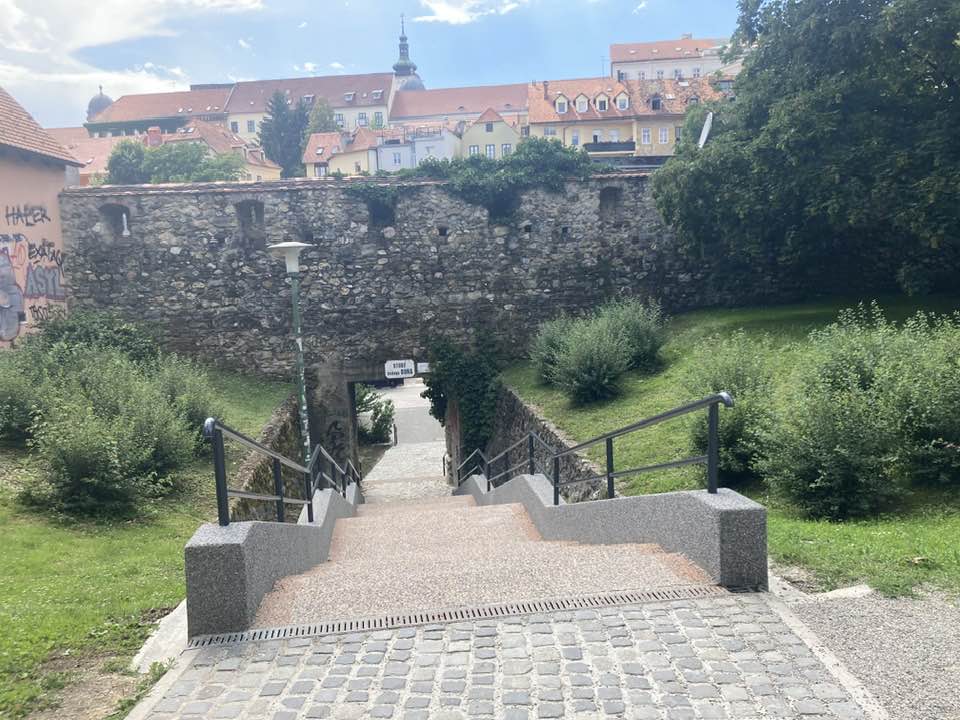
Even before 2018 I was visiting only occasionally. By my own choice, I have lived a nomadic life and enjoyed seeing the world - my old friends were always there to cheer me up and to celebrate my comings & goings - this time I was relaxed & happy with my current life so even visit to Zagreb was pleasant. Instead coming just for a weekend, I made a decision to stay a week and this gave me chance to meet some of my old friends & acquaintances + I treated myself with a walk trough my old neighbourhood. Where I confirmed that nothing was like it was anymore, that time is behind us now and the city continued to grown and prosper with new, younger generations. 


What striked me as very interesting was that the city center was actually very clean and neat. Everybody warned me about the effects of recent earthquakes, this and that, but I saw only nice things. It looked fairly classy and prosperous. My own Tkalčičeva street metamorphosed into main tourist attraction and was filled with charming terraces. Part of me recognised everything, the other part felt like a stranger. Compared to where I live now, this was actually clean and nice. Nothing like grey and gloomy place I remember from 1990s. It was good to see it again.