5.1.21

"Buffy Sainte-Marie: The Authorized Biography" by Andrea Warner

Buffy Sainte-Marie is really important, interesting and trail-blazing artist but for some reason until now nobody thought about writing about her life, until Andrea Warner came along - now, Warner wrote about Canadian women musicians before so she seems a perfect person to approach this + Buffy herself kind of welcomed someone showing genuine interest in her life and career. Two women bonded and formed a friendship that grew around this book - since this will probably be the last word on Buffy (with lots of her own involvement, her personal memories, photos from private collection, etc) it will have to do until someone else comes along and takes a different perspective. 


As the world's most famous Native Indian princess (I am saying this because there was always something regal about her)  Buffy Sainte-Marie have built quite a fascinating career in music, TV and education - all the while being mostly out of mainstream. While everybody loves to talk about her indigenous background, what strikes me much more is that she is true child of 1960s with wide interests, creativity and understanding that go way outside of music - although she works in a field of pop music, she managed to exist in her own sphere and support herself, her family and her charity/political causes without having any major commercial hits. You might say that the secret to her longevity perhaps lies in being outsider and doing her own things without a pressure from the industry. According to the book, Buffy is the first one to admit that she is happiest in her secluded Hawaii home and have always disliked social gatherings that other stars find necessary for their careers. 


It might be a bit unfair to Warner, but she is a bit too star struck for my taste - while Buffy definitely is an fascinating subject (and a very generous interviewee, willing to tell her story) the book would gain from a more objective tone - while Buffy herself comes across as a warm and funny, Warner is a bit too scholarly, preoccupied with tour dates and such - it is a very interesting story but for some reason it does not flow easily.

Basically Werner serves Sainte-Marie as a official biographer (while great lady herself is busy with tours and travels) and writes everything Buffy tells her, without analysing or questioning it - no other testimonies, memories or interviews with anyone who was around to confirm. This is important because it unbalances the perspective and at the end we have only the artist telling her version which (if you read between the lines) is often repetitive.

4.1.21

"It Always Rains on Sunday" by Robert Hamer (1948)

"Dead of Night" had excellent cast but where everybody else appeared more or less ordinary, there was one lady who was actually standing out as attractive and stylish - she appeared in a story about cursed mirror and her name was Googie Withers. Apparently big star in post-WW2 years and unfortunately so far completely unknown to me - in fact, I must say that just right now I realise how much were we conditioned to follow industry of Hollywood, where Europe (in this case UK) had its own production with interesting names, great ideas and original artists. Her biggest moment came with the movie "It Always Rains on Sunday" so  last night I dived into it with greatest pleasure.

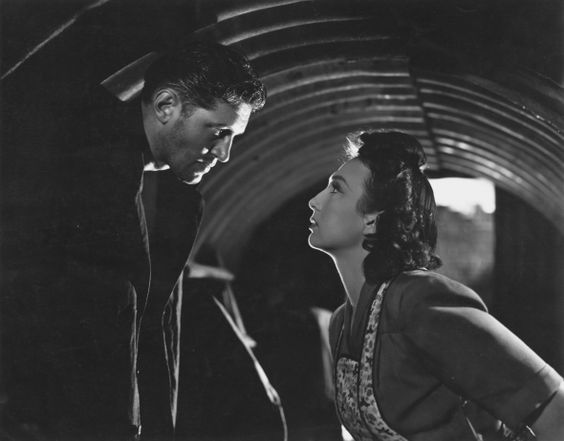
To my biggest surprise, it was real British film noir - it used the same ingredients as US cousin (underworld, criminals, detectives, people talking in slang, etc) but this was happening in London's East End, in fact this was Bethnal Green where my good friend used to live, so I recognised the area. When I was around it was drab and grey part of town, where poor people lived and apparently in 1948. things were exactly the same - director Robert Hamer (who accidentally made the cursed mirror story) made a point by describing life in a post-war London, where people hardly survive in their shaky, overcrowded houses and apparently everybody lives in poverty. This time Googie Withers is neither beautiful nor elegant, but rather a neglected, unhappy and nagging housewife married to a middle aged man who also have two teenage daughters in a tow. We find out in a flashback that she used to work for her husband as a barmaid and years ago she was in a love with a handsome criminal (John McCallum, her real life husband) who got arrested so her marriage was basically a defeat out of necessity. It turns out that the guy escapes the prison and is hiding in her garden shed, so now she is trying to protect him from police and detectives who are searching all over the town for him. 


There are many quite fascinating things about this movie, in fact I might watch it again just to appreciate it more: naturally the focus is on stoic and strong Googie Withers who is all fire under the ice, but I must say that all the other characters are equally great. Its interesting to note that its not only criminal who tries to break and escape, almost every character in this movie is desperately wiggling and trying to find some way out of this horrible greyness - both teenage daughters are trying to escape joyless home trough love affairs with their boyfriends, there is a womanising married man, a detective, a naive boyfriend, each one of them having his own subplot and idea of escape. And they all live in a impoverished, crowded place where privacy and freedom are genuinely unknown. Everybody lives on top of each other and they have to move out of the way in order for someone to have a bath or a dinner. Naturally its impossible to hide the escaped criminal in such circumstances. This is now second movie in a row that I am watching Withers and she seems to be real interesting screen personality, definitely not a weepy doormat, she has a great charisma and is constantly overpowering her male partners. I am so impressed with all of this that I might go a little deeper into classic British cinema. As much as I love Powell and Pressburger work, obviously there is much more to explore. 

"Dead of Night" (1945)

Full of energy & enthusiasm for my New Year resolution to read more, I grabbed the latest book by Kate Summerscale ("The Haunting of Alma Fielding: A True Ghost Story") that didn't exactly left me breathless so far but it mentioned something really interesting: in her previous book, Summerscale was writing about a murder in Victorian England and this same murder was vaguely mentioned as a part of influential horror omnibus "Dead of Night". To my biggest delight, I recognised the movie, it was a delight of my childhood and before you know it, I started re-watching it again.

It is such an interesting experience to return to something after almost a lifetime - kind of meeting an old lover after many years - I have seen "Dead of Night" as a kid and back than it left a huge impression on me. Actually that is not completely true - it is an omnibus of paranormal stories, as told in a parlour by a group of polite people drinking their tea in a set up that would made Agatha Christie proud. Out of five stories (directed by various directors) somehow I remember the first two - a mysterious carriage with coffins, whose driver says "just room for one inside, sir" and a haunted mirror that drive its owners mad. These two thrilled me to death as a kid and I remember them well with a tingle of excitement combined with fear to this day, excellent example of how our memories are made. Very stylish and sophisticated, mind you. The rest of the movie I don't remember at all - either I was sent to bed or it was simply too much for my little brain. 


So with a biggest pleasure, I re-visited this wonderful omnibus and loved every second of it. The rest of the stories were just as brilliant - a Christmas hide-and-seek game brings a girl in a secluded part of the house where she finds a boy crying and this is no one else but boy mentioned as a victim in "The Suspicions of Mr Whicher" by Kate Summerscale (a real case murder). There is a little out-of-place Golfer's story based on H.G.Wells that kind of don't really belong here because its neither scary nor particularly memorable - more as a TV sketch - but the best of all is the last story about the Ventriloquist (Michael Redgrave) and his domineering doll Hugo. Interesting that I don't remember this story from before, perhaps it didn't appeal to me because it wasn't about the ghosts but rather contemporary - now I see it differently - young Redgrave was excellent and he portrayed his descent into madness not as a full blown extravaganza but very subtle, we could just sense panic in his eyes and he was just getting crazier and crazier from scene to scene, until the final frame gets really chilling and unforgettable. I was so thrilled with the re-discovery of this fabulous old classic that I instantly went further and decided to check another movie showcasing actress Googie Withers.

2.1.21

A New Year

Dear reader, we are in 2021.
I have entered it very cautiously - quietly sneaked in, almost like a thief, without any celebrations or big words.
We had all of that last year and look what happened. This is why I find it inappropriate to make big fuss of it when in fact we have absolutely zero control over what is going on and repeated parroting phrases "Happy New Year" means nothing, its like the only thing people know to say to each other. Not that 2020 was especially difficult for me - I had some bad years before - but this was the first time that I was aware of the whole world going trough same difficulties. The whole world had to go underground and lick its wounds. 


What 2020 did, it showed us clearly how much we took everything for granted - social contacts, walks, our freedom, just ordinary everyday pleasures of hanging out together in the sun. This was all taken from us and I noticed with regret how even people on the street avoided contact with each other. You can't help the elderly lady with her shopping bags, because your compassion might actually kill her. If some mad scientist from old SF movies planned to mess up the human race, this is something he would come up with. That we would become afraid of each other and avoid embraces, hugs and kisses. That people will hide behind their walls in a perpetual solitude. It will leave scars on all of us. 


We have absolutely no control over what is happening but we do have control over how we react - and to keep some kind of equilibrium, each of us must find his own way how to stay calm and positive. Some people turn to meditation, religion, music, hobbies, anything that will keep them occupied. I discovered how much I am enjoying my solitary walks and browsing through the old streets - admiring the old, forgotten streets and houses full of history. Naturally I miss the real human contact but it seems that people are hiding and avoiding any socialising. We are forced to twinkle in the dark for now.


No resolutions, since life is difficult already without any enforced obligations. There is absolutely nothing genuinely important - everything is so trivial and irrelevant when compared to the main question: when and how will the life go back to some form of normality. I do wish that somehow I discipline myself into going back to reading, because it was really important part of my life and somehow the virtual world seduced me instead - I just lost the passion for reading somehow - but naturally, all these hobbies are not really essential, they are just distractions. Joni Mitchell once said, when asked how does she wants to be remembered, that her legacy is simply a pleasant distraction and I thought how interesting, this is really true - music, movies and books are distractions and comfort, but they are not reality - reality is the life around us, friends we have, conversations and laughter we share. Anyway, I started reading something already last night. 

24.12.20

"Ma Rainey's Black Bottom" by George C. Wolfe (2020)


OK so I am slowly capitulating and it took me forever to warm up to Netflix but there is really no point of resisting anymore - this is reality and it looks as everything else is actually eclipsed by what this platform offers: in the past, I resisted because of my lifelong love for watching movies in the cinema, but now being what it is, cinema is not an option and who knows will it ever be again - my gut feeling is that eventually cinema will simply metamorphose into home watching and cinema as such might be the thing of the past. I welcomed this movie with great anticipation, not only because of its cast and the buzz behind it, but also because it was based on a celebrated theatre play + did I mentioned that I am great fan of 1920s Classic Blues so everything here is right up my alley. 


Contrary to thousands of people who never heard of Ma Rainey and her legendary contemporaries (now you can find all these youtube introductions and explanations like its something that no one could ever find before) I was well aware of them, in fact there was a time when I was passionately collecting their music, back in the day when one still had to purchase and collect music on physical format - I was buying CDs and books about this music and it was my hobby, unlike today when kids have to click on Spotify and find everything online for free (and still need a Hollywood movie to tell them about it). I do return to my Blues ladies from time to time, but nowadays I feel as it was a chapter that thrilled me before, almost like a love affair from years ago. Several years ago there was a TV biopic "Bessie" with Queen Latifah in the main role and for some reason it failed my expectations - it had all the right ingredients (based on a famous book that I own, good cast, female director, etc) but felt overtly deferential to the point that characters were one-dimensional. I started suspecting that this brilliantly exciting period has not been properly investigated because people are too sensitive about being politically correct and in order not to offend anyone, they either romanticise it or skip it completely (or, like in "Bessie" case, just make a cartoon out of it). 


"Ma Rainey's Black Bottom"
is a 1982. theatre play by American author August Wilson - whom I am unfamiliar with and who sounds very interesting from what I had read about him. The play itself is now adapted for a movie screen but its theatrical roots are still very visible - and this is what I love about the movie. Instead of trying to squeeze a life story into a two hours, the play focuses on one particular afternoon in recording studio where Ma Rainey and her musicians have to record new music for the growing "race market". As expected, it does have a bit of "stage" feeling but the director George C. Wolfe does his best to move the camera outside of the claustrophobic, hot recording studio and capture some truly magnificent exterior scenes of 1920s Chicago. The story starts with backing musicians arriving in the studio and their chatter - while waiting for the main star, they joke, laugh, argue and reminiscence about their past - there is a hot headed, young trumpeter (Chadwick Boseman) who is a prototype of a slick, young wannabe in his ridiculously fancy shoes and he basically goes on everyones nerves because he is the one rocking the boat. Older musicians resent and laugh at his cockiness but when you think about it, its people like him who usually brings changes and turn this world. Ma herself arrives much later and the rest of the movie is electric exchange between her and the young musician - there is a push-and-pull energy between them, with disastrous results.


The moment musicians started their chatter in the recording studio I felt this is a great theatre, not unlike from what I heard in "Death of a Salesman"  - when several people have meltdown simultaneously. There is a tons of little details that I might explore later on subsequent watching - exploitation of black artists by white producers and managers, lesbian affair that Rainey obviously have with some unnamed sweet young thing, the tension between northern and southern blacks, the back and forth between artists and money makers, great soundtrack by Branford Marsalis and the amazing shadows in characterisation of main roles of both Rainey and young cocky trumpeter. While Boseman has a explosive presence and lots of energy (he is all laughter and eye twinkling, dancing young hustler) Rainey is more of a massive, tired Earth mother - although this particular interpretation of Rainey is more like modern idea of "sassy black mama" (dominant, salty and aggressive) where in reality, she was known as a very gentle hearted and supportive + she would never dared to talk to white businessmen like this. There is only one hint that Rainey might be caring (because she insist on payment for her stuttering nephew), otherwise she is portrayed as a genuinely demanding prima donna. It is an interesting thought, why the characterisation of her as a domineering Diva seems to be more appealing to modern audiences than some other possibility - for example, judging from what we know about her life, she could have been portrayed as a illiterate, lonely divorced woman who found escape from the crushing poverty in a show business that gave her freedom to be financially independent. And since she ended her days returning to church, its obvious that she always yearned for social acceptance and spiritual peace that this nomadic lifestyle could not satisfy. There is so much more colours in everyone's life, not just black and white but so far the movies have been unable to escape one-dimensional portrayal. Still, I have no complains - this was much better experience than Bessie Smith biopic and I loved it, will watch it again.  

20.12.20

"Miracle on 34th Street" by George Seaton (1947)


Last night I treated myself with this classic, old Christmas movie - I have probably seen it before because some characters appear vaguely familiar but who knows, I might have also seen just a few scenes previously - in any case I was completely on my own on Saturday night, the city streets were deserted and just as during he last Spring, people appear to be all hidden behind their walls. Everybody is terribly busy with their projects so I felt a bit crestfallen since I don't have any important things to do, everything is closed and without a genuine, human contact its getting a bit depressing - one thing is taking a breath from the crowd and enjoying one's own space but living in a Apocalyptic city with absolutely no one around is completely different story. 


Well, one way or the other, I ended up on "Miracle on 34th Street" which was just a perfect movie for that evening. It pulled me in, it cheered me and made me giggle, made me forget about reality. Sure its classic old Hollywood and I see nothing wrong with it - elegant people who are dressed nicely and living in a lovely homes, living some fantasy lives and having cooks & nannies conveniently hidden in the kitchen. Its kind of 1950s Doris Day movie except this one was done just a little bit earlier. Maureen O'Hara and John Payne are neighbours and he is trying to win her over by being nice and charming with her precocious little daughter (no other than Natalie Wood). Payne easily finds out that O'Hara is single mother who tries to bring her child firmly realistic and not believing in fairy tales that later just "bring disappointments and break hearts"  so he wants to introduce her to playfulness and lighthearted fun - one of the things he does is to introduce her to costumed Santa Claus who traditionally sits in the department stores and entertain little kids. And here we come to the real heart of the movie because white bearded Edmund Gwenn is so perfect as Santa, that after initial amusement and gentle suspicion, we actually start believing that perhaps he IS Santa Claus. The movie cleverly never pushes this subject too far and it leaves to the audience to make their own conclusion but we understand that this is not about Gwenn, its about Christmas itself and what it means to people, specially little children who needs magic in their lives. When Santa eventually ends up in a court, the judge Gene Lockhart  understand that his decision might costs thousand people their jobs, not to mention all the kids who would be broken hearted. So we come to the very lovely, old school Hollywood magic ending and I loved all of it. Perhaps little Natalie Wood gets a little bit annoying towards the end, but she was only 9 and was following director's instructions so I am not taking this against her. 


What this beautiful old classic did for me was that it reminded me on the magic of old movies that I always loved and it served as a beautiful escape from this sad reality around us. I loved it so much that I might just enjoy some more of it, specially as its all available online now.  

9.12.20

"The Crown" (season 4)

So I have binged almost every evening - treated myself with two episodes nightly with some Sangrilla that made me feel totally compassionate for Queen Elizabeth II and usually after few glasses I perfectly knew what she went trough and how she felt - on the other hand, four seasons is four seasons and I started to feel slightly saturated with the whole thing - even found myself skipping some scenes because it just went on and on. Every season had its highlights but this is the first time I noticed a certain padding just to make the episode longer. 


At this point I got so used to Olivia Colman that I almost completely forgot Claire Foy (who comes as a flashback in one scene) - Colman does wonders with what is basically a very ungrateful characterisation of a stoic and dutiful middle-aged woman who hardly ever shows her opinions or emotions. Her perfect match is Gillian Anderson in a role of the first UK's female prime minister and when these two lock the horns, its a white-hot duel and a highlight of the whole season. Both ladies are strong willed and fight in a silk gloves, bouncing and dancing around each other - you get the impression that Elizabeth never met someone as Thatcher. They are just perfect. The rest of the cast pales in comparison to them - everyone has a scene or two, an episode where focus is on them but honestly I didn't really care for anybody else. Both Josh O'Connor and Emma Corrin as ill-matched Charles and Diana eventually become tiresome - as Elizabeth herself once said, they are both spoiled, immature and endlessly complaining unnecessarily. I guess this will be a focus of the future season but I kind of dislike them both and have no patience for such whinny, entitled aristocrats who are so busy with navel-gazing that they expect the whole world must be focused on them. While media loves to portrait Diana as a victim, I do think that despite her youth, she got what she wanted - Charles was never a dashing prince and obviously his main attraction was in his social position - once things soured, both found themselves bad-tempered and demanding attention, where in fact two mature, confident people would just turn the blind eye and keep their private life secluded. Another link in the chain is somehow obscured role of Camilla Parker Bowles who was in fact very important in all of this and how she managed to be adulteress all awhile married to her husband and dating Charles. At this point the family suddenly doesn't look so nice anymore, you get the impression they are Mafia in their own way. Now I need a break. 

8.12.20

Marjana Deržaj debut LP (1960)

"Let's dance Rock and Roll!" cheerfully announces Slovenian songbird Marjana Deržaj and than goes straight into some wild Dixieland that has absolutely nothing to do with Rock - it is clear that Rock mentioned here meant more like latest dance novelty, Cha Cha Cha or Twist. We are still in pre-Beatles era when artists on the old continent mostly hark back to previous decade, old-style jazz and doggy in the window - even the song itself is cover of Italian original (Adriano Celentano) so its kind of second-hand Rock, as translated in Italian and than re-imagined again for Slovenia. 

Deržaj is of course forever associated with breath of fresh, modern pop sound in her native country - one of the first artists in post-WW2 era, she embraced Western sound, dances, lighthearted fun and basically family mainstream entertainment - not unlike some Slovenian Alma Cogan or Teresa Brewer - it was all terribly urban and modern for audiences back than, specially her hit "Vozi Me Vlak V Daljave" that in hindsight seems to have been not about the trains at all. It is bit unfair to judge her recordings today because they all sound very dated - this is pre-Beatles era, when artists were perpetually cheerful and Deržaj is not an exception. She is actually perfectly fine for a song or two, but the whole LP is a bit too much - her Dixieland band and backing vocal quartet Optimisti are suitably energetic on such old chestnuts as "Careless Love", "Jeepers Creepers" and 1950s hits by Perry Como and Paul Anka. Make no mistake, this has absolutely nothing to do with Rock but is instead a nice, polite and swinging collection of 1950s hits. 

7.12.20

3.12.20

"The Crown" continues (sesons 2 & 3)

So as the whole world suffers lockdowns, stress, anger, frustration and whatnot, I am getting along somehow and spending my evenings watching "The Crown" - it is something I could have not enjoy earlier because back than I was working on the cruise ships and had no access to internet or Netflix. And truth to be told, I had resisted Netflix for the longest time because I didn't want to become "one of those people" who never leave the house and preferred going to cinema with friends. Alas dear reader, the times became so dark and depressing that either cinema closed completely or my friends all hid behind their walls, or both. So with public places basically closed, with absolutely no one in deserted streets, with cold December upon me, I had a curious peek at this TV show, liked what I saw and continued with a second season.

Season 2 was in fact, even better than the first one. I must really compliment the actors, specially Claire Foy as young Elizabeth II and her feat is even bigger when you check her TV interviews and find out that she is in reality such a sweet, charming and completely spontaneous young person, nothing like a dignified, controlled character she plays in the series. True, I enjoyed the other actors as well (specially Vanessa Kirby as princess Margaret) but for me it was all about Foy and her very strange combination of sternness and vulnerability, I could just watch her forever. As the TV show suggest, her younger sister might had more flair or more public success but it was a serious, focused and hard working Elizabeth who was constantly doing all the work without ever showing a trace of strain, tiredness or indisposition. The series suggest that royal courtier are the ones pulling the strings, but Elizabeth mostly does what she wants without making too much fuss about it - no matter what they all politely suggest, or what her sulky husband might bark, at the end its her decision and you can bet she would always consider the feelings of others. I just love how she professionally welcomes all these new prime ministers who are constantly coming and going - this is her job, she does offer them a hand and smiles politely, listen what they had to say and than ring the bell, goodbye. 

Season 3 did something I had not expected and bravely changed the whole cast to represent ageing of the characters. It is quite epic, I must admit and great idea to present Elizabeth life story trough a prism of whole new actors portraying different chapters. Initially I was not so sure and I sat there sulkily but not for long - the new cast is brilliant and Olivia Colman brings a new colours to Elizabeth who is still serious, still firm, still vulnerable under all that cellophane but now she is middle-aged. (And again, surprise to see Colman in real life who is completely adorable chatterbox and nothing like this role). Tobias Menzies has ungrateful role as her sulky husband with too much time on his hands, though there is one episode where he goes trough a mid-life crisis and I must say he was genuinely brilliant. Helena Bonham Carter comes in as princes Margaret but this time around I found the character one-dimensional and basically she is Cruella de Vil who drinks and drinks and smokes. Surprisingly, this time they managed to make a character of young prince Charles somehow appealing in all his geekiness - played by Josh O'Connor - and everybody already understand he is not exactly the material for a sovereign so its kind of life wasted, really. I am now at the very end of the third season and really looking forward to continue.


16.11.20

"In De Uren Van De Middag" by Rob de Nijs (1973)


Now, this is me trying to learn the language and to find out more about the place where I live - for some reason, it seems that memorising the music lyrics works out just fine as a learning tool for me. I am seriously studying the lyrics, trying to understand them without translation and listening the sound of the language. The obstacle here is that traditionally many of Dutch artists were dismissing the native language and insisting on English - so it helps to search out for the ones who had stuck to their guns and decidedly created music in Dutch, like this guy. I have rare experience to hear a music icon as Rob de Nijs for the very first time and to soak in his music without any previous knowledge or prejudice. Previously I heard his 1964. album "Dit Is Rob De Nijs" which was very pleasant slice of 1960s pop but nothing special - kind of Dutch Cliff Richards. 


It took me some time to continue with his second album "In De Uren Van De Middag" (In the afternoon hours, yay I don't need a dictionary) that for some reason didn't register with me on the initial listening, but suddenly yesterday was just a perfect day or maybe I was simply more focused and suddenly everything clicked and I found myself enjoying the album immensely, reading the lyrics and basically getting it for the first time properly. First of all, this is not just another copy of some American star but a genuinely brilliant collection of original songs by Boudewijn De Groot who completely sidestepped the banal stereotypes and created quite inspired bunch of songs with characters from the history like "Jan Klaassen De Trompetter", "Malle Babbe", "Dag Zuster Ursula" and "Leonardo"  (about you-know-whom) - it sounds ambitious but its actually surprisingly engaging because its combined with a very gentle, country-pop from the early 1970s (I would dare to compare it with John Denver or Jim Croce perhaps) and music is intoxicating even without understanding the lyrics - once I got my head around translations, however, the album was constantly played on replay. 


Title "In De Uren Van De Middag"  comes from the opening line of the closing song "Meisje In Engeland" which is all about gentle goodbye to a girl who has moved on with her life and its actually very beautiful song, in fact the whole collection is so strong that is almost impossible to recommend one song instead of another, because it looks as one of those classic albums where true gems shine better after repeated listening, when we can focus behind obvious hits and pay more attention to the rest. I kind of suspect that the album works so well because the best songs were carefully arranged somewhere halfway trough the collection, not at the predictable way at the start - just when the listener starts really enjoying the music, you have five massive classics positioned one after the other ("De Avond" just one of the many) so it feels as the whole album just gets better and better. I absolutely love this. 


Photo of the Day


14.11.20

"The Crown - Season One" (2016)

Well, I'll be darned - I have just found a TV show that actually appeals a lot to me - and I am usually not interested in TV shows at all, because for some reason I refuse to be sucked into a vortex and dislike anything with a hype. But curiosity made me have "just a peek" and now I treat myself with a episode each night, enjoying it thoroughly and even later visiting youtube  to see real faces and events described here.


The story is about - guess what - British royal family Windsor and it starts in late 1940s when young princess Elizabeth (Claire Foy) is supposedly still many years from replacing her father on a throne. What nobody knows is that the king is deadly ill with a lung cancer and he hides this from everyone, including his own family - only prime minister Winston Churchill (John Lithgow) knows this, because he is told about everything. We follow courtly intrigues, whispers behind the fans, we witness the animosity and the hostility, court protocols that must be respected and often cumbersome traditions that Elizabeth must overcome while trying to do the right thing and please everybody. The whole show is filmed like the most glamorous MGM extravaganza with seemingly unlimited budget, everything looks genuinely sumptuous and we have pleasure of glancing into completely another world where royals never dress themselves up and even as they talk in private, the servants are here to collect discarded shoes and to help with the clothes - of course, royals don't really do anything, it is the cabinet with ministers who is making decisions while King is duck hunting and even than, servants are carrying and re-filling his gun. Men spend their afternoons drinking and laughing in a gentlemen's clubs, while ladies all look extremely bored and long-suffering under all those pearls and hats. There is a definitely a feeling of a gilded cage and a certain sinister claustrophobia here, because nobody is ever alone and there are no such things as secrets - even when princess Margaret (Vanessa Kirby) is phoning her sister for a completely private conversation, Winston Churchill is immediately notified and he is listening on the other side. You see, there is no such thing as privacy - everything Windsors do is of a great national importance and neither Elizabeth, nor her handsome new husband (Matt Smith) can't do whatever they want, they must respect the tradition and listen what the cabinet suggest - Elizabeth will sometimes put her foot down, but most of the time she will find the way to balance both what is expected from her with what she wants. 


Sure, I understand this is a fictionalised account and not really exactly what happened but its done with great attention, care and respect towards Windsors - I can't imagine anyone in Buckingham palace being offended with episodes I have seen so far, because family is shown as basically close-knit, strong and powerful. Yes, they privately despise king's older brother Duke of Windsor (Alex Jennings) who abdicated so he could marry commoner Wallis Simpson (Lia Williams) but he is shown as a bitter, vindictive man reduced to beg finances from the family he left behind and accepting embarrassing photo interviews from magazines who are paying for visiting his home - incapable of doing any real work, Duke simply wants money to continue living exclusive high life or as Wallis said to one journalist "we love to entertain". On the other hand, we are also informed how ministers circle around elderly Churchill like vultures but nobody dares to say anything to his face - they find him too old to make any decisions but he is way too clever and powerful figure to just be swept aside. The fact this is a TV show about real, historical characters and the things that actually happened (like great smog of 1952.) makes this hugely attractive and watchable, I am really excited with everything and I think its brilliant. Of course, I understand this should be taken as a real proof that things really happened this way, but it goes a long way to explain at least what happened and it shows Queen Elizabeth as a human who is actually likeable and not just intimidating. (I have seen her once, in real life, when I lived in London). 


13.11.20

"Da L' Se Sjećaš" by Krunoslav Kićo Slabinac (1986)

Sad news - Kićo has passed away today at respectable age of 70+ and I got inspired to re-visit this mid-1980s LP that I don't remember ever listening before. It is actually not really a "new album" but a collection of his biggest hits up to that point, re-recorded again as it was a practice in 1980s - I never understood the logic behind it, because radio and listeners always preferred hits in their original versions, but many artists were doing this, perhaps in attempt to modernise their old music. Like many of the singers of his generations, Kićo started as a young rocker with a genuine band, just to embrace mainstream pop festivals and "schlager" music, which brought him to wider audiences and he successfully juggled genres as highly popular host on TV shows - a genuine charmer, Kićo could do anything, from Elvis to standard traditional folk material and Christmas music - in fact, his 1983. Christmas LP came as a brave statement at the time when this was not accepted in the country.

Hrvoje Hegedušić and his team of studio musicians have wrapped all these re-recordings in a mid-1980s sound, so you can expect a lot of synthesisers but to be honest, this didn't bring anything new or fresh to original songs that were already well-known in original versions. Kićo peaked commercially in the 1970s and subsequently merged in the background together with most of the artists from that particular generation, while new, angry young artists took the spotlight. As this albums shows, he still had that attractive voice but he also mellowed perhaps too much for his own good and all these generic ballads didn't really create any excitement - naturally, nothing wrong with the music here, these are all pop classics from a specific era, but if you want to hear "Zbog Jedne Divne Crne Žene", "Plavuša" or any of these songs, you would be better off with original singles - to my ears the cold, 1980s production just sounds aseptic and sterile. 


Just like Dalibor Brun and Darko Domijan, Kićo was one of those people who knowingly and decidedly swapped youthful energy and enthusiasm for middle-aged conformability and large part of his work was focused on pleasing mainstream audiences - this collection focuses on his pop festival incarnation, but he also showed great affinity for traditional folk music. 

7.11.20

Old SF movies

Recently I treated myself with some very good old SF movies, kind of things I would usually watch with my parents on a Sunday afternoon after the lunch, when our bellies are full and the house still smells on food - we would enjoy a dessert and watch some family movie together. Both of these old classics were mildly scary but in a good way, since we all understand this is just a campy fun and viewer can easily slip to WC without missing a beat.


"Invasion of the Body Snatchers" from 1956. was remade twice more and this is actually the first time that I have seen the original that in my opinion completely eclipses the newer version away. As a kid I saw 1978. movie with Donald Sutherland (which was not bad at all) and Nicole Kidman was in 2007. movie but this old, black & white 1956 felt like a real deal to me, definitely because I absolutely love old black & white movies and there was something in it that reminded me on "Twilight Zone" and all those fantastic, classic TV shows - kind of small budgeted but it didn't matter, the story was gripping and captivating even without any supersonic special effects. Kevin McCarthy was perfect as a doctor caught into surreal experience where the small town gets invaded by Alien seed growing into human replicas. The role of his girlfriend Dana Wynter was very typical of the times - she was here to be beautiful and decorative distraction, but the moment when the things starts cooking, she is just a weak nuisance who can't run, hide or do anything physical. And this is perhaps the biggest difference between the movies than and now - nowadays we would just accept as natural that the girlfriend could fight, run, drive the car or do anything that main protagonist can do but back in the 1950s women were supposed to be fragile and delicate. I actually wanted Kevin to drop annoying girlfriend and let her die, because she was just whimpering and creating troubles instead of being helpful. 


"The Blob" was made just two years later but it feels like something out of the 1960s because it has a stunning colours, usually found in glamorous MGM musicals. From the first moment we hear fantastic, catchy title song (composed by young Burt Bacharach, of all people) we know this is going to be something fun, nothing scary or serious. Young Steve McQueen is the main character and he is all about cars, girls and saying "yes, sir!" to local policemen who threats him with telling his father that he drives to fast, backwards or whatever. His girlfriend is not so annoying, but she is also not very important either - when Steve goes to check what is going on and where is this strange noise coming from, she stays in the car, therefore when police later ask her did she see anything, of course she didn't, because she was a good 1950s girl and was not even looking. The alien creature is of course a blob that just rolls along and I am not exactly sure why is everybody screaming, since my first reaction would be to come close and inspect what is this strange mass wobbling around - but hey, this is a campy movie so the nurse screams terrified because a blob/pencil/trash bin is coming close to her. It was great fun but nowhere close to excitement of Body snatchers which I really loved and could watch it again. I don't have desire to re-watch "The Blob" again.