30.7.23

Bela


Grieving for our pets is a special kind of pain - while society in general don't care much for it and associate it with weakness and self-indulgence, the fact is that we as a species are connected to our pets (the point could be made vice versa as well) and for thousands of years there is a link between us that to my knowledge no other species on this planet create with other creatures. Only humans select certain animals as their pets, share their home with them and grieve after they die. I have never heard of donkey or a geese having a pet - only humans do it. And its with a heavy heart that I have to write here about the passing of sweet Bela. 


Bela was not officially my dog - she belonged to my first neighbour who decided to adopt her one winter when I was between the ships on vacation and enjoying my deserved rest after non stop 6 months work. Like everything else that young couples do, it was a spontaneous decision made in a heat of the moment but not very well planned - they both worked long hours and the little fluffy white puppy was crying alone in a empty house. So I suggested, why don't you leave her with me, I am here just across the road and she will be in a warm house + will have somebody to look after her. So the puppy Bela spent days with me in a warm kitchen and would go back to their owners in the evenings. I clearly recall her learning how to use sandbox for wc and how excited she was when she managed to jump on the chair for the first time. 


In the beginning she was too small to even made it trough the few steps in front of the house. The very first time she saw another dog, she was so scared that she run back to the house to hide behind me. And it was very sweet how she wold always run behind me when she felt threatened. Once we were walking somewhere trough the forrest and she was barking at the other dogs in the distance but once they decided to respond to her challenge, she hid behind me. The official master of the house was actually a bossy cat who surely had to adopt to a fast-growing puppy who was completely harmless but eventually grew much bigger. 


For the longest time Bela was just a sweet, playful puppy and was roaming free around our houses, as animals do in the countryside - occasionally this was dangerous for cats who would get killed by a car but dogs were doing just fine. I always thought she had a wonderful life, living completely free without any fences or barricades - I recall waiting for the local bakery bus and watching her joyfully jumping trough the tall grass in the fields. Yes, this freedom also had a price - when her periods started, she was not protected from local dogs and we had to quickly sterilise her (traumatic experience for all involved, I still feel so guilty about bring her to a vet) but that was really the only way we could keep her from million dogs attacking her. 


As the years passed, I was really always looking forward to go on vacation and to return to the little sleepy village, where Bela was now a part of the story. I had always wondered would she recognise me and brought her lots of goodies and treats (bought specially for her in other countries) - naturally she would always recognise me and we would have a wonderful time together, she was just a lovely, sweet natured dog. When babies came along, her owners naturally shifted their priorities and perhaps she was not pampered as before but that is probably reality of many dogs elsewhere. Seriously, my main reason to go back there for eventual vacation was to see Bela again, for me she was a connection with the place much more than anything else - to find out that she has gone was really sad news and I don't think that I will ever forget her. 


The one particular memory I have about Bela is the bright moment I forever keep in my heart. It was a beautifully quiet and peaceful afternoon, one of those lazy summer afternoons when there is no other sound around but just a birds chirping, insects buzzing and a lonely tractor somewhere far away. I was standing in front of the house admiring the view, with Bela by my side - it was one of those strange moments when I was perfectly aware this is happiness - very rarely I live in a moment but that time I recognised the beauty of it. It was perfect, tranquil and peaceful, just me and a dog full of love standing next to me. She can never be replaced, because she was unique soul like all of us. I am still grieving and it created a scar on my heart. 


29.7.23

In memoriam: Branko Blaće


This blog is turning into one long list of obituaries but that's life - my heroes are slowly leaving this planet. Recently I have found out that Branko Blaće had passed away and it was sad news as he was one of my all-time childhood favourites, in fact the generations have grown with brilliant recording of our very own rock-opera "Gubec beg" where tall, strong and handsome baritone Blaće performed the title role. Croatians are always very quick to admire everything imported and usually don't appreciate homegrown talent, but this was genuinely a historic moment, where we had our very own rock-opera (one amongst the very first in the world, next to 1969. "Tommy" and 1970. "Jesus Christ Superstar") and it was a huge success at home and at the foreign stages. It was welcomed with standing ovations in Italy, Hungary and Soviet Union while at home the performances were sold out. 


"Gubec beg" was based on a historical novel “Seljačka buna” (by August Šenoa) and it was planned as anniversary of famous village uprising against local feudal nobility who treated them as slaves (we were not the only ones, apparently these village rebellions had happen all over the continent). The leader remembered as Matija Gubec was eventually brutally executed along with his helpers but the episode was remembered as a part of national consciousness and after centuries still echoes with a message about human spirit that won't accept injustice. At the time of its premiere, it was quite a spectacle rare on our local stages (they had huge folk chorus Ladarice and karate fighters amongst the cast) while media buzzed is it acceptable that pop singers like Branko Blaće or Josipa Lisac were invited in the theatre. 


After Gubec, Branko Blaće continued to perform in the musicals - I had seen him in another historical rock-opera that was also inspired by the famous book ("Grička vještica") and in fact cherished that recording as well. Later he played in local versions of "Les Miserables" but never seriously pursued solo career as a pop singer - there are literary only a handful of singles and some festival performances left behind him, it looks as he never cared much for that and was focused on a teaching work. I have actually met him completely by accident as a young man, when I worked as a journalist - invited into a home of a famous Croatian pop singer who lived in a fancy, northern part of town, she told me not to worry, her neighbour will pick me up - this neighbour turned out to be Branko Blaće and my head almost exploded from excitement, I still can't believe that it was Gubec beg himself that gave me the lift. I think I said something stupid like "You were Gubec beg!" and he laughed at me being so thrilled. 

4.7.23

"Gospel Truth" by Russell Shorto (1997)


Normally, I love Russel Shorto. I have read with the greatest pleasure both of his books about Amsterdam and New York. And this particular subject - possibility of historical identity of Jesus Christ - has long been one of my all-time favourite subjects. So why then, you might ask, has this been such a joyless task instead of exciting read? It took me forever to finish it and it became one of those books that i am reading just to finish what I started. At first I thought it was because I frankly read too many books about this, starting with 1903. "Did Jesus Live 100 BC? " trough excellent 1965. "The Passover plot" and more recent books by Lee Strobel, Bart D. Ehrman, Bill O'Reilly and Ian Wilson, capping it all with brilliant "Zealot: The Life and Times of Jesus of Nazareth' by Reza Aslan - I honestly thought maybe its just a case of overkill and I had read too much about it, but actually what struck me this morning is something else.


For such a controversial subject, Russell Shorto is simply too reverent for his own good. If you are playing with fire, if you dare to poke in a hornet's nest, than do it properly or don't do it at all. Where other authors before and after him, dared to bring something new, something provocative or simply stir controversies by considering fresh alternatives, Shorto goes on trough what was already being mentioned many times elsewhere but he is never going to upset anybody with new claims or new ideas. My personal feeling was that he did not dare to go any further (for whatever reason) and somehow got sidetracked by modern day Christian circles, televangelists and whatnot - I take brave works by other authors like Hugh Schonfield or Richard Dawkings anytime instead of this bland camomile tea. 


3.7.23

"Indiana Jones and the Dial of Destiny" by James Mangold (2023)


There are not many things that still bring me pleasure like in previous times - blame it on a completely natural process of ageing, but at this point I am aware that clock is ticking and everything is just about being comfortable, not about the excitement anymore. However, the news about upcoming Indiana Jones movie got me all excited - this was THE cinematic superhero of my youth and I can never forget the thrill of watching "Raiders of the Lost Ark" for the first time (and many times afterwards) - in order to mentally prepare for this, I have spent a whole week re-watching all of the Indiana Jones movies in order just to make sure I know who is who. Guess what, I still love "Raiders of the Lost Ark" the best - every subsequent sequel had better production, bigger budget and more explosions and somehow less heart. 


On to a latest (and hopefully, the last) Indiana Jones movie - out of a sheer affection, I decided it will be in a lovely old (and recently renovated) cinema "The Movies" that proudly stands here since 1912. and when facing a closure, locals from the neighbourhood pulled cash to save & renovate it. It is such a special place that I feel compelled to always visit and support it. It is decorated in a classic Art Deco style and at this point everything is so new that it smells on carpets and glue - audience is also very lovely, real film lovers and not silly teenagers who usually prefer huge cinemas. There is a certain magic and charm about small places. 


What can I say - I am much older now, I am not a teenager anymore and this type of stuff is not even entertaining to me. It appears the merchandise is out of Spielberg & Lucas hands, Walt Disney Pictures and Lucasfilm Ltd. pulling the strings, investing the money and pushing the promotion. I am honestly surprised that Harrison Ford even accepted this. Maybe he though it would be a perfect closure. In any case, there was a first part of the movie (call it an introduction) set in a WW2 where Indiana was digitally de-aged to look younger - this was actually done very well and you would never know the difference - this part actually feels like a classic Indiana Jones adventure. Everything that comes after that is unfortunately a never-ending action and run from one crowded place to another, so much that we never have a chance to actually care of these characters. The worst of all, the movie is too long - at 2,30 hours it feels seriously tiresome and when it all ended, the audience in a cinema felt not excitement but a relief. 


Harrison Ford is not to blame - at the age of 80 he is still reasonably fit elderly gentleman and he does everything to keep this mammoth afloat but the story itself is silly (or perhaps it always has been?) while his supporting cast is just not so engaging. Instead of his son and wife (who were important characters in 2008."Indiana Jones and the Kingdom of the Crystal Skull" now we have British actress Phoebe Waller-Bridge as his goddaughter. She is a cunning daughter of a scientist introduced in WW2 scenes and for the most of the movie we are not completely sure is she antagonist or a hero - when she eventually switches over to Indiana's side, its already a bit too late, we can't take her seriously as a goodie because she was baddie for too long. There is an obligatory child sidekick (this time a young Moroccan), almost unrecognisable Antonio Banderas in a very short, cameo appearance and a Danish actor Mads Mikkelsen as the main Nazi enemy. My conclusion is - "Raiders of the Lost Ark" is still by far the best Indiana Jones movie and every subsequent sequel had bigger budget but less heart. Piling action scenes and car races trough the crowded streets of exotic locations does not necessarily bring anything new. It could be that I simply can't accept what is basically a cartoon-based pulp fiction adventure movie anymore the same way I did when I was twelve. But such a huge budgeted spectacle will not appeal to young kids who are not connected with 1981 classic and the elderly audience will probably feel exhausted as me. 


20.6.23

Amsterdam - Open Garden Days

Once a year, one particular weekend in June, houses located on beautiful canals of Amsterdam are opening their doors to public so people can admire private gardens usually hidden from a view. Even though most of them are museums now, the gardens are still not usually available to visitors - so this is a very special occasion and a chance to see something different, something more personal. 


"But how do people feel about opening their doors to so much intrusion?" I asked a friend. "Most of them don't mind" he said "in fact, some of the people quite welcome the visitors and the attention. You must understand that people live very lonely lives and having curious visitors checking out their gardens is actually a welcome entertainment." We both agreed that in private houses we will behave and will not swipe the dust with finger in front of our hosts. There were some house rules (no backpacks, no bags, no pets, etc) but nothing that I would find unusual and in front of each house there were some young students marking our map, each house had a different number on a map and you will get cross or a fish or a heart on each location. We did all of them, this year 25.


What strikes me the most is a tranquility in these gardens - they are in a historical centre of Amsterdam but so well hidden from the streets, mostly as a part of the inner courtyard - that you feel as slipping into another, magic world, far away from the city. While each single of these gardens have their own identity, I have discovered that the little ones, that belong to private families are by far more attractive than the large gardens that are part of museums and therefore somehow generic. 


26.5.23

Anna Mae Bullock (1939 – 2023)


Shocked and heartbroken as I was when hearing about the passing of my beloved Tina Turner, it actually took me a while for this to sink in - initially I was just surprised (and don't even know why, since we all knew she was sick and fragile, so this was inevitable) because she was such a symbol of vitality and strength that in my mind she was supposed to go forever and stay immortal. I genuinely expected her to live to hundred. The full sadness hit me the next day when I cried the whole morning and was so distracted that I went to work leaving my keys and phone at home. While the tributes of love, admiration and support are coming from all over the world, I am thinking how interesting is that this lady touched so many lives around the world and people feel genuinely moved by her passing. It is a testament to her charisma that this is not just another celebrity death but a passing of a genuine icon.


Like so many listeners of my generations, I was vaguely aware of Tina from 1970s (I was too young to remember the first half of her career) but witnessed her 1980s explosion and to this day I remember where I was and who was with me, as we saw her strutting her stuff on MTV, proud, sexy and strong - nothing like teenage pop stars of the day, this was a true warrior queen. Everything about her was unique and there was absolutely nobody else like her around - somehow she turned all her characteristics into a weapon and the fact that she was middle-aged, black and raspy-voiced, well it was all part of the package. You could hear her amongst ten other voices and even with eyes closed you knew it could only be Tina. During my formative years, when my head was buzzing with current pop stars, she was a Northern light for me, I celebrated and revelled in her triumph, apparently the millions around the world felt the same because people truly loved her success in spite of adversity. 


I collected posters and newspaper cuttings with her pictures. I collected VHS tapes with her live performances. Eventually I discovered the huge recorded back catalogue that introduced me to 1960s soul and chitlin circuit, the golden era of soul music and many other musicians who where there. To get her autobiography, I traveled to another country just to order it and than travelled back to collect it. I have witnessed her live in concert three times in three different countries (and somehow got missed the fourth time, which I still regret). I loved everything abut her - her laughter, her earthiness, her openness and charm each time she spoke and you could tell she was a gracious person. When internet came along, it became my almost daily routine to always check Tina Turner on youtube, something that always uplifted me and put me in right mood - it was like a shot of energy, where others would have a drink, I would watch Tina and click my fingers. 


After two days of serious moping and mourning, today suddenly it hit me that I can't listen her music and feel sad - everything about Turner is uplifting, celebratory and exuberant. Because her music was extension if her personality - Tina was ball of energy, she loved life, she loved to laugh and listening to her music is always "joie de vivre". And I am loving the fact that millions around the world - grieving and mourning her passing - still understand that Tina Turner was always about the good mood, spark and light, they celebrate her gift to this world and fire she gave. Farewell my beautiful lady, I loved you always and will for the rest of my life. 


24.5.23

Exhibition: Juliana's century


Before I forgot, I must mention a quite beautiful exhibition that was on display in Amsterdam's De Nieuwe Kerk and it was about Queen Juliana, one of the many royal links in the chain that led to a current king. Since I am a foreigner here, it was very interesting for me to learn who exactly these people are - other visitors are naturally familiar with them, me not so much - apparently for a few generations it was always the females who inherited the throne, Juliana being the only daughter of Queen Wilhemina and later succeeded by the daughter Beatrix. All the material on display came from a personal collection of the royal family so we were treated with really interesting photos, costumes, mementos and memorabilia that described the life of young princess as she grew into adulthood.


Old photographs are showing stunning similarity between different generations of women in the family - there are quite a recognisable, distinct features connecting all of them and I can even see these features going further to a present royals. I have noticed young Juliana looking quite gloom and somber trough her youth, but she did cheer up once she got married to a German prince with whom she had four daughters - it was Juliana who with her family lived in Canada until the end of WW2. You must locals to tell her more about her, I learned that she was basically a very much loved queen and often snubbed the protocols, insisting on simplicity and humanity. 


This exhibition was inspired by the anniversary of her inauguration and provides a historical context of the times when she lived, along with a refreshing portrait who she was as a person. I was particularly taken with a little miniature portrait from her student days and really loved it. In fact, went to see it even twice. 


22.5.23

"Love to Love You, Donna Summer" by Roger Ross Williams & Brooklyn Sudano (2023)


A brain child of director Roger Ross Williams and actress Brooklyn Sudano (real daughter of the singer), this was supposed to be a genuine, warts and all portrait of a famous disco queen and the stark contrast between her public and private persona. If you ever had any passing interest in Summer - and she was, frankly, unavoidable at certain point, where her double albums were selling in millions and topping the charts - you are probably aware that she was uncomfortable with her sultry image and contrary to her success, could not wait to escape disco, embrace religion and strive to some imaginary validation, which unfortunately also means antagonising the very same audience that loved her and made her a world success. These are very known facts, often covered elsewhere and millions around the world are familiar with the story - therefore, a documentary might serve as a perfunctorily introduction to a new generation who has never heard of her and who might delve deeper in her recordings, but older fans know all of this. It seems this is what documentaries nowadays do, they rehash old stories and re-package them with some new scandalous twist, to make it more interesting. Next generations will refer to this documentary as a point of reference. 


I kinda expected a storm in a teacup and this is exactly what it was. We go trough Summer's childhood, Germany, "Hair" musical, first scandalous disco hits, Giorgio Moroder, than singer's growing distaste for everything that her success represented - sexy image, hedonism, disco clubs, etc - and eventual insistence that she is not like that at all, rejection of the whole genre and its audience, vicious homophobic remarks and their denial (I don't believe the denial). Because I grew up with her music, I was very focused on this documentary but slowly it started to annoy me, I clearly saw it for what it is - an apology to her fans who supported her and were crushed when she turned openly against them. By creating a documentary where the main character is unhappy and haunted, its expected it would somehow make it easier to swallow. No, the documentary just makes her superficial and ungrateful for success she had. 


Let's start with a daughter Brooklyn Sudano who is often shown rummaging trough her mother's scrapbooks, awards and LP covers as she is some kind of Indiana Jones who has now for the very first time discovered that her mother was a superstar. She is looking at these album covers like "oh wow, I didn't know she was so famous" - please. There is also a family, as expected a typical church going Boston family who was ashamed of her chart smashing hit single "Love to love you baby" and while this obviously bothered artist herself, the family quickly learned to enjoy her wealth and success. As expected, Summer often complains that she is not a sexpot at all, than there are stories about abusive partners, attempts at suicide, how unhappy she was all that time and we got the strange feeling that she rejects the very success that she strived for - leaving a divorce and a first daughter behind, where she could focus on career, than she moans about the career. The breaking point for me came when she complained that recording company dismissed her request to hold on with release of latest Streisand duet until her own "Dim all the lights" grows to number one - eventually the Streisand duet went to nr.1 and "Dim all the lights" was only number two. It was a huge year for Summer and having two singles on top of the charts was not something to ignore, however the documentary makes it sound as it was evil and greedy recording company that stabbed her in the back and did not listen to her wishes. In reality, a petulant stance from someone who obviously lost her compass.


Documentary somehow totally ignores everything that happened after 1970s - there is a skimpy mention of her turn to Christianity, a tearful press conference where she cries that she didn't mean to criticise her fans and some home footage showing her slowly withering away from cancer. 1980s and beyond simply didn't happen, neither many unsuccessful attempts at come back. They did mention her 1983 smash "She Works Hard For The Money" but mostly as a example how far her image had cleaned up and subsequently how less interesting she became. A disco queen who actually don't like disco, rejects her gay audience and wants to be known as a serious (& religious) artist is just not so appealing as a sparkling, exciting artist she once was. I will always love her early albums because I grew up with them but this documentary just left a sour taste in my mouth. I hope that future generations will not whitewash that Summer rejected the very audience that build her up. 


20.5.23

Eurovision Song Contest 2023


The biggest TV event of the year is behind us now. For all the smirking and criticising that Eurovision is 

uncool,  it was the most watched Eurovision in the history of this programme and BBC had reported that 63% of the total TV audiences watched grand finale. It feels like every year it attracts new generation who is not familiar with it and every year people get upset by voting system, rules, etc. Well it is what it is - entertainment show with a huge history and of course its not the same as before (the most notorious complaint) because the music industry is changing and current performers are like gladiators in arena. One interesting thing that i have noticed is how spectacle itself almost completely eliminated the music - now its all about being noticed and catching everybody's attention during a few minute performance - just standing there and singing will not do, to be remembered in such competition, an artist must preferably swallow a burning torch or strip naked or do something extra unusual. And so it goes. 


I couldn't be bothered with semi-finale but was genuinely excited about big finale on Saturday night. Immediately I noted that performances this year are competing who will eclipse who - anything we have previously seen only in video clips is not possible to do live on stage, including a totally SF act by Norway and allegedly huge favourite Loreen who rolled between two giant spaceship screens and was basically alien from another planet. It had absolutely nothing to do with the song or its lyrics but it was very effective and quite unforgettable. Right next to her, shoulder to shoulder was Finland and its manic representative Käärijä who was actually quite good - not my kind of music, but it was something fresh and different. I have also noticed performances by Portugal, France and Italy as they were memorable and stood up from the crowd. Both Portugal and France had a confident, flashy girl singers while Italy sent a typical model looking guy who was better than his song. 


And now to the elephant in the room - Croatia. After years of trying everything and being ignored time and time again (always painfully obvious that local taste differs from wider EU) this time they were inspired by last year's entry of Serbia, which was a highly stylised art performance not unlike something by Laurie Anderson and though it did not won, it gained quite a cult following. Not to be outdone, Croatians decided that this year they can send something completely left-field too and sent punk band Let 3 apparently known for their effective shocking performances - at first, this seemed as such a cheap trick to me, kind of reaction one would expect from someone who was never validated so now decided to show the finger to establishment. But to my surprise, as Eurovision itself settled into circus and one cute girl singer replaced another in perpetual ass wiggling contest, Croatians came in as a very welcome breath of fresh air - they were rocking, they were almost naked (in completely ridiculous, unflattering underwear) , they screamed, they had a blast. And even though they did not win or even rated high (they ended up right in the middle, around 13th place) they left quite a mark - no less than J.K.Rowling tweeted that she loved it and audiences around the world welcomed something outside of the box. 


I must also add that just the day before Eurovision, I have listened the whole list of every song at my work and absolutely nothing registered in my brain - when played in the background, this was just a white noise, overproduced and bland. However, it worked as a visual spectacle. So my conclusion is that at this point Eurovision metamorphosed into something else and perhaps its unrealistic to expect music to be same as back in the day when singers just stood there with hands in their pockets. And let's not forget that even back than, there were some bland and uninspired choices. 


3.5.23

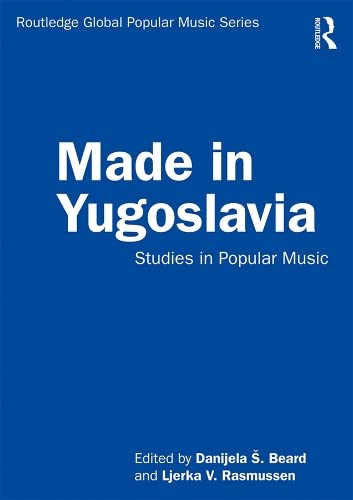
"Made in Yugoslavia: Studies in Popular Music" edited by Danijela Š. Beard (2020)


I have read quite a few books on the subject of popular music in my homeland (as it was back than) but so far they were always focused on pop & rock music - there is this huge discrepancy between what urban centres promoted and what actually is accepted and loved across the whole region. With all my love and respect for works of Petar Luković and Siniša Škarica, theirs was just a part of the story. Even as a child, when I was growing up, I was aware that its only in big cities that audiences actually care for classical music or chanson or anything really urban - step outside of the cities and the whole countryside is all about folk music and its countless variations. We used to look down and snicker at those but the tide has turned and apparently kids today are accepting it in all the seriousness. 


According to this book, the actual sales of gramophone records in 1980s were genuinely reflecting what was the taste of the nation - folk music was almost 60% of total sales, followed by 29% pop and only 13 % of pop music. This is something I always suspected. If you read the magazines, it was all about pop stars and rock music but in reality, this was happening only in the big cities - the rest of the country was all about folk musicians who existed in their own universe and had 0 support from the critics and journalists. And this is why this book is so fascinating and illuminating, because it points not only at popular music - which was already covered elsewhere - but also seriously discusses various branches outside of urban genres - like folk, starogradska, music of Macedonia, the phenomenon of Lepa Brena and even festivals of patriotic songs that were promoted by the regime. 


Because its a collection of 19 different essays (and various authors) at first it appeared a bit dry but soon I was won over by the sheer scope of the subject and how respectful these authors were: without exception, they approached their genres with greatest attention and explained why this matters and when did it happen and how it lead to something else. Every single name here was a link in the chain that created much bigger story and if at times it seems a bit too politicised, its only because I was not aware of it back than - I was a teenager who did not care for the political background of this music - this was a very welcome read and will probably return to it at some point. The whole series seem very interesting as this publisher has a lot of similar titles with introduction to music of various countries. 

2.5.23

God's children: Lady Day going home after the concert 1957.


The full title of this photograph is "Billie Holiday on Broad Street leaving after a gig at the Sugar Hill club in Newark 1957" and here we have a completely natural, random and candid moment where living legend and internationally celebrated Jazz royalty is caught in a second just as a natural, breathing and probably slightly tired human. 


As much as we love to romanticise and admire celebrities (specially dead ones), its easy to forget they were just humans, like any of us - nobody starts with the idea that one day they will be remembered as giants and cornerstones of anything. Most of us are just living day to day and its the people's perception of us what makes all the difference. Billie Holiday herself was long gone and became a myth, our jazz lady of perpetual sorrow - under the layers of beautiful, melancholic music there is a real person buried deep, the old photos showing her fragile beauty, Gardenias and all. Mostly, we see her in the dressing rooms, alone with her dog, on a stage, her life lived between sharp contrasts of expected 1950s comfortable home life and night clubs. Majority of her pictures were posed so this one comes as a refreshing glimpse into a moment, when Lady Day is deep in her thoughts, walking towards the cab, perhaps to her dealer, the stage glamour just a prop, she needs a drink and her feet hurt her. What an excellent photo.