11.7.18

"Feud" TV Series


Binge-watching TV series is a thing today and I am not immune to this phenomenon, although nothing since glorious "Game of Thrones" really interested me enough to invest my time to follow episode after episode - out of curiosity I decided to check something fairly recent, since the subject appealed to me + combination of talents involved seems intriguing. Before you know it, I gulped three episodes, although the programme has only eight so this is not going to be punishing task.


Many years ago, I had read delicious "The Divine Feud" where Shaun Considine in detail discussed lifelong competition between two Hollywood biggest screen goddesses Bette Davis and Joan Crawford. As much as I can remember after all these years, it was very entertaining and engaging read, although between the lines one gets impression that two of them were curiously not so much different - both survivors in the fickle business, they were eventually reduced to play together in a horror B movie that most of the people remember them nowadays, still fantastic and chilling "What Ever Happened to Baby Jane?". Its perhaps unfair that most of the audiences know associate them with this particular movie, because both ladies cemented their legends decades before this and their 1930s and 1940s work is in fact, the reason why are they celebrated. Behind the scenes, apparently, they were fiercely competitive, although I still have doubts about the truth of it, because it might have been part of Hollywood public machinery in order to whip audiences in frenzy.


"Feud" could have been a disaster and caricature, luckily it works surprisingly fine because instead of non-stop bitching, script focuses on the position of actresses in Hollywood and how the industry treated them once they came to certain age. Both no longer young, Davis and Crawford had to work hard just to get another chance to get back on the screen and even though initially they are perfectly fine with each other, publicists, media and almost everybody around only wanted them to fight - manipulated and encouraged, divas clash on the set (which drives director Alfred Molina almost to heart attack) but the script suggest that they were both aware of what was going on. To my knowledge, Davis enjoyed this adulation and continued trashing her co-star forever since, while Crawford kept her thoughts private, but she did pull out of the sequel. Oranges and apples, two ladies were clearly opposite side of the spectrum, since Davis was magnetic actress, while Crawford was glamour star - who knows how their chemistry might have worked if they collaborated back in the 1940s when they were at the top of the game, at this point in 1962. they were forced to claw on each other. Script cleverly suggest that behind the scenes they were both hard-working single mothers struggling to stay afloat and they might have even admired each other. 


So far I have only seen three episodes, but must comment on sensational acting: Jessica Lange might have unpromising screen start in 1976. "King Kong"  but ever since her unforgettable turn in 1982. "Frances" (where she played Hollywood star Frances Farmer who was a victim of industry) I was aware of her magnificent talent and here as Crawford she burns the screen, portraying glamour diva as deeply troubled woman who hides scars of abuse behind obsessive behaviour and constant demand for glamour that kept her all those years. Davis, on the other hand, was never a glamour girl and she was aware of it - Susan Sarandon had difficult task to bring this legend to life and depict her as a human being, with all her strength and vulnerability - she actually does great job and shows Davis as she actually might have been outside of spotlights. My guess is that both these wonderful actresses accepted this task not so much for Crawford/Davis feud as much for chance to point at the position of women in the movies than and now. Even though now we have women directors and whatnot, on deeper level actresses are still perceived as disposable girlfriends/wives/grandmothers and with occasional exception, they still head for twilight where they languish overshadowed by new, fresh faces. If they were alive today, Crawford would probably be a victim of plastic surgery (because her life was based on looks) while Davis would relish roles of mass murderers, since she was always willing to explore dark sides of human soul. 

10.7.18

"Oh No Not My Baby: The Best of Maxine Brown" by Maxine Brown


Just like Baby Washington and the rest of early 1960s songbirds, this silky-voiced siren worked all over the music map with frustrating lack of hit singles, although she almost made it with "All in My Mind" that gave her ticket for prestigious New York-based label "Scepter Records" that promoted artists like Dionne Warwick, The Isley Brothers and Tammi Terrell among others. What came out of this collaboration was only one sizable success but the one she will be forever associated with - irresistible slice of early 1960s pop by redoubtable Carole King/Gerry Goffin team called "Oh No Not My Baby" that singer had to rescue from previously unsuccessful attempt by much bigger hit-makers The Shirelles - I always wondered how this song ever came her way, since Brown would not have access to such material in the first place and it seems fairly possible that someone at "Scepter Records" felt that the song had potential.


Maxine Brown herself clearly had gospel background - she might have recorded music very much in the vein of young Dionne Warwick but you can clearly hear gospel in her passion and exuberance. When initially I got this compilation, I was a little confused with such versatility, because it comes almost as a curse - its clear the vocals are excellent and more than capable but on the other hand, she comes as tamer predecessor to subsequent soul divas who would really get thing going later in the decade. Now its perhaps time for some re-evaluation, because in hindsight, even without big hits this music has its magic - singer is always spot on, while its hard to find fault with numbers by Ashford & Simpson. Unfortunately, nothing matches the sheer beauty of classic "Oh No Not My Baby" but what slipped between the cracks is still worth checking out. Perfect example of gifted vocalist who had all that matters - talent, looks, attitude - but is known only to devoted fans. It actually sounds better than I remember first time around. Personally I don't find her any less interesting than Warwick who simply had better luck with songwriting team. 

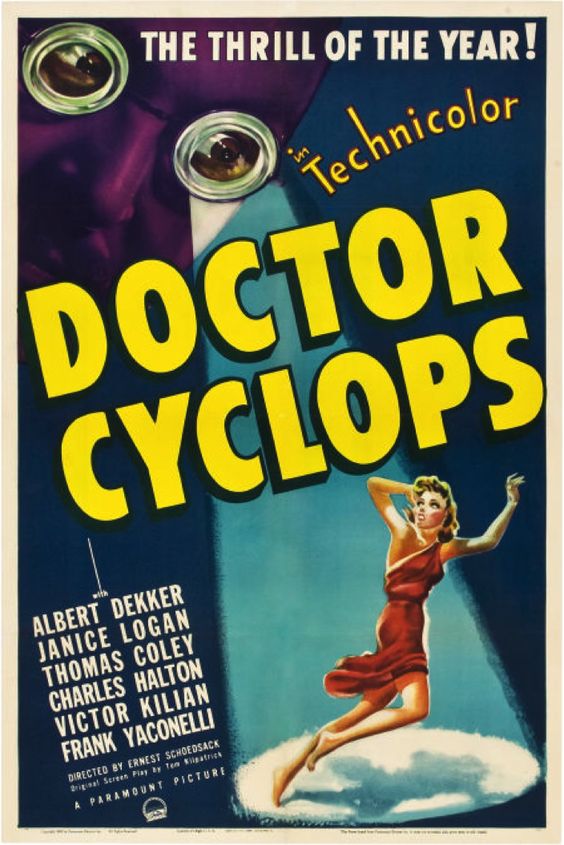
"Dr. Cyclops" by Ernest B. Schoedsack (1940)


Curiously undercooked, this old science fiction movie is one of those unfortunate attempts to follow the impossibly towering previous success - director Ernest B. Schoedsack is the one who will be forever associated with his 1933. masterpiece "King Kong" and seems it was impossible act to follow. This time he had glorious  technicolor at his disposal that is the first thing that strikes the viewer, making you wonder how would 1933. classic turn out if things were different. 


Not every old movie is campy and silly - the best example in this genre would surely be awesome 1927. "Metropolis" - but "Dr. Cyclops" unfortunately feels like children's movie from our perspective, with cartoonish characters and script that defies serious analysis. Bunch of scientists wonder in the Peruvian jungle to help mysterious Dr. Thorkel in his research - before they can even dust their boots, he quickly dismisses them and unceremoniously sends them back to where they came from, which makes them very curious so they decide to stick around and find what secrets he hides. All sorts of mayhem and adventures that follow present our heroes as brave survivalists while Thorkel is obviously an evil ogre, but personally I couldn't help but feeling some compassion for visually impaired loner who lives and works alone outside of any human society - as usual, I am always for unfortunate monster misunderstood by people, be it Frankenstein, King Kong or like here, Dr. Thorkel. Obviously, this is not the way Schoedsack planned, because movie depicts him as evil but I was rooting for him, instead of these annoying visitors. 

Visual effects, so naive to us today, were spectacular for the time and even nominated for Academy Award back in the day. More importantly, writer Richard Matheson paid close attention to this movie because we find clear echoes of "Dr. Cyclops" in Matheson's 1956. novel "The Incredible Shrinking Man" later adapted for the big screen with some identical scenes, so perhaps I shouldn't be too harsh on its predecessor. I guess this is a cult classic now and there must be some movie cognoscenti who cherish its quaint charm. Of all the people in the movie, I can only praise Albert Dekker in his title role as mad scientist - scientists here are curiously perceived as loonies and bug catchers while real people supposedly have other occupations. Not only that Dr. Thorkel works something secretly in his laboratories but he also have books - sure sign of his strangeness and potential dangerousness - today they would make him listen classical music as well, since this is also something every monster does. No wonder I was rooting for Dr. Thorkel instead of those meddling creatures. 

9.7.18

Dreamhouse


Around the Castle


Although I was perfectly happy living quietly in countryside, the world came to me. 
For the first time, my vacation coincided with International short film festival organised in the gloriously restored medieval castle that towers above all of us here on the top of the hill - Veliki Tabor is one of the most beautiful landmarks in this heavenly region, but as a historical monument it usually just stands there pretty and stately, well this time its purpose was to bring people together and it seems this is turning into a beautiful tradition. This film festival attracts young crowd that camps around the castle and spends several days in sort of Utopian commune, with camp fires, music and art, really beautiful sight to see. I was very impressed with the crowd - mostly idealistic, young, urban people stretching on their mats, playing Frisbee, meditating and soaking in the spectacular view, engaging in conversations with filmmakers, enjoying the programme and naturally there were lots of music acts to spice up the evenings long in the night. For the first time I thought that this place actually have a purpose, since everybody had such wonderful time, it wasn't just some boring old event but true get together in the best sense. Of course, castle's original owners would probably turn in their aristocratic graves if they could witness roaring crowd partying in the early hours here.


First thing first - we are in the middle of world football match and Croatia is doing extremely good. For such a small country we have surprisingly strong results and this is also a tradition - at least for few weeks, the whole nation gets so swept away in excitement that people forget to complain about politics, bad economy and negativity so ubiquitous everywhere. Under normal circumstances I would not even switch on TV, but this time I also got carried away with excitement - followed the match between David (Croatia) and Goliath (Russia) on some terrace with friends here in the neighbourhood and it was a blast, we all thought we would get heart attack from sheer nerve racking game which ultimately resulted with Croatia winning over their hosts, the victory celebrated with explosions and detonations all over this usually quiet countryside. 


The football game lasted forever so I already gave up on planned Jazz concert which really interested me - however, my friends insisted that concert will probably be postponed until end of such important sport event so we later ended up in this beautiful spot, restaurant terrace overlooking the hills and valleys, with castle in the background. The performers invited this year were wonderful Croatian music legend Gabi Novak and her pianist son Matija Dedić - I know their music very well and have been listening the whole gifted family for many years (even trough my journeys around the world) so this was pure pleasure and welcome relaxation after the unbearable stress of the football. At midnight the whole crowd sang "Happy Birthday" to this sweet lady who now turned eighty two (!) and she was touched - it was truly memorable evening.


However, evening was still going strong - later we strolled to a castle where enthusiastic crowd danced to pop and rock performers, even I wiggled my booty inspired by my friends who clearly had a blast, the audiences were very happy and the music resonated trough the sleepy hills long into the morning hours.
Next day we all gathered around family barbecue which is obligatory summer tradition - with so many spritzers I could hardly keep my eyes open until the evening when we went again on the same little terrace to listen Slovenian artist Zoran Predin and his charming brand of acoustic ballads, the guy is sixty now but still absolutely magical and as I had seat right next to stage, I had admired what he was doing - with only a guitar and voice, he spread stardust all over hypnotised audience, we were all spellbound. As much as I enjoy music and constantly playing something or other at home, nothing can ever match true live performance where artist is engaged with the public and mutual love flows between them. 

"That's How Heartaches Are Made" by Baby Washington (1963)


This glorious album came from the early days of R&B when American black artists had limited audience at home but were worshipped in Europe, particularly UK where singles by New York's "Sue Records" had cult status. Music acts like Inez and Charlie Foxx, Ike and Tina Turner, Barbara Lynn and Righteous Brothers were all at some point recording for them and they (along with singers like Maxine Brown) paved the way for soul explosion in the late 1960s. It was Dusty Springfield who championed this particular lady as her all-time favourite singer and out of curiosity I checked album that trough the years became one of my favourites as well.

Its very interesting that whispery and willowy Springfield was enamoured of sound so drastically removed from hers - just as in another era small-voiced Billie Holiday admired majestic "Queen of the Blues" Bessie Smith, at first listener is struck with huge difference between two completely opposite kinds of instrument. Frankly, I would assume that Springfield owes much more to young Dionne Warwick who at the same time dazzled with the strings of delicate hits but it seems that privately British diva was enchanted with massive voice of this young lady whose sweet face belied impossibly mature, dark voice. Baby Washington might have looked like a doll but hers was the powerful roadhouse voice not unlike that of Darlene Love - instantly recognisable and exceptionally heavy, it was dark, chocolate sound that completely sweeps the unsuspected listener in warm cloak. Although I have collected her other work (even with girl group The Hearts) this particular album seems to represent her moment of glory, with classic early 1960s hit "That's How Heartaches Are Made" being perhaps the most famous of all. Another personal favourite is haunting "You And The Night And The Music" that Washington completely re-imagines from its past and creates something uniquely hers (another curiosity, also stolen from jazz repertoire is "Doodlin" previously recorded by everybody from Ray Charles to fantastic Lambert, Hendricks & Ross). As opposite to many other early R&B albums of the time, this one sounds excellent even today and I have been listening Washington for many years since - seems she still have cult following, despite being largely neglected by recording industry. UK's "Ace Records" released the whole album on a CD titled "The Sue Singles" (along with other tracks recorded at the same time) in 1996. and its my highest recommendation.

6.7.18

"A Woman Like Me" by Bettye LaVette and David Ritz


David Ritz is American writer specialised in biographies of soul royalty - I have read his biography of Etta James with the greatest interest and he also wrote about Jerry Wexler, Marvin Gaye, B.B. King, Ray Charles and Aretha Franklin amongst others. I also know his name from countless liner notes in CDs by many of my favourite music artists, so it seems the man is great authority on music - when opportunity came to collaborate with Bettye LaVette it must have been a dream job for him because here was this unsung heroine of soul who languished neglected in the background, just to get wide international recognition much later in life.

Initially I was just mildly curious - after all, LaVette hardly left any trace in business, where her contemporaries conquered the world - but before you know it the book was so engrossing that it was impossible to put it down and I read the whole darn thing in two days. What distinguishes this autobiography from countless other similar books is the gleeful frankness LaVette unrepentantly displays all the way through - warts and all, she is here to tell her story and if you don't like it, tough luck. Tough luck is mostly what this woman had trough life full of disappointments and false starts, broken promises, penniless years, music projects shelved and discarded, singing radio jingles and performing in small local bars forgotten by the world. Along the way she did had her share of fun as she cheerfully admits herself - her romps and escapades are gossipy heart of the book, although one suspect pent-up frustration behind all these admissions - having independent spirit and sense of humour is all fine, but to actually name the people who snorted and blowed with her back in the day feels like a swipe at those who made it (the list is long and mighty entertaining). Decade after decade, LaVette barely survives, until reader really wants her to finally get a break - curiously, most of unhappiness and frustration was self-inflicted as singer rejected opportunities for anonymous family life (daughter and the husband are unceremoniously dumped aside) in order to persevere in her pursuit of fame. As much as industry didn't treat her kindly, LaVette herself lacked the skills to deal with important people and book is full of Muthafuckas who deceived her. Its good to see her finally successful, though it feels a bit too late. 

"Unforgettable: A Tribute to Dinah Washington" by Aretha Franklin (1964)


Early 1960s were times when some of the biggest stars of the previous decade suddenly left the race - Nat King Cole, Sam Cooke and Dinah Washington subsequently all got their tribute albums as recording companies followed obituaries with almost morbid obsession. Just as Washington herself recorded tribute album to her famous predecessor Bessie Smith, now another queen celebrated her songbook. It was probably masterminded by singer's ambitious husband/manager Ted White who saw her as natural successor to queen of the jukebox and wanted his young wife to follow similar crossover path.


To understand why this album didn't exactly work as planned, you should check original Washington - controversial, salty and ballsy mama, she was also mercurial artist who sassed her way trough early R&B market with hits like "Evil Gal Blues" before achieving lifelong ambition to break into pop arena with soft ballads with "What A Diff'rence A Day Made" that confused music critics ever since. Was she blues singer? Or 1950s crooner purring gently trough love ballads? Hard to categorise, Washington had many talents and was equally at home in many genres so tribute to her should cover many faces of this magnificent woman. No doubt that young Aretha Franklin genuinely liked her predecessor but at that time (aged twenty two) she was still conditioned with her strict upbringing and reluctant to explore bolder aspects of earthy singer's music - what appealed to her were Washington's later ballads so unfortunately "Unforgettable: A Tribute to Dinah Washington" ended being mostly unexciting renditions of torch songs sung approached with affection but ultimately curiously bland. Where Franklin caught the fire were Washington's uptempo numbers, but there are only two of them - smothered in strings, young singer valiantly emotes and it all sounds the same. Variety is the biggest issue here, since album would benefit from inclusion of Washington's pre-pop repertoire like "Baby Get Lost", "Fat Daddy" or "Salty Papa Blues" (nobody expected preacher's daughter to cover "Long John Blues"). That Franklin was serious, shows fifty years later when she lovingly covered "Teach Me Tonight" on her 2014. album - seems she genuinely loved Washington and never forgot her idol. 

5.7.18

"Yeah!!!" by Aretha Franklin (1965)


For all the talk about later legendary "Atlantic" years that would catapult her in the long deserved spotlight and make her a part of R&B aristocracy, Aretha Franklin had very interesting apprenticeship with mighty "Columbia Records" and these albums definitely deserve reassessment, since she was given fair chance to shine and show off that glorious voice. The fact that years from 1961 to 1966 produced no hits could be perhaps not be entirely blamed on "Columbia" as they were very successful with other music acts, it might be that Franklin simply had to wait for the right time and soul explosion that eventually shifted her focus from Broadway standards to more current sounds.


From the whole bunch of "Columbia" albums, this fake-live jazz album is still my favourite - released in 1965. as "Yeah!!!" it has confident, young Franklin leading small combo trough the dozen of standards where her gospel roots are clearly audible. Everything she later became renown for is already here in place: soaring vocals, improvisations, authoritative piano playing, you name it - far from being Jerry Wexler creation, this young lady was dazzling from the start and if this album came decade earlier it could have been sensation. However, in 1965. the album of jazz standards was nothing new and when you think that biggest stars of the year were The Beatles, The Rolling Stones, The Animals, Sonny & Cher, Bob Dylan, The Lovin' Spoonful and the whole arsenal of "Motown" musicians, the idea of late-night jazz combo tearing trough "Misty" or "Love For Sale" might have missed the zeitgeist of time, no matter how brilliant Franklin was. 


Just a year before, Franklin released her affectionate tribute to Dinah Washington and it seems this is where her heart was at the time. Or this is what her husband/manager thought she should do to crack fancy supper clubs market, like Sam Cooke did with his triumphs in New York's Copacabana Club which was the ultimate goal of music entertainers at the time. On purely musical merit, the album is still exciting (fake audience and all) and its a joy to hear what young soul sister does with this material (she even includes swinging version of "If I Had A Hammer"). It is not completely true that these early years were fruitless, since other musicians paid attention - Dusty Springfield even covered "Won't Be Long" from Franklin's very first LP, so people knew about her, it was just a matter of time when wide audiences will become aware of this unique talent. Personally, this was the very first Franklin album I have ever owned (it was finally released in my country in 1983.) so it gave me somehow distorted impression of who this lady was, because it represented her in jazz light but  she never left it completely behind - in subsequent decades Franklin would often revisit jazz standards.


4.7.18

"A Wrinkle in Time" by Ava DuVernay (2018)


Because I just finished book "How Reading Changed My Life" where Anna Quindlen lovingly mentioned "A Wrinkle in Time" as one of her favourite childhood books, when I stumbled upon this movie I took it as synchronicity and a sign from universe. It didn't bother me that this was obviously a Disney children movie, since I am not familiar with the book anyway.

What did bother me - immensely - was the way Ava DuVernay presented the story, combining patronising sermonising with irritating moralising so ubiquitous in American movies currently, creating curiously bland and bloated, sprawling mess out of what seems to have been beloved classic book. Lacking really strong script (because characters are constantly saddled with life-affirming messages and quotes about finding true peace & happiness) movie is visual overload of special effects that stunning as they are, can't replace its inner emptiness. Mind you, even these special effects are derived from "Avatar" and Stanley Kubrick but kids would not know this - more problematic is that movie like this (full of preaching) is not entertaining enough, like a medicine that is supposed to be good for you but it tastes awful. 

Inclusion of three angels who lead the kids into adventure is laughable: they are all without exception smothered in cluttered costumes and the biggest joke is vanity turn by Oprah Winfrey who just couldn't resist a movie role where she gives advices to kids - "You must be a warrior", "Follow your star" and "Eat your vegetables"  (in fact, her first message is something like "Is there such thing as the wrong size?"). No doubt everybody thought they are creating something very commendable and spiritually uplifting but it would have been much better if they restrained themselves and just went for good old entertainment instead - imagine what Steven Spielberg would have done, back in the day when he was still doing "E.T" and "Indiana Jones". There is understandable uproar from audiences raised on this book and it looks like a perfect example of how not to mess with literary classic. 

"How Green Was My Valley" by John Ford (1941)


A wonderful example of big-hearted, old-fashioned Hollywood sentimental melodrama, "How Green Was My Valley" was cinematic equivalent of "Angela's Ashes" (novel that looks back at impoverished childhood with affection and tenderness) - the world described here was already long gone by the time movie (and the novel that inspired it) was made, so it might appear almost unreal to modern audiences raised on all sorts of comfort and privileges but there is something warm and magical in this description of life in small Welsh coal mining village. 


Nowadays we are used to movies as grand spectacles, huge fireworks and all sorts of technical wizardry - nothing of it you will find here, this is all about everyday life in 19th century Wales, where strong, taciturn men lined up to work in mines and womenfolk waited for them at home with dinners. Nobody was allowed to grab the food before prayers were said and children (no matter how grown up they might have been) treated their parents with respect and gentleness. We follow the story trough the eyes of the youngest son (Roddy McDowall) who with touching innocence witnesses all the comings and goings in the village - the poverty, gossips, weddings, disasters, quarrels, births and deaths. He even falls in love. "I think I must have fallen in love with Bronwen even then and I must have been in love with her all my life since. It is silly to think a child could fall in love. If you think about it like that, mind. But I am the child that was, and nobody knows how I feel, except only me."


John Ford created something truly magical out of this ordinary story - the script is magnificent, mind you, it really inspires you to find the novel - and he gets brilliant performances from his actors who all show great compassion for characters. Each single villager, priest or gossipy housekeeper is excellent, no matter how small the role and for every depressing moment, there is a light comic touch that makes everything uplifting and beautiful. It is a starry-eyed look at the innocence and childhood, the time that each of us know it can never be repeated - reality might have been tough and full of hardships, but what we remember is love and affection. The movie tugged at my heartstrings big time and I am not surprised at all the accolades and praises won at the time. 

"Mi Prepuni Smo Ljubavi" by Dubrovački Trubaduri (1970)


Dubrovački Trubaduri (Dubrovnik's troubadours) were immensely popular multi-vocal pop band helmed by Đelo Jusić who must be one of the most talented and inspired composers around - his particular brand of music combined classical and folk motives with contagious pop and as Siniša Škarica notes in his excellent book "Tvornica Glazbe: priče iz Dubrave (1947-69)"  they were quite outsiders, neither rockers nor exactly part of mainstream schlager pop tribe. What they cultivated was instantly recognisable sound that could only come from Dubrovnik - imagine lusty renaissance troubadours somehow transported into 20th century with their lutes, mandolins and flutes on top of glowing harmonies and this description might do them justice.

Initially the act might appear a little gimmicky and international TV audiences on Eurovision were startled with their renaissance costumes (this particular appearance is still often shown as Eurovision oddity, though personally I see nothing unusual in this, troubadours get it?) luckily image was never eclipsed by their wonderful music perfectly tailored by Jusić who in my opinion was a genius - the music just flowed out of this man and there is not a single unnecessary note in his songs, they are all without exception extremely hummable and uplifting. You can clearly hear classical touch in everything he did with troubadours and this is done so cleverly and unobtrusively that it became their trademark. There is something very endearing about these guys so happily bursting into a song and you have to be really a curmudgeon to get fixated on renaissance tights instead of their seductive, sunny music. After the band eventually run its course, Jusić continued career as one of the most prolific and magnificent composers for other artists, he really enriched Croatian pop music. 

3.7.18

"Posve Slobodna (Suradnje i Etno)" by Josipa Lisac (1974 - 2017)


When in 1993. Croatian music establishment initiated annual awards "Porin" to celebrate most important projects of the year, one of the very first awarded artists was our own Rock goddess Josipa Lisac - veteran from 1960s and still very active performer, in the meantime Lisac gathered more "Porins" than any other female singer and just recently won the latest accolade in 2018, at the age of sixty eight. This is not just any wreath given for past accomplishments but a genuine recognition to still relevant artist who dares to push the envelope and surprise, even though her music legend was cemented decades before "Porin" came along - after all, Lisac was our only female Rock singer when her current colleagues and collaborators were not even born and TV was still black and white.


Trough her long and important career Lisac faced two main obstacles - lack of any serious competition (she was the only girl amongst the guys) and criticism from the music press who objected to her constant excursions in various music genres. From 1960s pop festival schlagers to jazz, pop, rock, disco, chanson, traditional folk music, fado and even salsa, her music adventures always had their share of detractors, but now when the dust settles it seems that this constant curiosity (along with charisma and recognisable vocal identity) might exactly be the main reason why she lasted so long. If majority of her classic oeuvre was tailored specifically for her by Karlo Metikoš (himself important architect of Rock in Croatia), since his passing in 1991 Lisac accepted collaborations with young musicians who lovingly kept her at the top of the charts with duets and guest appearances. What might have been hard work initially trough decades of misunderstanding, eventually paid off trough respect and reverence by generations of young artists who grew up idolising her voice, music and courage.


Long overdue, "Posve Slobodna" (Completely Free) is two disc compilation of this intriguing voice in collaboration with other artists trough decades. The selection is idiosyncratic and it doesn't have absolutely everything (as enthusiastic fan, I could add a dozen more recordings) but it serves in neatly presenting what is Lisac capable of, outside of Metikoš songbook. First CD collects guest performances with some of the biggest names in business, from Bajaga, Dino Dvornik, Gibonni (not the celebrated live recording from "Baloon"), Neno Belan and Cubismo to her obvious support to fledging bands like Flyer and Quasarr and even interesting poetry piece by wonderful Vesna Parun, Lisac unleashes that powerful voice with a passion that has no competition whatsoever. Second CD (titled ethno) might be even more interesting as it presents singer trough selection of folk music, where she dipped her toes from time to time. Known mainly as a Rock artist (she worked hard to dissociate herself from schlager beginnings) Lisac showed surprising competence in ethnic sound, be it sevdah standard "Omer Beže" (that she soaked as a little girl trough recording by Nada Mamula), Gypsy songs or Macedonian traditional folk - legendary Rock artist Johnny Štulić even claimed that Lisac wasted her considerable talent on Rock, when she could have been our greatest Folk singer (astute judgement that might have some truth in it) - this second CD really celebrates Lisac as artist of unprecedented stature and constant willingness to branch into dizzying range of various music. Personally I dare to say that nobody on music scene of Croatia (and even wider, what was known as Yugoslavia) comes close to Lisac in artistic integrity - almost everybody else had their own little comfort zone - and even the fact that she sticks to her recognisable vocal mannerisms in spite of commercial appeal shows that this is someone who values individuality above anything. Literary only one amongst her contemporaries, Lisac still thrives and inspires serious assessment . Long may she rule. 

2.7.18

"How reading changed my life" by Anna Quindlen


This wonderful, too-short book (actually extended essay) is Quindlen's love letter to reading and although it might sound as preaching to the converted, it speaks to all of us who were born with passion for reading. It is still a mystery to me why some people took to reading from the earliest age while others just couldn't be bothered (something I noticed from the childhood in my own family) so its a revelation to read authoress as eloquent and compassionate as Quindlen who understands this inner urge to travel far away from boring reality trough the wonderful medium of books. Although Quindlen points at certain expectations in American society, where outdoorsy activities were always preferred to suspicious reading indoors, I have absolutely same experiences in my corner of the world, where I was perceived as a strange, bookish child who should "go outside" like my little book companions were somehow not the real world - well, for me they were real world and it still are far more real than anything else. Amongst other things, Quindlen discusses the importance of "bad literature"  (all those bestsellers that gave us pleasure back in the day) as opposite to classics often forced upon schoolchildren who are too young to actually enjoy them, the books our parents considered "dirty" and the effects of technology on medium that was long confined to the paper but now metamorphoses - and still thrives - in other clothes. It took me forever to accept e-reader but it didn't diminish my pleasure in reading, in fact thanks to it I am actually reading more than ever before. I gulped this in one sitting and feel such comradeship with Quindlen (and all the bookworms around the world) that I could embrace her with happy smile. 

"Yet there was always in me, even when I was very small, the sense that I ought to be somewhere else. And wander I did, although, in my everyday life, I had nowhere to go and no imaginable reason on earth why I should want to leave."

"Perhaps only a truly discontented child can become as seduced by books as I was."

"And a book provides what it always has: a haven. I remember the first year after my second child was born, what I can remember of it at all, as a year of disarray, of overturned glasses of milk, of toys on the floor, of hours from sunrise to sunset that were horribly busy but filled with what, at the end of the day, seemed like absolutely nothing at all. What saved my sanity were books. What saved my sanity was disappearing, if only for the fifteen minutes before I inevitably began to nod off in bed, into the dark and placid English rooms of Anita Brookner’s newest novel, into the convoluted plots of Elmore Leonard’s latest thriller, into one of my old favorites, Breakfast at Tiffany’s, Goodbye, Columbus, Our Mutual Friend, Wuthering Heights."

“In books I have traveled, not only to other worlds, but into my own. I learned who I was and who I wanted to be, what I might aspire to, and what I might dare to dream about my world and myself. More powerfully and persuasively than from the ‘shalt nots’ of the Ten Commandments. I learned the difference between good and evil, right and wrong. One of my favorite childhood books, A Wrinkle in Time, described that evil, that wrong, existing in a different dimension from our own. But I felt that I, too, existed much of the time in a different dimension from everyone else I knew. There was waking, and there was sleeping. And then there were books, a kind of parallel universe in which anything might happen and frequently did, a universe in which I might be a newcomer but was never really a stranger. My real, true world. My perfect island.”

"Turn the Beat Around: The Secret History of Disco" by Peter Shapiro


Almost three decades after it peaked as social phenomenon, disco finally got serious literary treatment in this lengthy, detailed and occasionally exhausting book that seriously ponders its origins, socioeconomic atmosphere of 1970s and why this widely popular music genre eventually had its day in USA (but curiously, survived in Europe). Hats off to Peter Shapiro who approaches the subject with utmost seriousness and authoritatively explains what were the main factors in rise and fall of disco, how it broke in the mainstream and why the passionate backlash that reflected conservative fear of decadence and homophobia.

Tons of fascinating information's: I never knew that the idea of dancing to records (as opposite to live bands) started in the basements of pre-WW2 Germany where rebellious teenagers partied to the forbidden imported records. First discotheques as such started in Paris, UK's Manchester started the trend of worshipping black soul artists of 1960s (phenomenon that later resulted in famous Northern Soul), how Philadelphia Soul gradually mutated in disco, what exactly was the story behind Continental Baths and Stonewall, list of every important club in New York and why some of them were successful while others withered away ... Shapiro follows all of this with devoted enthusiasm and its almost impossible not to get swept away with his contagious passion, though occasionally he really wonders off the subject in order to explain the wider picture - I rolled my eyes when he started going back as 19th century king of marches John Philip Sousa (who preceded Jazz) but most of the time he is spot on with academic musings what was going on in the background, while mainstream public only vaguely understood corporate machinations that pulled the strings. He also patiently explains how disco never really went away but metamorphosed into new genres that will rule the radio waves of 1980s and beyond (connections between disco and punk are particularly enlightening).

One small objection is the way author dismisses European branch of disco (and almost everything that came from old continent) - because Shapiro worships at the shrine of Studio 54, his view of European artists is largely smirking and although he readily admits the frivolous nature of some American music acts, he gleefully points at derivative nature of European recordings. I understand his point of view but since I grew up with all that music inspired by American disco, I don't see anything bad in it - clumsy and campy they might have been, but they were exciting, celebratory and happy, just as their American relatives. On the positive note, Shapiro lists literary hundreds of artists worth searching for and its a joy to check them out. It is one of the best books about music that I have encountered and definitely something worth re-reading, as its wealth of information's is perhaps too much to take in at once.